Written By Chris Norris
The Konsent is not built like a conventional metal record. Conceived as a single continuous work, the album strips away guitar entirely and builds its strange, oppressive world from bass, drums, vocals and keys, drawing heavily from the adventurous spirit of 1970s progressive rock while pushing into something colder, heavier and far more unsettling.
At the center of the project is Ales Campanelli, known for his work with Samael, Sybreed and The Erkonauts, handling bass and keys alongside Abstraum on visuals and keys, Steve Fari on vocals and Mathieu Martinazzo on drums. Together, they shape The Konsent around six interconnected pieces, K01 through K06, designed to unfold as one complete journey.
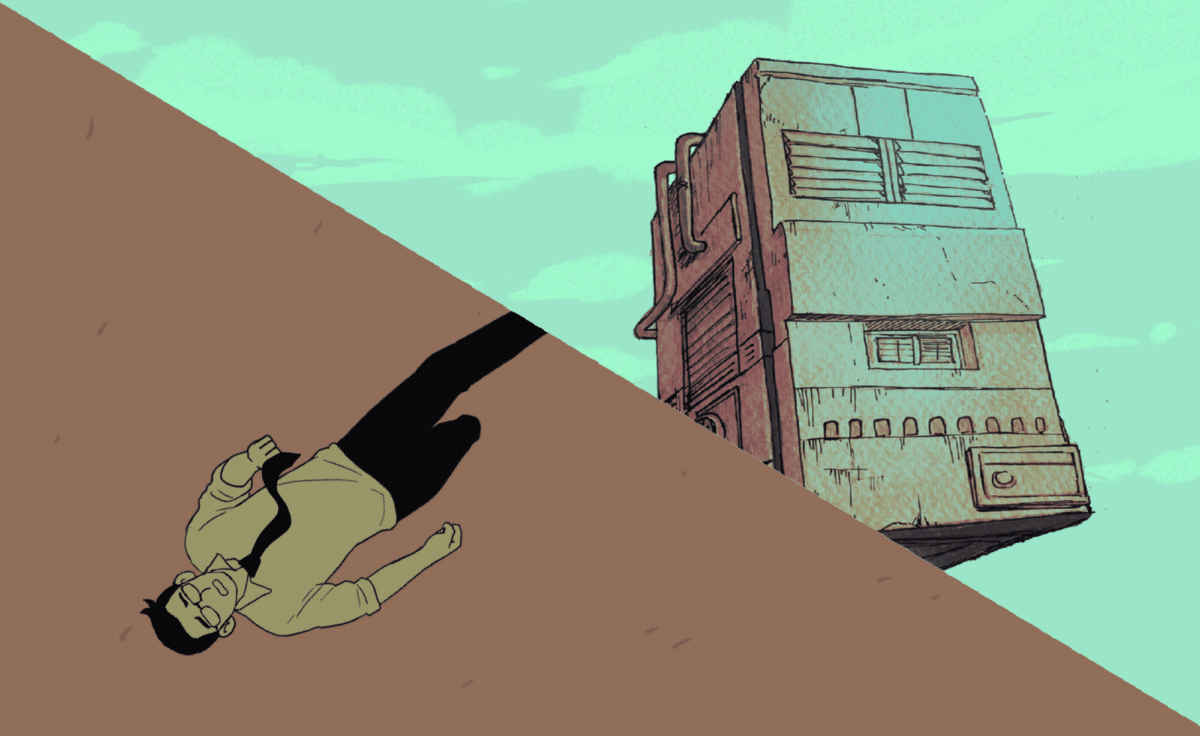
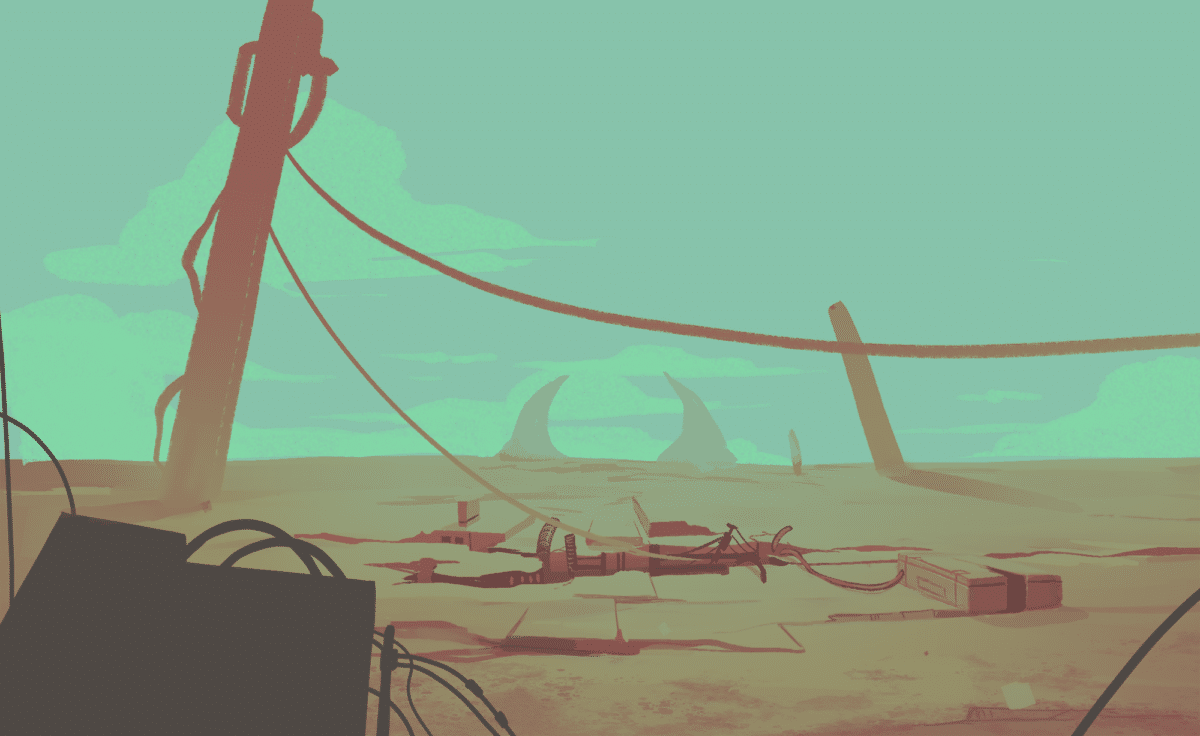
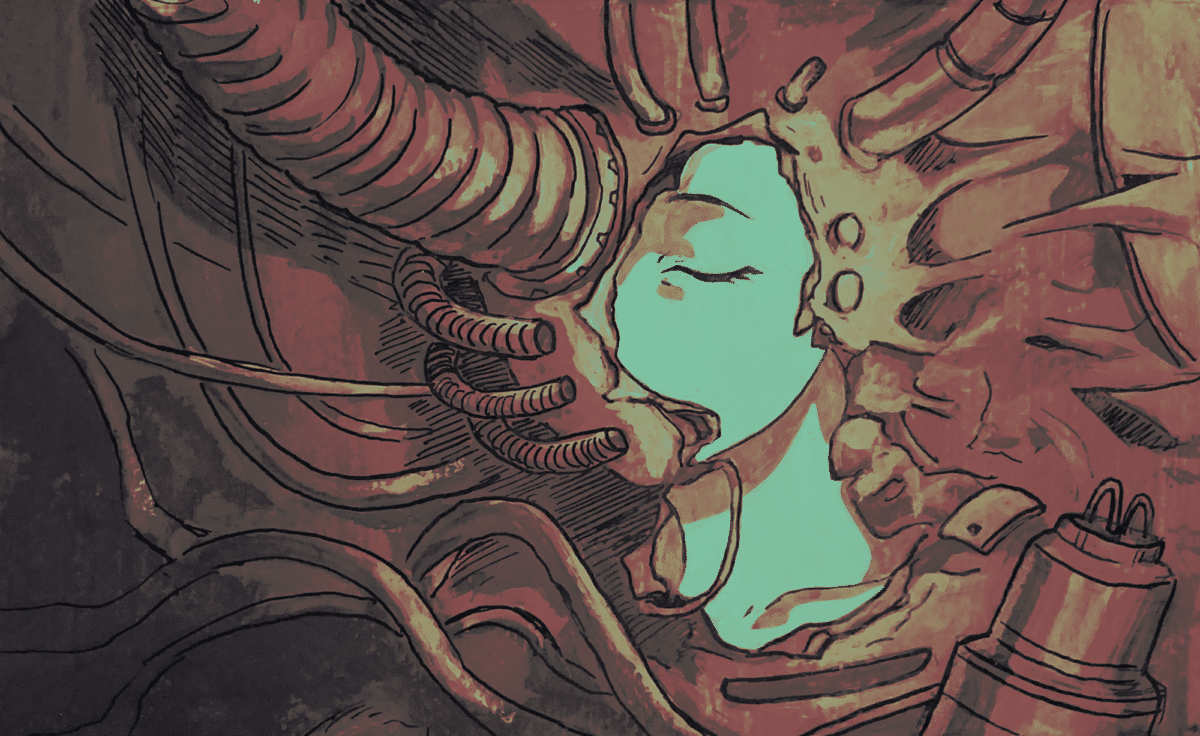
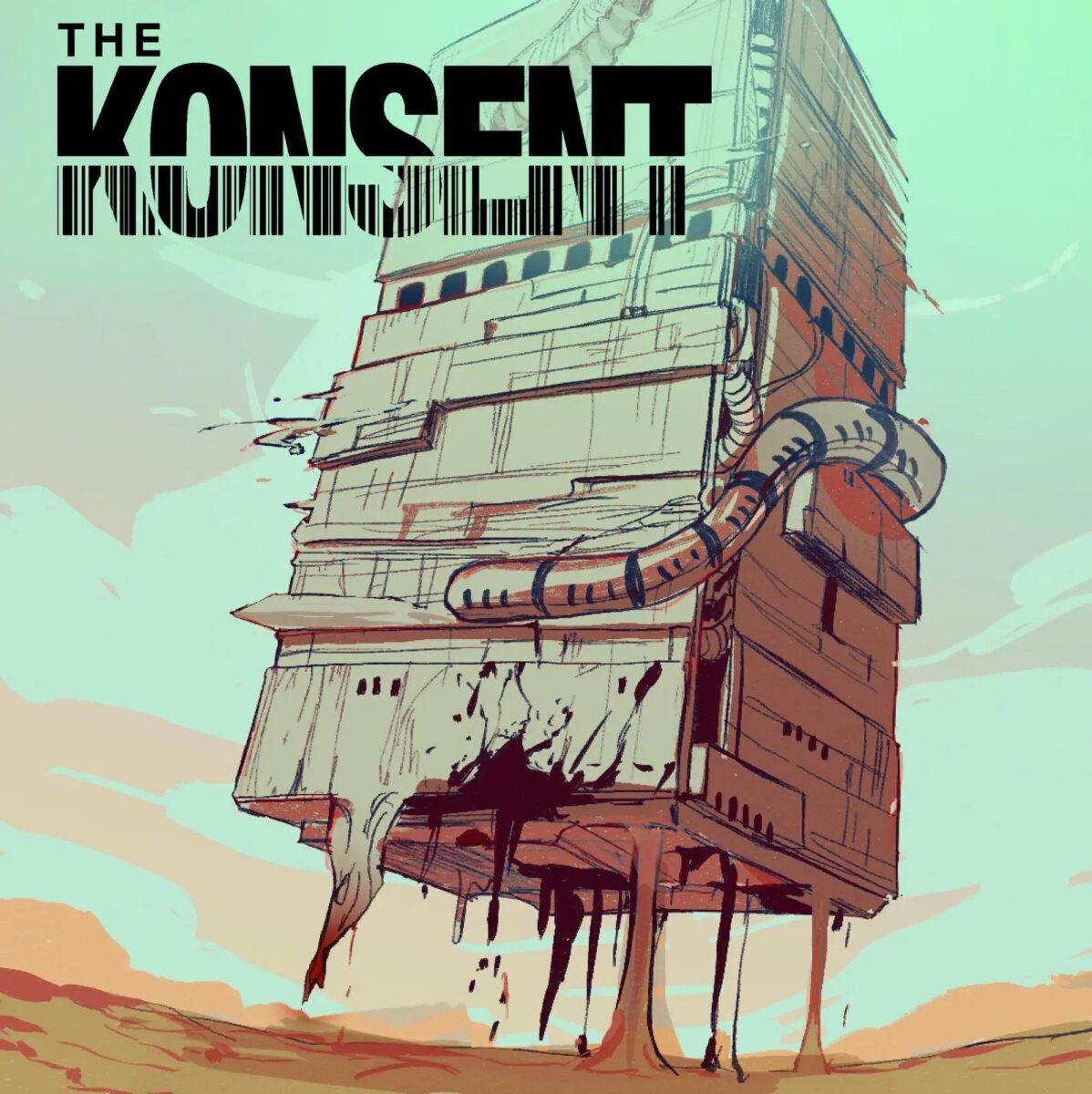
The record moves through boredom, fear, escape, confrontation and destruction, while Abstraum’s biomechanical visual universe gives that descent a physical form: human bodies tangled with machinery beneath a suffocating blue sky.
There is plenty here for anyone who loves records that demand more than a passive listen. The Konsent is atmospheric, conceptual, deliberately strange and built to reward full immersion, from its vinyl-minded sequencing to its handmade animation and guitarless instrumentation.
But beneath all that sonic and visual architecture is a far uglier question: how much of our freedom has to disappear before we actually notice?
For Metal Lair’s The Konsent interview, we spoke with Ales about the ideas behind the album, the music that shaped it, the decision to create a project with a predetermined ending, the biomechanical world of Abstraum’s artwork, and why the superhero this world may need is apparently early Robespierre with laser eyes.

Inside The Konsent: Ales Campanelli on Numbness, Resistance and a World Built to Collapse
Metal Lair: The Konsent focuses on the quiet erosion of resistance rather than obvious oppression. What was the first idea, image, or real-world observation that made you realize this was the subject you wanted to build an entire album around?
Ales: The main image for me would be one of routine. The state of extreme numbness we get from having our lives made gradually worse. Prices getting slowly higher, places getting smaller, work conditions making many people feel like meat more than humans.
We grow up having dreams, ideas, convictions… and all erode because we want to be safe. And the safety we find is in places where we are not valued. But because we’re scared, we obey.
If everyone stopped paying taxes until billionaires did, there would not be enough police to arrest everyone. But it’s not going to happen, because we value our small piece of slowly decaying comfort. We consent to a lesser life.
Metal Lair: K01 contains the line, “Keep us numb with your slow embrace.” The album seems to suggest that control becomes most powerful when people internalize it and start policing themselves. Do you think that’s where modern conformity becomes most dangerous?
Ales: I’d say that we are free to say whatever we want, because when we have the freedom to express ourselves in a consequence-free environment, what we do is fight. The internet offers unlimited possibilities for humanity to gather, but also provides safety. I can call Mike Tyson an idiot on any social network, but I guarantee that I would never do it to his face.
This lets us feel like warriors, content with ourselves. We feel we stand our ground, participate in making the world a better place, while we do strictly nothing. The false feeling of accomplishment is there so we don’t look for the true problems.
We’re provided with shows, music and games that cater to our need for conflict. They make us feel understood.
And numb.
Metal Lair: K03 invokes “Soma” alongside sickness, artificial realms and becoming “less awake.” Is that a deliberate Brave New World reference, and what does that song say about the ways people escape reality rather than confront it?
Ales: Nice eye! Obviously a lot of literature influenced the project. And a reference to Brave New World seemed to be quite fitting. But it would be ungrateful not to mention Orwell, even if it sounds cliché. He laid down some pretty serious rules. K. Dick, Ray Bradbury, and even Asimov were part of the journey.
It’s difficult to judge people because in most cases, life is an escape from reality. It has to be. We spend the vast majority of our waking time working in places where most don’t get respect or gratitude. Many don’t even really know if what they do serves a purpose. So we have TV, drugs, alcohol, soccer, video games… And those are things we look forward to.
We live for these tiny moments. They are the few moments of happiness we get before a sleepless night full of worries and another thankless day. Reality does no good for most people, I’m afraid.
Metal Lair: The album is divided into six pieces and designed to be heard as one continuous work. Are K01 through K06 meant to represent stages in the erosion of resistance, or are they different perspectives on the same condition?
Ales: The unspoken line in The KONSENT is what boils inside a person who gets gradually put in a worse state. Like a cubicle growing an inch smaller every year. Where would the limit be? How would a person react, and how would they express their disdain? How far do things need to go before one chooses to express oneself, and act? I mean really act. Fight. I’m an extremely weak person and I’d like to think that after a certain limit, even I can become aggressive.
The album follows that evolution. From boredom to fear, escape, confrontation and destruction.
Metal Lair: You deliberately removed guitar from The Konsent and built the record around bass, drums and keys. What made you want that restriction in the first place, and what did it open up creatively?
Ales: It came naturally, so I wouldn’t talk about a restriction. I’m a bass player first and foremost. So when I started putting some ideas together, they were played on the bass. And when a second track was needed, I kept playing it on the bass thinking I would play it on the guitar later, which I obviously didn’t do. Drop really liked the idea too so we said what the hell and went for it.
Metal Lair: The Konsent draws heavily from 1970s progressive rock and was conceived specifically around vinyl. Did writing for that format change the way you approached pacing, sequencing and the transition between Side A and Side B?
Ales: Almost everything tried for this album felt new. But I have and love a lot of these progressive albums that are tailor-made for vinyl, like Yes, Genesis, Uriah Heep, early Scorpions, some BÖC… I always felt they were the right length for a complete listen. Especially if the music is progressive.
The writing came pretty naturally at the beginning. The idea for The Konsent was there and I was just going with the flow. No pressure. But there have been many walls, and I came close to giving up at some point. Instead, I reworked everything calmly and the result got better. Trial and error, I guess. Since nobody was waiting on me, it took the time it needed.
Metal Lair: Abstraum’s visual world feels inseparable from the music. The album artwork and the handmade animated video both seem to show humanity being absorbed into, cultivated by, or sustained inside a larger machine, with the human body almost becoming part of the infrastructure itself.
There’s something very Matrix-like in that idea of machinery growing and feeding from human energy, but the imagery here feels more organic and disturbing than straightforward science fiction.
What exactly is happening in that visual world, and what does that relationship between the human body and the machine represent within the album’s larger concept?
This is a question better answered by Abstraum himself:
Abstraum: Body and machine mix, often referred as biomechanism, is both a complex and extremely common theme.
The original idea was apparently to lean towards a more psychedelic atmosphere but I just decided to go for a more hard-coded aesthetic instead. The only thing I can say is that with a theme as wide as this one, it was definitely better to stick to a limited amount of references.
The only difference is that I decided to try to give this world a suffocating blue sky instead of the usual dark ambiences.
Metal Lair: Benjamin D. M. Nominet and Adam Bunzl are credited with lyrical consulting. What did those collaborations bring to the writing, and were they mainly helping refine language, challenge ideas, or keep the concept coherent across the album?
Ales: I like to discuss lyrics with them. To confront ideas and see if they hold ground. They are close friends and have points of view that I value tremendously. If they say the lyrics are OK, then I can confidently use them.
They will look for flaws and point them out in the best manner possible. Makes me comfortable and relaxed. Which is saying a lot. I’m a team player, even if I work alone. I need to confront my ideas and love input.
Metal Lair: If you could drop one superhero into the world of this album to help humanity fight back against the machine, who are you sending in, and why?
Ales: Well Batman could exist and is the one we would need. He’s the billionaire helping the little guy. Well… in theory. He’s the only one that could actually happen, yet he clearly doesn’t.
People can reach a certain amount of wealth by being exceptional, and that’s fantastic. But after a certain point, you start making your money by being rich.
Excellence, like creativity, is a muscle. Once you stop working on it, you remember how good you were, but you stopped working. And that makes many extremely rich people entitled pricks. And that’s when we give them more power.
So if theoretically possible superheroes do not happen, I have a hard time imagining a fantasy one coming to save the world. Maybe early Robespierre with laser eyes?
Metal Lair: The Konsent was designed to end: one album, one visual universe, one Japanese tour, then nothing more. Why was it important for the project to have a predetermined death, and does that ending itself belong to the concept?
Ales: Absolutely. The album follows a path from extreme boredom to complete destruction. The end of the final track is the end of a system, right or wrong.
We don’t have to know which one because it’s irrelevant. Whoever wins will claim justice, declare great intentions, freedom, equality and whatnot. But they will have power, support their friends, go too far, and steadily become what they overcame. So a next album would have to be the exact same one to make sense.
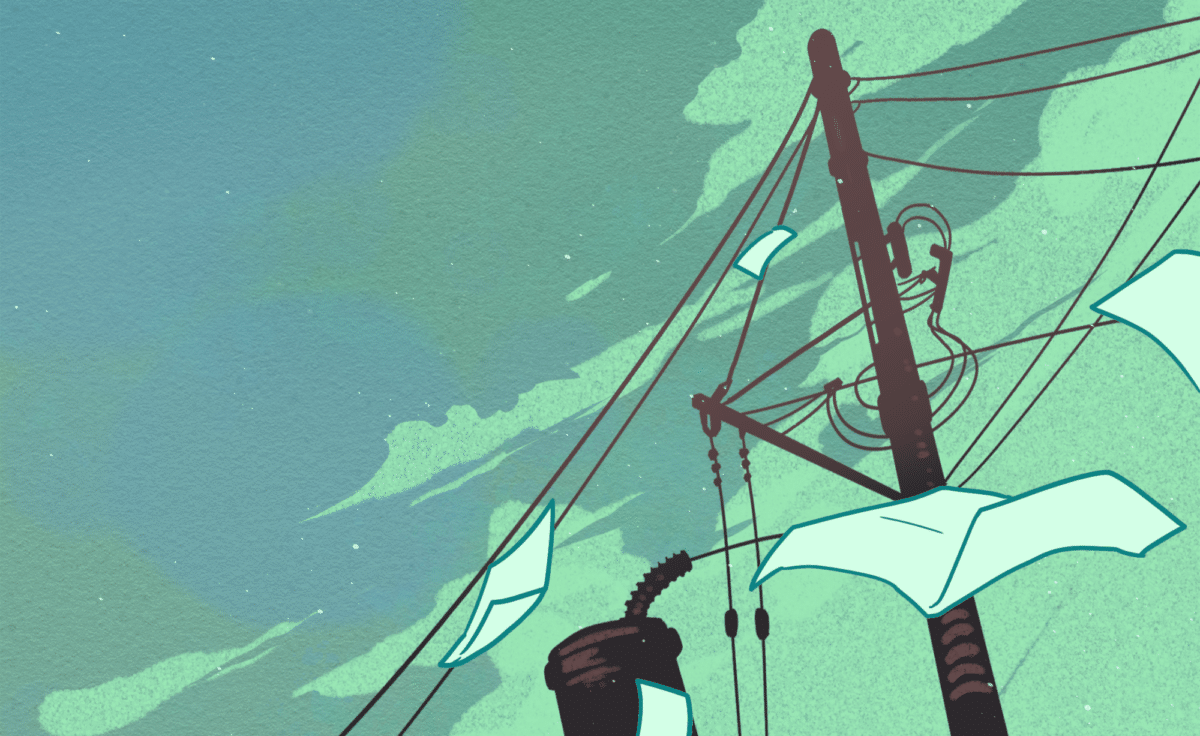
The Konsent ends where its concept says it must: with destruction, collapse and no promise that whatever comes next will be any better than what came before.
That final idea gives the record its bite. This is not a story about heroes arriving at the last second or systems correcting themselves. It is about repetition, power, fear, comfort and the uneasy possibility that people may recognize the machine only after they have already become part of it.
For Metal Lair’s The Konsent interview with Ales makes one thing clear: this is a record built to be entered, not skimmed. The music, the visual world and the philosophy all feed the same unsettling question, and the answer is left exactly where it belongs.
With the listener.
THE KONSENT — TRACKLIST
SIDE A
K01
K02
K03
SIDE B
K04
K05
K06
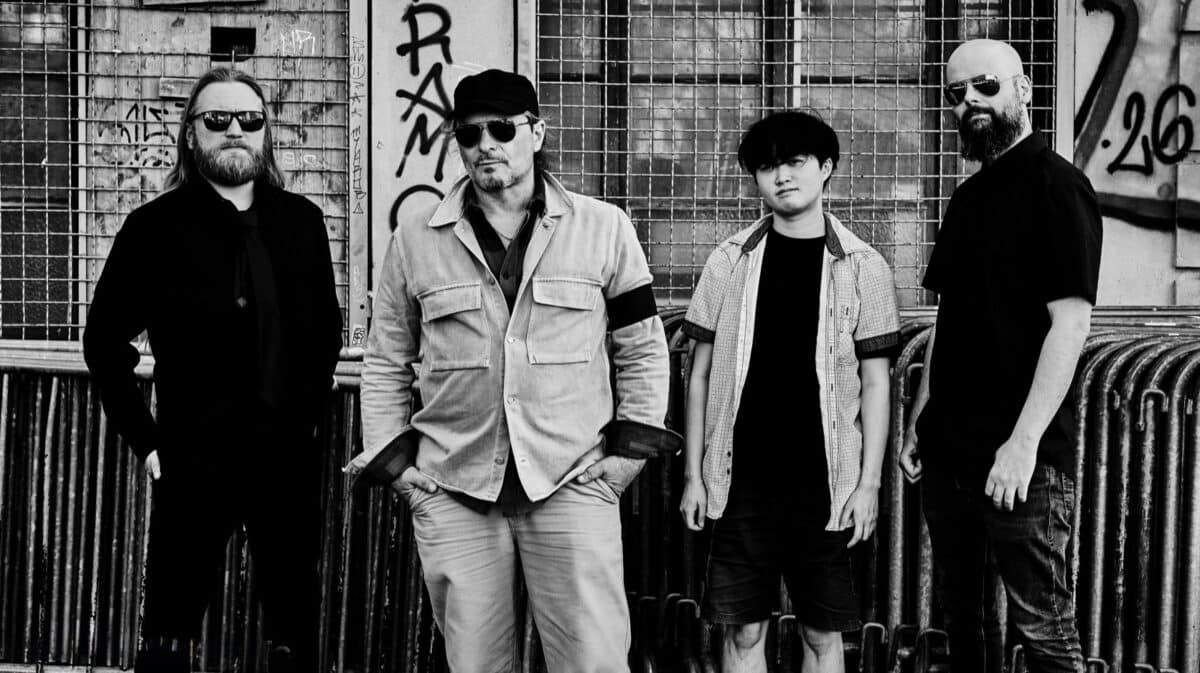
Lineup:
Ales: bass and keys
Abstraum: visuals and keys
Steve Fari: vocals
Mathieu Martinazzo: drums
THE KONSENT — JAPAN TOUR 2026
December 4 — LIVE FREAK, Shinjuku December 5 — SUNRISE, Ryogoku December
6 — SILVER ELEPHANT, Kichijoji December 8 — Yogibo HOLY MOUNTAIN, Osaka
December 9 — GATTACA, Kyoto December 12 — BABEL, Tachikawa December 13 —
SOUGEN, Shizuoka
THE KONSENT ONLINE:
About the Author
Chris Norris is the voice behind Metal Lair’s global metal coverage, World Metal Weekly. From funeral doom in the north to thrash born in the streets. Known for spotlighting bands before algorithms notice them and for writing with the precision of a scalpel… or a well-sharpened guitar pick. Vinyl collector. Night-shift journalist. Believes heavy music has no borders.
Read More From This Author:
GÅTE Sigil Interview: Folklore, Magic, Eurovision and a New Chapter
Stoned Jesus Songs to Moon Interview: Igor Sydorenko on Darkness, Descent and the Trilogy
Fallen Letters Interview: Finding Beauty in A Familiar Absence
Rotting Christ Interview: Sakis Tolis on 35 Years of Greek Metal, History and Legacy
Green Carnation Part III: The Messiah Complex Interview
No algorithms. No fluff. No watered-down corporate metal coverage.
Subscribe to Metal Lair and get weekly underground features, Seven Deadly Songs, Deep Cuts, interviews, and original metal journalism sent directly to your inbox.
Join the patrons of Metal Lair
MetalLair.net is a metal zine muttering to itself about seo and blastbeats at 3 AM powered by caffeine, riffs, a severe lack of sleep, and a dog wondering why the human is still awake.
Sometimes it’s Kevin passing out mid Seven Deadly Songs.
Sometimes it’s digging up forgotten records no one else is talking about.
Always, it’s built for people who actually live this music.
If that sounds like you, you’re already one of us.
Supporting Metal Lair means keeping it independent, loud, and real with no corporate filters, no watered-down takes. If you want to help keep it alive…
Become a patron of Metal Lair.
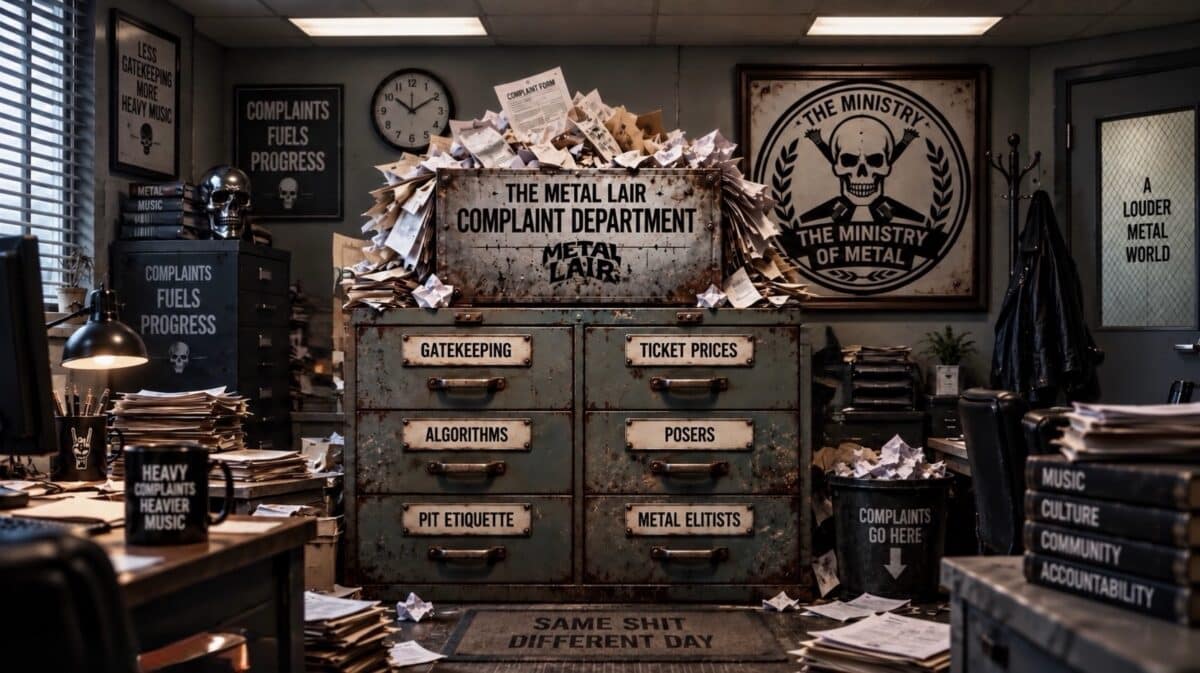
FILE A COMPLAINT WITH THE METAL LAIR COMPLAINT DEPARTMENT
Have a metal-related grievance that needs official investigation?
Bad concert etiquette? Venue bullshit? Festival fuckery? A trend in metal that needs to die? An industry annoyance? Something that’s been pissing you off since 1987? Have a complaint against Metal Lair?
FILE YOUR COMPLAINT
File it with the Complaint Department. Remmy may investigate your grievance in a future installment.
Selected grievances may be investigated, mocked, dissected or otherwise subjected to the questionable judgment of Remmy Chillmister in a future edition of The Metal Lair Complaint Department.
Submission does not guarantee investigation. Remmy has a substantial backlog of things that piss him off.
1 thought on “The Konsent Interview: Ales Campanelli on Control, Conformity and the End of the System”
Comments are closed.