
Written By Metal Lair Mick
Sybreed interview: Drop and Benjamin Nominet revisit Antares, The Pulse of Awakening, and God Is an Automaton as they reflect on the band’s legacy, vinyl reissues, and the future.
In a world overrun by digital noise and algorithm driven playlists, Sybreed’s timeless fusion of cybernetic groove and raw emotional grit still slices through the static. With vinyl reissues of their iconic trilogy, Antares, The Pulse of Awakening, and God Is an Automaton finally in fans’ hands, we sat down with guitarist Drop and vocalist Benjamin Nominet to crack open the cryogenic vaults of their discography.
From Myspace memories and touring with In Flames to philosophical reflections on AI and musical prophecy, this interview dives deep into the creative processes, personal struggles, and sonic legacy of one of the most forward thinking bands in industrial metal. No fluff, no filters, just two artists reconnecting with their past to reshape the future. Consider this your download into the Sybreed mainframe.
Sybreed Interview
Mick: What are your favourite nostalgic memories from the time of Antares (released 2007), The
Pulse Of Awakening (released 2009), up until God Is An Automaton (released 2012)?
Drop: Antares was kind of the beginning of serious things for Sybreed. The feedback from the
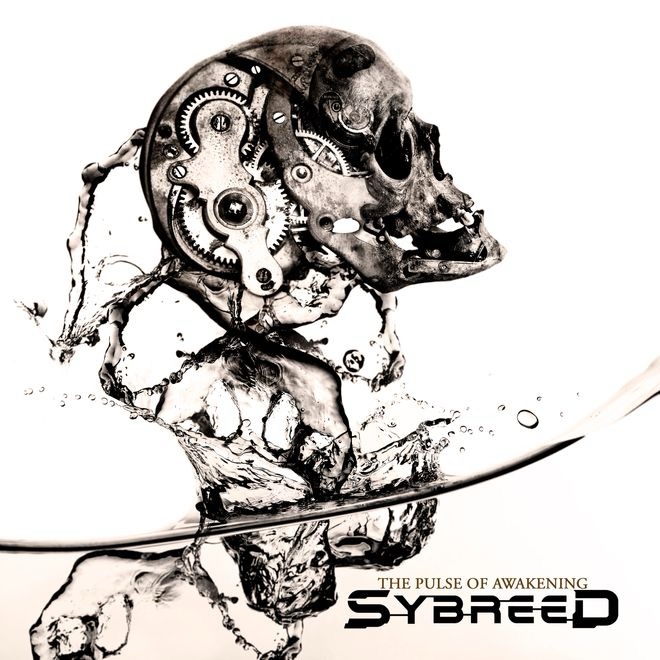
press, the growing number of fans, at the time we only had Myspace and our official forum, it was easier to respond to all the messages we received. I remember the promo session in Paris for Antares: Listenable Records had rented a bar for us, and journalists came one after the other from morning to night, each time sharing a drink, you can imagine the atmosphere by the end of the day, hahaha. The tour opening for Samael in Europe in 2008 is also a great memory from that period. The venues were pretty packed, and we played every night in front of new potential fans as well as our already solid fanbase. As for The Pulse of Awakening, my best memory is the US tour with Threat Signal and The
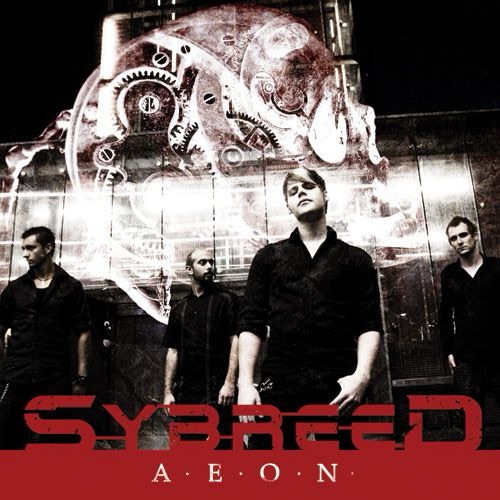
Agonist, which took place just before the album’s release. We were already playing A.E.O.N. and Human Black Box (we had released the A.E.O.N. EP specifically for that tour). Those are
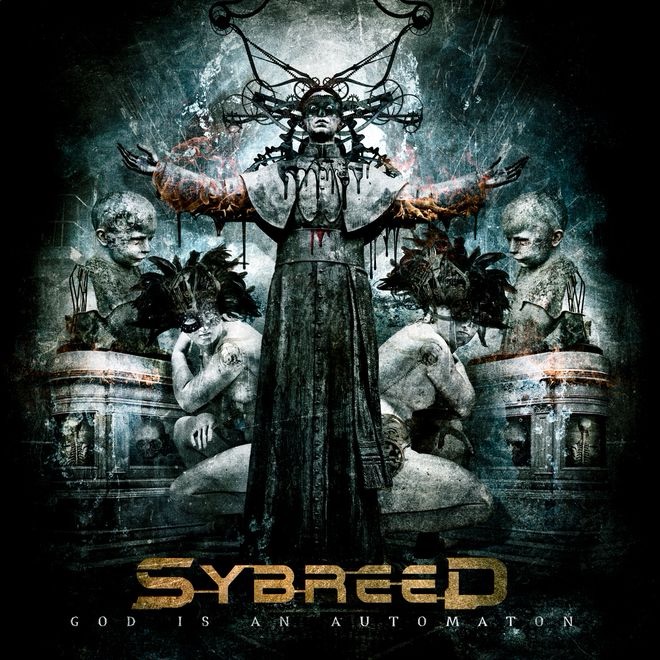
unforgettable memories. Not to mention the European tour that followed in 2010 with Threat Signal again and Raunchy, such amazing moments and friendships that still last to this day. The tour on direct support of In Flames was one of the pinnacle moments for Sybreed, the conditions were nothing short of a dream. Unfortunately, I have fewer good memories of God Is An Automaton. That period marked the beginning of our decline, before we made the decision to stop, so the God Is An Automaton era doesn’t really hold a special place in my heart. Even the album itself suffered, its composition was a bit rushed in my opinion, and you can feel that, especially in the first half of the album. I’m actually quite happy with the second half, though. However, the three weeks I spent in Los Angeles doing arrangements and mixing with Rhys Fulber are probably my best memory of God Is An Automaton, along with the Australian tour that followed in early 2012. Headlining shows on the other side of the world, in venues filled with fans who knew every lyric by heart, that’s memories we’ll always cherish.
Mick: Which are your favourite tracks from each album?
Drop: That’s a really tough question, and the answers can change depending on when you ask. I’d say for Antares, my favorite track is Isolate: the tempo, the one-string riffs, the looping
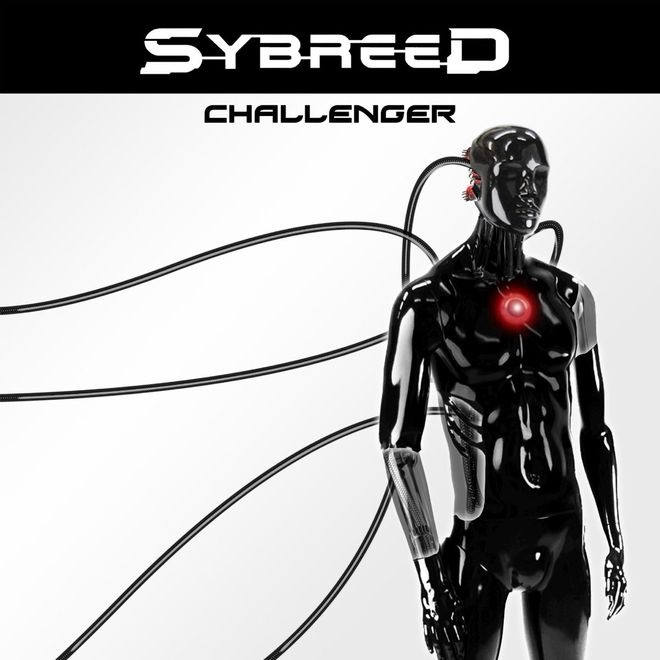
arpeggio on top. Those bell sounds, the church-like voices, and that super emotional middle part… I’ve always had a soft spot for that song. It was also an absolute joy to play live. On The Pulse of Awakening, I’ve always loved In The Cold Light. That UFO of a track in the middle of everything. I love its dreamy, vaporous vibe, the robotic yet emotional vocal lines, and the epic ending. Also, Rhys Fulber made some beautiful new arrangements on that one. We often talked about opening shows with that track, but it never happened. In fact, we never even played it live. As for God Is An Automaton, it’s harder to say, as I mentioned earlier, I’m not totally satisfied with that album. I listened to it again a few years ago and had partly forgotten about songs like A Radiant Daybreak. It felt like I was hearing a Sybreed song with almost neutral ears, and I actually had a great time rediscovering it. Otherwise, I’d say Challenger, though like many people I prefer its demo version that was released on the Challenger EP.
Ben: I’ts very straightforward for me. Permafrost on Antares, From Zero to Nothing on The Pulse of Awakening and Into the Blackest Light on God is an Automaton.
Mick: What emotional or artistic space were you in when you revisited Antares, Pulse Of Awakening, and God Is An Automaton for the reissues? Did it feel like cracking open a cryogenically frozen memory bank?
Drop: Actually, we’ve been planning to reissue these albums on vinyl and digipak for quite a while. We had been discussing it with Listenable Records, who were just waiting for an available
slot in their schedule. All three reissues have been ready since 2022, that’s also the year we got together in the studio to record our cover of Tears For Fears’ Shout. That felt amazing to record together again! At the time, we also talked about whether we should include all the old demos on the reissues. In the end, we decided to add only the 2010 demo of Hardboiled Venus to God Is An Automaton, since it’s the only track that has never been released.
Ben: In my case, it was a process of spiritual reconnection. I had slightly lost touch with myself at some point in my life, and coming back to Sybreed was a moment of rediscovery and
reconciliation with parts of my personality that I had buried deep inside me. It was also an opportunity to reconnect with my brothers in arms, Drop, Ales and Kevin, and finally to heal old wounds, as leaving Sybreed had been nothing short of a traumatic event for me personally. From an artistic point of view, it’s like coming home after a long absence.
Mick: In a digital era drowning in singles and algorithm driven playlists, what made you want to bring these full albums back to the foreground and on vinyl no less?
Drop: Yeah, streaming and digital have taken over most of the market (unfortunately). But on our end, we’ve always had a strong preference for physical formats. Personally, I still buy CDs and vinyl of the albums I enjoy. Even though I listen music on Spotify… All the Sybreed albums had been sold out for a long time, and we had never released anything on vinyl before, so it felt like the right time to do it. Plus, there’s been consistent demand over the years, so now everyone’s happy. As for the digital side, we didn’t re-upload the three albums to streaming platforms. But a lot of people have been asking for the bonus tracks to be available digitally too. We’re planning to fix that later this year with a digital EP that will include all the missing bonus tracks.
Ben: It is precisely because music is becoming a somewhat laughable mess of digital consumerism and this is not only the responsibility of the music business, but also of the audience and us, the musicians that these physical reissues are essential. Sybreed is a
cyberpunk-inspired band, and as such, it will always resist the alienation and mediocrity that prevail. In essence, it’s a way of saying, ‘Here we are, here we remain!’
Mick: If you could Frankenstein a new Sybreed album by fusing two or three tracks from each of the reissues, which songs would you stitch together and why?
Ben: That seems impossible to me. Every Sybreed album is unique, with its own color and tension, created at a specific moment by four people. I think a ‘Franken-breed’ album would be unpleasant to listen to and would quickly fall apart: the result would certainly be dreadful, almost on a lovecraftian scale. I would rather avoid that mental exercise.
Mick: Sybreed has always explored the tension between humanity and machine. How has your view of that dichotomy evolved since writing God Is An Automaton in 2012, especially with today’s AI dominated discourse?
Ben: In the context of Sybreed, the concept of ‘Machine’ should be understood in the poststructuralist sense of the term. At the time, I was not referring to the machine as an artificial device, but as a superstructure that feeds on our existence and which is composed of both machine-devices and machine-humans, which act as internal organs of some sort. From this point of view, little has changed in my opinion, despite hefty claims of social progress: for example, AI and algorithms are, at best, sleight of hand aimed at atomizing and assimilating even more individuals and forcing them to integrate into the superstructure so that it can continue to perpetuate itself. Worse still, we are now becoming both prisoners and wardens, thanks to this inescapable panopticon that is social media.
Mick: Antares feels like such a breakthrough record for you guys. Going in, what was your approach to writing such an incredible record?”
Drop: We wrote Antares over an extended period of time and across several different locations. In fact, half of Orbital was composed even before most of the tracks on Slave Design. But at the time, it felt so different in tone and direction that we decided to hold it back for the next album. Parts of Ethernity were also written well before Slave Design. But unlike that album, where we imposed a few musical constraints on ourselves, the writing process for Antares was completely
open, no boundaries, no rules. It was more synth-oriented for sure, also probably the first time I started writing over a synth part, Ego Bypass Generator is a good example. The main riff is just a jam on top of the synth. The first songs we fully completed were Emma-0, Permafrost, and Technocracy they really set the tone for everything that followed. Technocracy already existed in a different form during the Rain era, in 2003, it’s the song Contamination on the Bioactive EP.
Mick: I used to see a different album art on Spotify that had a ‘steal this record’ stamp. What was that about?
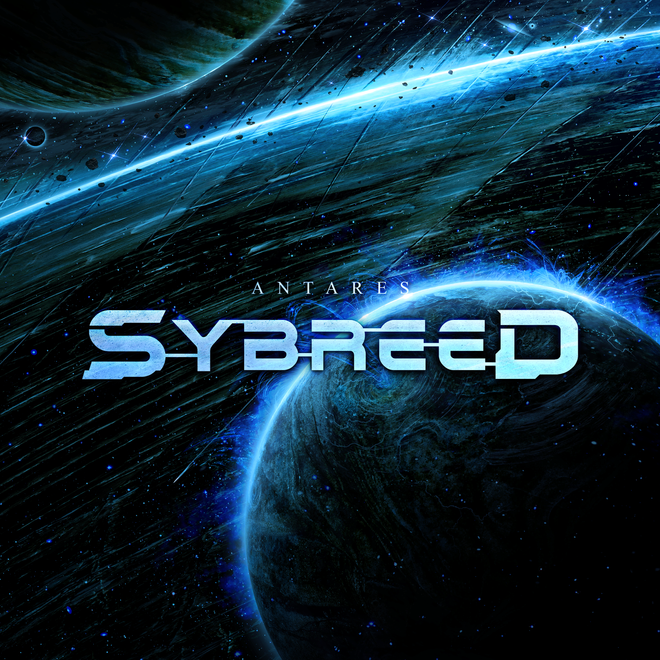
Drop: For some time, Spotify had a picture of the promo of Antares, we’ve never knew why! But yeah, in the end, we wanted to create new cover art because the original one was based on a photo of a real person, something we didn’t know at the time. Fun fact: Antares is actually a red giant star, so from the beginning, we had envisioned a red themed artwork. When the blue cover arrived in the mail, I was right in the middle of the mixing process, and I had been shaping the mix with red tones in mind. Seeing that blue artwork completely threw me off, and I ended up redoing the entire mix to match its cooler palette. The only track that survived entirely from the original ‘red’ mixing sessions was Ethernity.
Mick: Let’s say you could perform one Sybreed track inside a virtual reality nightclub in the year 2084. Which song are you choosing, what does the stage look like, and what are the fans wearing?
Drop: Doomsday Party, obviously! We always felt that track deserved a proper video clip, but we never had the budget to bring our vision to life. The idea was an end-of-the-world rave, a chaotic celebration with a crowd completely out of their minds, lost in the moment inside a dystopian nightclub. The stage? Definitely steampunk-inspired, with twisted metal structures, flickering lights, and industrial machinery pulsing to the beat. I imagine the crowd dressed in a fusion of industrial, cyberpunk, and gothic styles, torn fabrics, glowing accessories, post-apocalyptic fashion. Basically, it would look like the final party before the world collapses… and everyone’s
dancing like there’s no tomorrow. With us playing in the middle of this chaos. Also, I would celebrate my 100th birthday!
Ben: I agree with the choice of the Doomsday Party. However, I don’t think the club would be virtual, because everyone would hate artificial stuff by 2084. I would lean more towards Diesel
Punk: It would be in an old steel mill, and the stage and lights would be powered by gasoline generators – why worry about the environment when it already went completely haywire, it would also be unbearably hot, because some genius would have decided to restart the blast furnaces. But after years of being confined in cozy virtual simulations, everyone would enjoy a good sweat and the occasional blackout. The fans would be … just like us, an unlikely mix of styles, philosophies and tastes that have miraculously found a common idea: 1980’s New Wave and 1990’s Metal were lit.
Mick: If each of these albums: Antares, Pulse of Awakening, and God Is an Automaton were a sentient AI, how would they differ in personality? (Who would be the benevolent overlord and who’s going full Skynet?)
Ben: None would be benevolent, far from it! But to go from the most benign to the most formidable, let’s say that God Is an Automaton would be the Philosopher AI with godlike powers, Pulse of Awakening a Daimon-type AI, which tricks and plagues humankind out of boredom or disgust, and Antares would be the neutron star-powered AI whose sole purpose is to endlessly
compute stuff, like the value of Pi and whatnot. They all would obliterate Skynet with a flick of their fingers, though.
Centrifuges asks: What was Benjamin’s headspace when writing the lyrics behind Antares? The lyrical themes of mental decline and suicidality throughout the album really helped me through some tough times, so I want to know more about how that process was and his struggles, if he feels comfortable sharing?
Ben: It’s a very personal question, but I’m happy to answer it because it provides context for Antares. I would say that I was in a rather peculiar state of mind: nothing really made sense, I was somewhat out of control and out of my mind. There was also a lot of anger and frustration, because I was trying every day to hide behind a veneer of acceptable behaviors. I was struggling to live with my own ambivalence and contradictions at the time. As a result, the lyrics, vocal lines and performance convey coldness, fury and a need to subjugate my own voice to my will, as if I wanted to throw that hidden part of myself in the face of the world.
Mick: You’ve covered Tears For Fears and Killing Joke. Be honest… how close were we to getting a Depeche Mode or Pet Shop Boys cover? Are we on the edge of a full on neon noir EP?
Drop: Depeche Mode is actually in my top 3 favorite bands of all time, which is exactly why I never felt comfortable revisiting their material. Their music is sacred to me, and honestly, Enjoy
the Silence already got a killer reinterpretation by Linkin Park. They absolutely nailed it. So instead of going down the obvious route, we wanted to explore different directions and dig into other iconic bands. Our cover of Shout by Tears For Fears was actually something we played live as far back as 2005/2006, it just took until 2022 for us to finally record it properly, and 2025 to release it. As for a full new wave inspired EP… never say never.
Ben: To round out this idea, the influence of New Wave will certainly be very present in all new Sybreed material in terms of vocals. As I have gotten older, I’ve returned to my influences from the 80s and a certain way of singing and writing melodic lines.
Mick: What books/tv/news influenced your themes and lyrical ideas for each album such as any other references in their lyrics or album titles to movies, tv series, novels or anime, like
references to an Ergo Proxy anime?
Ben: It’s obvious that Ergo Proxy was a major influence and had a strong impact on one album in particular. I’ll let you guess which one, but otherwise, my influences have been, and still are, certain specific strands of French philosophy from the second half of the 20th century, and authors associated with the Cyberpunk subgenre to be understood in its original form, not the cheapen version of today. So, it ranges from Philip K Dick to William Gibson, with a detour via more offbeat writers like Maurice G Dantec. Films such as Blade Runner and The Matrix had a
strong influence too, although I regret the ham-fisted reference to the latter, but I was young and therefore not always subtle myself.
Mick: What are your favourite venues you toured from 2009 – 2012?
Drop: Honestly, the best conditions we ever had were during our direct support slot for In Flames in 2010, as I mentioned earlier, it was incredible. We were playing large venues every night, and the setup was top-tier. In Flames were touring with their own FOH and monitor consoles, so everything was streamlined and incredibly professional. We’d show up around 3 PM, and their soundcheck was already wrapped up. We had all the time we needed, no stress, no rush. We’d just leave our gear on stage after soundcheck and wait. Then, 30 minutes after doors opened, we’d hit the stage in front of a packed crowd every single night. It was unreal. That tour remains one of the absolute highlights for me.
Mick: Do you ever listen to your own music as leisure, so not while you are working on tracks? Or does it feel weird to enjoy your own work?
Drop: Once an album is finished, I usually don’t listen to it at all. I’ve heard every single detail on repeat during writing, arranging, recording, re-arranging, mixing, basically every step of the process. But that doesn’t mean we don’t enjoy our music. We’re incredibly lucky to create songs exactly the way we want, music we want to hear, so naturally, we like what we do. It’s actually a pleasure to listen to new demos, sometimes on repeat, just for fun. Honestly, anyone who says they don’t enjoy their own music is either not telling the truth or is a session musician who didn’t have creative control, haha.
Mick: During production of the 3 albums, what Gear and software did you use to record each of the 3 albums?
Drop: I’ve always composed using Logic Pro, it was the first DAW I really got into. In fact, both Slave Design and Antares were recorded with it. Then, from The Pulse of Awakening, we began tracking everything in Pro Tools, although the writing still happens in Logic. I find Pro Tools much more user- friendly for recording, editing and mixing, while Logic has far better MIDI handling, and I’m simply much faster when composing with it. As for the guitar tones: – Antares: Amplitube 1 (or 2) – The Pulse of Awakening: Line 6 Vetta II – God Is An Automaton: Bogner Uberschall Regarding synths, at this point there are just too many to list. But for the early Sybreed, I used a lot of: – Spectrasonics Atmosphere (which later evolved into Omnisphere) – Native Instruments Absynth (I used versions 1 through 3 on these records, they’re at number 5 now) The majority of synth sounds on the early Sybreed albums come from those two. I also remember using Albino 3, D-Cota, and Gladiator quite a lot. For God Is An Automaton, the approach was a bit different. I already had the synth ideas and knew exactly where I wanted them, but we did all the programming and sound design using Rhys Fulber’s gear in Los Angeles, a lot of Clavia Nord Wave and various analog synths.
Ben: On my end, since I have created the symphonic arrangements on The Pulse of Awakening and God is an Automaton, I can list a couple of software too. First, I am a Cubase user, and I have been using the pro version of this DAW since 2008/2009. I mainly used EastWest virtual instruments to compose the orchestral parts on the third album, but I added Spitfire Audio plugins on God is an Automaton. To this day, I still use these two specific brands because they offer a sufficiently organic sound without sounding like cheap Hollywood trailer music, and they require solid arranging skills, which is one of my favorite things to do in music.
Drop: About the gear used for recording: Antares drums were recorded at Taurus Studio, We’ve recorded the guitars, bass and vocals with a Motu 828 and an SPL Channel One as vocal preamp. The Pulse Of Awakening drums and vocals were recorded at SDF Studio, the rest has been done with the same Motu 828.
God Is A Automaton as been entirely recorded at my studio, Downtone Studio.
Mick: Drop, What string gauges, tuning, Pickups, and Pick size did you use for the 3 albums??
Drop: I use D’Addario strings with the following gauge: 17–26–36–46–56–68. I usually get a standard 13–56 set and add a separate 68 for the low string. I just toss the 13 and start from the 17. My tuning is Drop A#. As for pickups, to be honest, I don’t pay much attention to that. I’ve always believed that tone comes mostly from your fingers and wrist. One of my guitars has old DiMarzio pickups, another one has Seymour Duncan, I tend to stick with whatever comes stock with my Ibanez Guitars. For picks, it’s always 2mm. I have custom picks made by InTuneGP, but they’re based on the Dunlop Gator Grip 2mm, which I’ve used forever.
Mick: And more recently, what strings do you like currently, do you use .70 for the low string?
And do your guitars have bolt on or thru necks?
Drop: Now we’re getting into territory I barely speak, haha. As I mentioned before, I don’t really pay much attention to those kinds of details. I’ve always used Ibanez guitars, mostly Prestige models, and I’m still sticking with my trusty .68 for the low string. Most of my guitars have Floyd Rose bridges, but I always block them. Being the only guitar player live with Sybreed, if you break a string on an unblocked Floyd, your whole tuning goes out and you basically have to stop and swap guitars (or fix the string mid-set). By blocking the trem, I was able to finish the song with decent tuning, even with a broken string. Of course, the goal is not to break any strings in the first place!
Mick: Were there any tracks where the riff/rhythm took a LOT of practice to get right or is still really difficult to play? Or did every riff come out naturally the first time and then you could just repeat them ad nauseam?
Drop: Honestly, not really. Most riffs come naturally, usually from jamming over a synth idea or a rough drumbeat, or sometimes just a riff looping in my head. I’ve never aimed to write something overly technical or difficult; it has to be groovy, effective, and above all, emotional. Some longer riffs are built in layers. For example, the verse riff in Permafrost, the middle section of AEON, or the chorus in Electronegative were all composed step by step. I’d loop a short segment with the corresponding synth note behind it and find a riff that fits on top, then I do the same for the next part, and so on. Once the whole riff is assembled, I sometimes need to refine the transitions to make everything flow naturally. Those kinds of riffs usually need to be heard a few times before they really stick, both in the mind and under the fingers. I do not sit down and practice riffs. I
prefer to play them a little, let them sink into my subconscious, and come back the next day. It’s often after a night of sleep that everything just clicks, and suddenly the riff feels natural and easy to play.
Mick: Do you write/notate your music? Or do you just record demos and go back and listen to those? (A super-fan would kill for some good tabs…)
Drop: I’ve never written anything down for Sybreed, no tabs, no notation. When it’s time to record the final guitars, I almost always find myself listening to the demo thinking, “Wait… what exactly did I play here?” I’ll usually just loop the demo, play it a few times until it clicks again, then hit record. I also tend to follow the drums closely, even the fills, so the riff isn’t really in its final form until I’m tracking it over the full drum arrangement. Sometimes I think playing the songs live with the full band beforehand might have made some riffs feel more natural or fluid. But we’ve always prioritized efficiency. We like when things come together quickly, without overthinking. As for a tab book, I wouldn’t be able to do that myself. But if someone with solid transcription skills is up for
the challenge, I could absolutely play them the riffs and they could write everything down.
Mick: Do you have plans to release the re-issues on iTunes?
Drop: No, we won’t be re-uploading the albums to iTunes or other platforms, simply because the audio is the same as the original releases. Replacing them would mean taking down the existing versions and losing all the plays they’ve accumulated over the years. That said, we’ll make it up to l those who want the bonus tracks digitally, we’re planning to release a bonus-track-only digital EP later this year.
Mick: Regarding the Pulse of Awakening (writing/inspiration), does it ever feel like as artists and musicians, we’re unconsciously predicting the future, given the current social political climate, particularly with death wave’s presentation and thematic delivery?
Ben: I don’t know if we unconsciously predict future events. I tend to link this more to the concept of synchronicity, dear to C. Jung. To be an artist, you must be at least a little sensitive to your environment and the zeitgeist. It’s difficult to create a real work of art while sticking your head in the sand: if you do so, you can only come up with a product to be sold. In any case, the mind loves to make causal connections: humans are born planners. Or amateur prophets. But I must admit that I am concerned by some of the extrapolations my unconscious mind made while writing The Pulse of Awakening. What seemed to be the time a rather far-fetched dystopia is now becoming our everyday reality. It sometimes gives me pause, but on the other hand I can now confine myself to describing the world rather than imagining it and live in the “now” instead of a realm of possibilities.
Mick: How did you guys find Dirk Verbeuren and get him to play on Antares?
Drop: We were opening for Scarve in 2001 with my former band, Rain, during a French tour, that’s when I first met Dirk. We became friends and kept in touch over the years. I’ve followed his career closely ever since, and what a journey! He’s truly one of the kindest, most down-to-earth people I know, and an absolutely phenomenal musician, hands down one of the best drummers out there. When Alex left the band, we had to find someone who could match his level, and that’s no easy task. Drummers with that kind of skill and precision aren’t easy to come by. So we turned to Dirk to record Antares while we searched for a permanent replacement. He came to Geneva and tracked the entire album in just three days at Taurus Studio, it was honestly incredible to witness.
Mick: From Zero to Nothing has a 10-minute silence, why?
Ben: Actually, it’s not silence, if you listen carefully with headphones, you’ll notice a binaural frequency laced in a white noise. If you’re a bit sensitive to this, it can alter your brain waves and slightly fuck you up. The Pulse of Awakening has a rather malicious agenda, and this ending is just the final prank, the proverbial icing on the cake.
Mick: What Inspired the song Emma-0? Is it our dependence on things like technology and/or drugs?
Ben: Not at all, it’s all about a messed-up, dysfunctional romantic relationship. That may sound
quite mundane, but such things are an equally valid source of inspiration, as personal can be as alienating as anything else.
Thank you guys for taking your time to chat with Metal Lair today!

Here is a bit more about Sybreed.
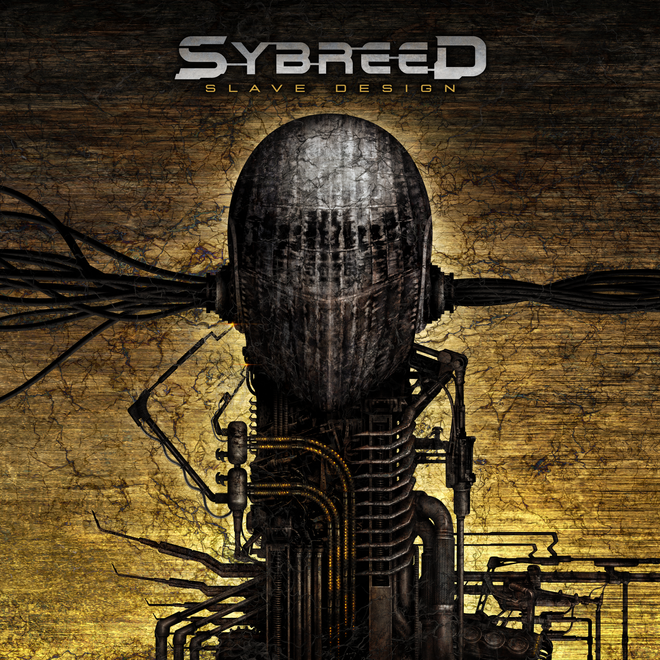
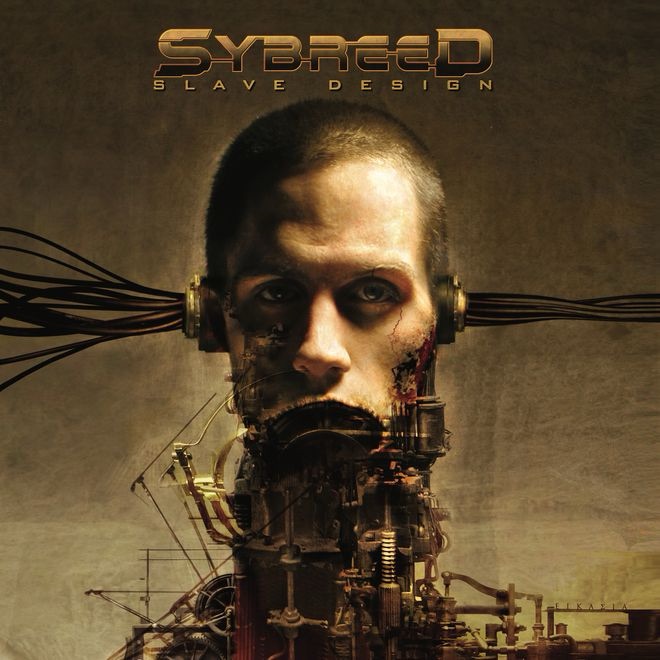
On October 4th 2024, Sybreed also re-released their seminal debut “Slave Design” on its 20th anniversary.
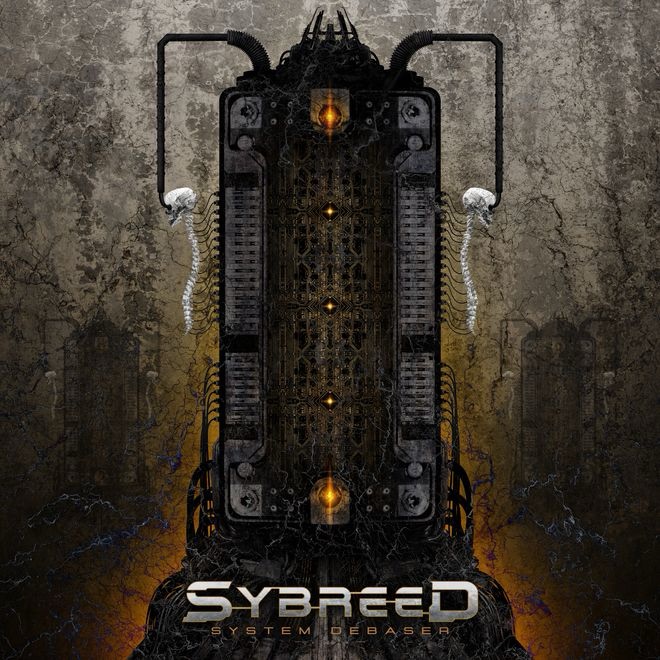
The special edition of Slave Design has been remastered by Jens Bogren at Fascination Street Studio. It features two bonus tracks : a re-recording of “Bioactive” and the previously unreleased “System Debaser”, which is among the earliest tracks Sybreed composed in 2003. It was initially shelved during the Slave Design pre-production and remained a demo. Finally recorded in 2023, this version reveals the track’s true brilliance, encapsulating Sybreed’s signature style.
Sybreed envisions a bleak future come true, the integrity of the individual is threatened by the unquenchable thirst for control by those in power. Songs of Slave Design have been featured on the Texas Chainsaw Massacre and Hellboy Sword of Storms soundtracks.
Their music features powerful and complex guitar riffs, aggressive yet tasteful post-punk melodic vocals. They’re known for their excellent atmospheric synths, and thought-provoking lyrics that explore themes of dystopian futures, complexities of human behaviour such as war, greed, manipulation, and overcoming such issues.
Despite the band disbanding in September 2013, Sybreed’s music continues to resonate with a dedicated fan base, solidifying their status as a legendary band in the industrial metal scene. The good news however is that the band has recently announced that they are back writing demos but have no plans to tour.
Their 4 albums are all groundbreaking and ahead of their time in both their sound and messaging. “Slave Design” in 2004, “Antares” in 2007, “The Pulse of Awakening” in 2009, and “God Is An Automaton” in 2012.
Sybreed is a band that metal lair rate as one of the greats. Whether you’re a die-hard metalhead or new to the scene, Sybreed’ is a band that is sure to leave you a lasting good impression.
Order Sybreed’s Album Reissues On Vinyl Here
Continue Reading
- Enter Cybrid: A Look into Sybreed’s Evolution
- 20 Years of Sybreed
- Sybreed Release Unreleased Bonus Tracks
- The Synthetic Ceiling: Why AI Music Is Hitting a Hard Limit
- Metal Should Never Be Safe: Why I Still Choose Chaos
SYBREED ONLINE:
No algorithms. No fluff. No watered-down corporate metal coverage.
Subscribe to Metal Lair and get weekly underground features, Seven Deadly Songs, Deep Cuts, interviews, and original metal journalism sent directly to your inbox.
Join the patrons of Metal Lair
MetalLair.net is a metal zine muttering to itself about seo and blastbeats at 3 AM powered by caffeine, riffs, a severe lack of sleep, and a dog wondering why the human is still awake.
Sometimes it’s Kevin passing out mid Seven Deadly Songs.
Sometimes it’s digging up forgotten records no one else is talking about.
Always, it’s built for people who actually live this music.
If that sounds like you, you’re already one of us.
Supporting Metal Lair means keeping it independent, loud, and real with no corporate filters, no watered-down takes. If you want to help keep it alive…
Become a patron of Metal Lair.