Written By Lucien Drake | Metal Lair
Would you buy metal festival tickets before lineup announcements? Thousands of people do. They hand over hundreds, reserve holiday time, consider international flights and only later discover which bands they are paying to see. Somewhere, a bank manager is crying into a spreadsheet.
Imagine handing a restaurant €400 for dinner next summer. You ask what’s on the menu. The waiter tells you the atmosphere is magnificent, the regulars are lovely and the chef has an excellent reputation. The food? A surprise. You pay anyway. So do thousands of other people.
That restaurant would probably receive a few alarming online reviews. A metal festival would sell out.
Before anyone mistakes this for an attack on metalheads, here’s the twist: buying early can be perfectly rational. A festival is more than a collection of bands. It’s an annual reunion, a pilgrimage and a temporary city where people communicate through blastbeats and questionable sleeping arrangements. Still, when a logo can sell a ticket without a lineup, we need to ask who is taking the risk and whether the music has somehow become the optional extra.
Metal Festival Tickets Before Lineup Announcements: The Numbers
Ticketmaster’s 2025 State of Play: Festivals report found that 19% of festivalgoers surveyed bought tickets before any acts were announced, compared with 6% in its 2019 comparison. Another 39% purchased after some acts were named but before the full bill was available; 23% waited for the full lineup. These are broader festival figures, not a metal-only census, and they do not establish why each buyer made that decision.
Yet the change is remarkable. Traditionally, you see who’s playing, decide whether those artists are worth your money and buy a ticket. Now you may buy the ticket first and wait for the poster to tell you whether your favourite band is on it. Festival organizers have discovered that loyalty has a monetary value. Fans have discovered that loyalty doesn’t always require a confirmed headliner.
Hellfest 2027: Four Hundred Euros and a Question Mark
Take Hellfest 2027. Its four-day passes sold out before the full lineup reveal, scheduled for November 26, 2026. The ticket price was €389 plus a €10 service fee. The festival in Clisson, France, plans around 300 bands across ten stages from June 17 to 20.
Three hundred bands. Ten stages. Four days. The clashfinder will resemble a hostage negotiation between your favorite musicians, your back and your bladder.
The buyers weren’t purchasing complete ignorance: they knew the place, the atmosphere, the scale and the festival’s history. They just didn’t know the musicians. That’s a rather substantial omission for a music event. Add airfare, lodging and meals for someone coming from overseas and the gamble may swallow far more than the face value of the pass. Your credit card can enjoy the festival, too. It will be screaming the entire time.
Wacken: The Holy Ground Is Part of the Headliner
Germany’s Wacken Open Air has been demonstrating this kind of loyalty for years, and it’s important not to pretend the phenomenon started in 2027. In August 2023, Wacken announced that all 85,000 tickets for 2024 had sold out in four and a half hours, long before the complete bill was in place. For the 2025 event, its official presale announcement listed just 34 confirmed bands when general tickets went on sale.
Buying with absolutely no artists announced, buying with a preliminary wave, and buying without the headliners are three different levels of faith. Wacken has used early sales while the lineup was still taking shape, not invariably with a completely blank poster.
What keeps people coming back? For many, it’s the Holy Ground itself, the friends they’ve made and a belief that the organizers will deliver enough worthwhile acts that no one band has to justify the entire trip. Metal community is real. So is the breathtaking power of persuading thousands of people to plan next year’s vacation before you’ve finished planning next year’s entertainment.
Ozzfest 2027: No Lineup and One Very Large Absence
The return of Ozzfest in 2027 presents another kind of wager. The festival’s official November 5 announcement confirmed 2027 shows in the UK, US and Mexico. Early Bat tickets went on sale November 6, before the lineups were disclosed. As of November 20, the performers remain unannounced.
But Ozzfest isn’t just another festival name stamped on a poster. It’s Ozzy’s name, and Ozzy isn’t here to take the stage. That has produced an understandable divide in how people respond to the return. Some argue that without Ozzy, it cannot truly be Ozzfest. Others see the revival as a fitting way to honor his memory, keep his festival alive and give younger bands the exposure that made the original event special. Neither reaction is difficult to understand.
There is also a revealing piece of context. Sharon Osbourne recounted a conversation in which Ozzy himself asked whether Ozzfest would work without him. She told him it would, and said he supported bringing it back. That doesn’t settle what every fan should feel. But it complicates the argument that continuing the festival is automatically a betrayal of his wishes.
My view? The festival doesn’t need a hologram of its namesake to justify existing. It needs a bill worthy of the name and a real commitment to the emerging artists Ozzy championed.
If Ozzfest honors the spirit of the man, rather than merely cashing in on the lettering, it deserves the chance to prove itself. But asking fans to pay before showing that bill means the burden of proof still falls on the organizers. Nostalgia is an emotion, not a set list.
Download: The Early Bird Gets the Mystery
Britain’s Download Festival sold 2027 early-bird tickets from June 2026, months before its November lineup reveal. Later announcements named Blink-182, Bring Me the Horizon and Evanescence among its headliners. This isn’t identical to a festival that holds back every act until after selling out: it’s an early commitment ahead of the artist announcements, with the possibility of securing a ticket tier sooner instead of waiting for complete information.
And it’s an excellent demonstration of the buyer’s dilemma. You can purchase early and trust Download’s history, or wait to make an informed choice and risk a different price or availability. It’s a decision between certainty about your place and certainty about the program. For those following the broader 2027 festival circuit, Metal Lair has also covered the Murderdolls’ Download and Graspop appearances.
Bloodstock: A Smaller Scale, the Same Leap of Faith
Bloodstock Open Air adds a useful dimension. Early-bird sales around the previous year’s festival and progressive lineup announcements mean fans can commit while the next bill is far from complete. It is not just the enormous international festivals that benefit from a loyal repeat audience.
Bloodstock’s more concentrated heavy-music identity also matters. A fan who likes its general approach may feel more confident about a partially revealed lineup than someone attending a sprawling multi-genre event. The unknowns remain, but the likely musical territory is less of a mystery. If your taste runs toward extreme metal, that can make a big difference.
Are Fans Buying Bands, Belonging or a Holiday?
Here’s the part that makes the usual “fans are idiots” argument collapse under its own arrogance: people don’t necessarily go to a major festival to watch one artist. They go to see old friends, discover bands they didn’t know existed, camp among thousands of kindred spirits and spend several days temporarily forgetting the existence of ordinary adult responsibilities.
For repeat attendees, the festival is the headliner. Ticketmaster’s 2025 research also documented how much of the festival appeal now revolves around experience and connection. The music remains central, but the social experience is part of the purchase. Older metalheads who’ve spent decades returning to the same fields know the difference between a gig and a gathering.
And frankly, watching an unexpected afternoon set by a band you’ve never heard of can be more memorable than watching a familiar headliner from half a kilometer away through an ocean of phones. That is not an argument for buying blind. It’s an argument for recognizing the thing you’re actually paying for.
The Gamble Isn’t Just the Price on the Ticket
There is an obvious privilege hidden inside this beautiful mythology of metal unity: not everybody can afford to spend hundreds on a promise. Some fans save all year. Some need to coordinate childcare, disabilities, work schedules or international travel. Some cannot easily write off a disappointment. And even someone who can afford a ticket may not be able to afford the same journey twice.
Refund and resale rules vary by festival, ticket type, region and seller. A fan should never assume that disappointment with an eventual lineup automatically entitles them to a refund. Before buying early, check the official terms, authorized resale options, accommodations, cancellation rules and exactly what your ticket includes. An official ticketing page is a better source of answers than a bloke named RiffLord666 who insists he has an extra VIP pass and only accepts payment in cryptocurrency.
There is also the industry’s side of the equation. Early ticket revenue can help organizers forecast demand and plan massive events. Whether any particular festival’s advance cash materially changes its artist negotiations is a separate question requiring evidence, not something we can declare from the cheap seats. But the basic asymmetry is plain: the organizer knows the event it intends to build; the buyer is agreeing before the final bill is public.
The Industry Secret: Your Early Ticket Can Help Pay for the Bands
There is a business reason this happens, and it is considerably more interesting than the usual explanation that promoters know their fans are gullible. Festivals have bills long before they have gates to open: artist deposits, production, staging, security, insurance, toilets and enough logistical headaches to make a tour manager weep.
In a March 2026 Pollstar interview, Ticket Fairy co-founder Ritesh Patel explained that ticket presales historically helped promoters pay artist deposits. When ticket buyers wait until the last minute, some independent festivals struggle to pay agencies and early invoices. In certain cases, the money fans spend before seeing the lineup can help finance the bookings they are waiting to hear about.
Congratulations. You may have bought a ticket to a concert you are helping finance. The musicians will be announced once everyone has finished passing the collection plate.
It isn’t just theory. In July 2026, promoter Matthieu Drouot told Pollstar that Hellfest sold around 55,000 four-day passes at €389 apiece in roughly an hour, before announcing the bill. That’s about €21.4 million in gross ticket value. Not profit, and not necessarily cash instantly available to the organizer, but a compelling illustration of what an established festival brand can generate before the bands are named.
There is a second advantage: repeated publicity. Early-bird sales, first-wave announcements, headliner reveals and final lineup drops all create separate moments of attention. Ticketmaster’s festival research describes strategically timed announcements as a way to boost engagement and sales.
Early money also helps organizers forecast demand and plan expenditures more confidently. But don’t confuse this business rationale with proof that any particular festival has booked a cheaper or worse lineup because of its presales. We don’t have access to those private negotiations or budgets. The documented point is simpler and sharper: early buying transfers some uncertainty to fans while giving promoters valuable financial and marketing advantages.
Do Sold-Out Festivals Still Need Superstar Headliners?
If a festival sells out before its full lineup, it’s tempting to say the bands don’t matter anymore. Tempting, and wrong. The event earned that trust through years of bookings, performances, atmosphere, logistics and reputation. A festival that repeatedly failed to deliver would risk the very loyalty that powers its advance sales.
Still, it raises an uncomfortable industry question: if a recognizable festival logo can move tens of thousands of tickets without a headliner, how does that change the value and bargaining position of the artists? There is no one-size-fits-all answer. The economics of each booking are private, complex and different. The question is worth asking precisely because the bands remain essential to building the reputation that the promoter can eventually sell before naming them.
Imagine helping create the culture, earning the audience’s devotion and then watching the festival sell every ticket before anyone knows whether you’re even invited. That is either a remarkable achievement in brand loyalty or an excellent basis for a deeply sarcastic concept album.
Should You Buy Festival Tickets Before the Lineup?
If you would happily attend the festival regardless of who headlines, buying early can make sense. Look at the previous lineups, the event’s track record, the total cost of travel and accommodation, and whether official resale options exist. The real question isn’t whether the ticket is a bargain. It’s whether the festival itself is worth the price to you.
If you’re going for one band, can’t afford to lose the money, or need expensive nonrefundable flights, waiting for the lineup is usually the smarter gamble. Check the festival’s terms before paying, because an underwhelming artist announcement generally isn’t a magic refund button. It’s perfectly metal to demand some actual music before handing over your rent money.
My Verdict: Trust Is Earned. So Is Your Money.
Would I buy a Hellfest or Wacken pass before seeing every band? Possibly. A festival with a consistent history, a clearly defined identity, transparent ticketing terms and a genuine sense of community has earned some latitude. Would I book flights and a hotel on the strength of a logo alone, without assessing the financial risk? Absolutely not. My bank account has enough unresolved trauma.
There’s no universal right answer here. A fan who buys early because the festival itself is their yearly reunion is making a different decision from someone flying halfway around the world to see one beloved band. Treating those people as though they’re purchasing the same thing is where the analysis goes wrong.
But I do believe this: the louder a promoter demands your trust, the more carefully you should examine what you’re being promised. Metal was built on devotion, but devotion isn’t a direct debit mandate. Your loyalty shouldn’t mean surrendering the right to ask questions.
When thousands of fans buy tickets before seeing a lineup, they are making a statement: “We trust you.” The organizer’s obligation is to answer with a festival worthy of that trust. Preferably with some absolutely filthy death metal, a functioning water supply and enough toilets to prevent the entire weekend from becoming a biological incident.
Would you buy a festival ticket without knowing who’s playing? Is the festival experience enough, or do the bands have to earn your money first? Tell us what you think.

Related Metal Lair coverage: Hellfest 2027 | Wacken Open Air 2027 | Ozzfest 2027 | Bloodstock Open Air 2027 | Download and Graspop reunion coverage.
Sources: Ticketmaster State of Play: Festivals 2025; official Wacken Open Air 2024 and 2025 presale statements; official Hellfest 2027 announcements; Pollstar and contemporary Ozzfest interviews and announcements. Information current November 20, 2026.
About The Author:
Lucien Drake is a writer and archivist at Metal Lair, contributing across features, essays, cultural commentary, and long-form series including Deep Cuts, Road Riffs and editorial projects exploring music, memory, and resistance.
Known for treating heavy music as living history rather than nostalgia, Drake focuses on influence over canon, context over hype, and the stories that survive outside official timelines.
Read More From Lucien Drake
Ministry Hate to Go Review: Uncle Al’s Final Middle Finger Still Cuts Deep
GTA VI Turns Up the Metal: Slayer Hosts, 22 Killer Tracks and a Vice City Worth Exploring
Halestorm Set the CMA Awards on Fire, and Country Fans Lost Their Minds
Rock & Metal Website Directory: 192 Publications Worldwide
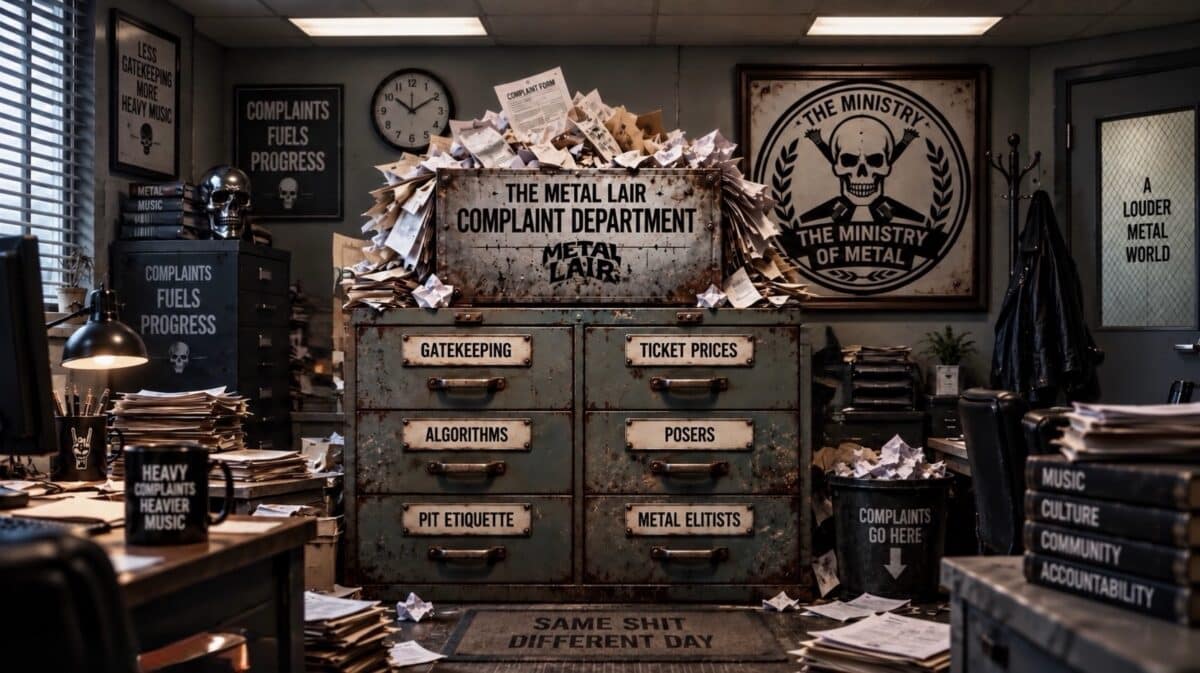
FILE A COMPLAINT WITH THE METAL LAIR COMPLAINT DEPARTMENT
Have a metal-related grievance that needs official investigation?
Bad concert etiquette? Venue bullshit? Festival fuckery? A trend in metal that needs to die? An industry annoyance? Something that’s been pissing you off since 1987? Have a complaint against Metal Lair?
FILE YOUR COMPLAINT
File it with the Complaint Department. Remmy may investigate your grievance in a future installment.
Selected grievances may be investigated, mocked, dissected or otherwise subjected to the questionable judgment of Remmy Chillmister in a future edition of The Metal Lair Complaint Department.
Submission does not guarantee investigation. Remmy has a substantial backlog of things that piss him off.
No algorithms. No fluff. No watered-down corporate metal coverage.
Subscribe to Metal Lair and get weekly underground features, Seven Deadly Songs, Deep Cuts, interviews, and original metal journalism sent directly to your inbox.
Join the patrons of Metal Lair
MetalLair.net is a metal zine muttering to itself about seo and blastbeats at 3 AM powered by caffeine, riffs, a severe lack of sleep, and a dog wondering why the human is still awake.
Sometimes it’s Kevin passing out mid Seven Deadly Songs.
Sometimes it’s digging up forgotten records no one else is talking about.
Always, it’s built for people who actually live this music.
If that sounds like you, you’re already one of us.
Supporting Metal Lair means keeping it independent, loud, and real with no corporate filters, no watered-down takes. If you want to help keep it alive…
Become a patron of Metal Lair.