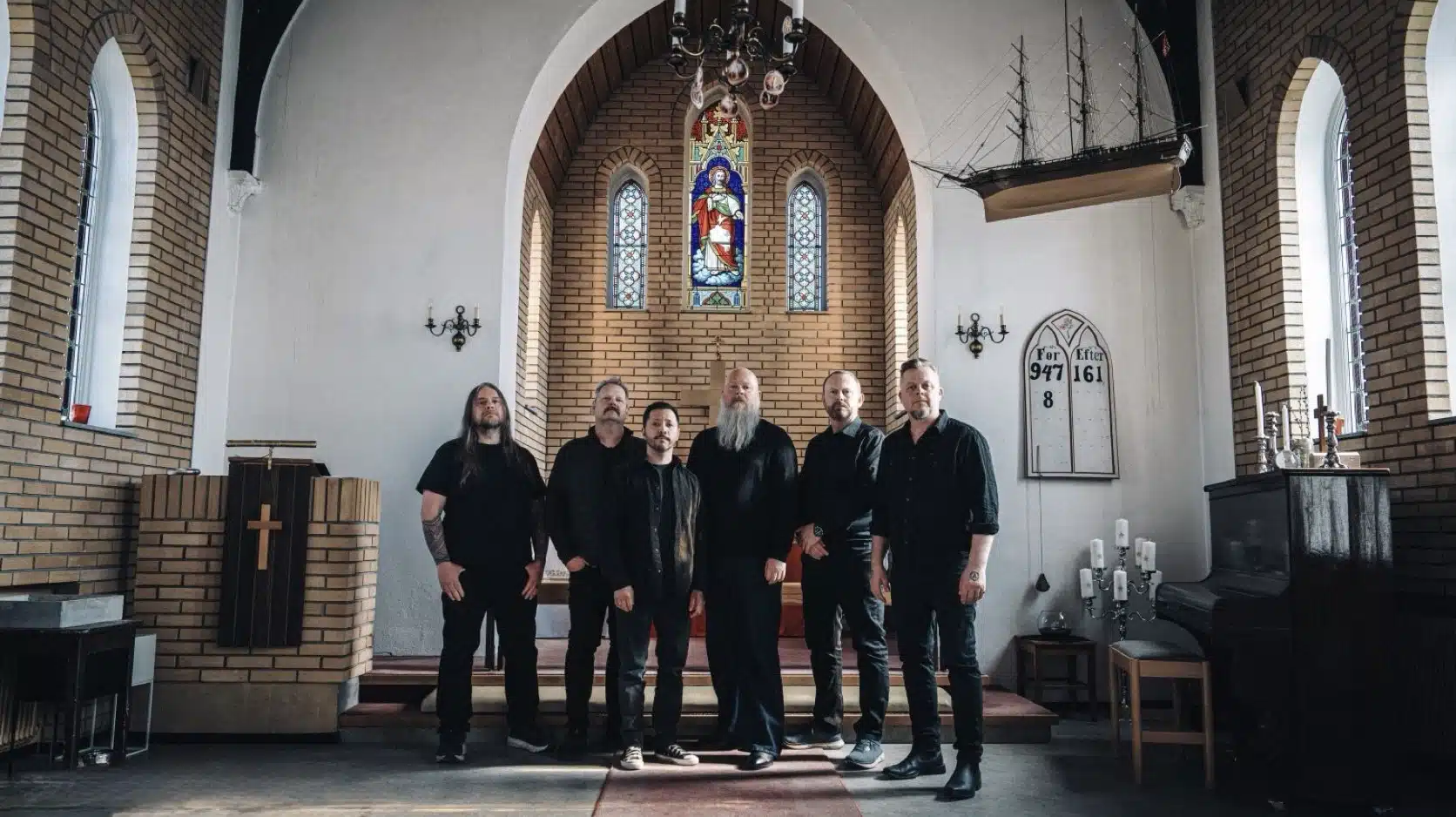
Written By Kevin McSweeney
It comes down to this. This is the moment when the ring is cast into the fires of Mount Doom, when Darth Vader turns from the Dark Side and sacrifices himself to save Luke Skywalker, his son.
It is the moment when Doc Brown and Marty fly off on a time-travelling train. This is the culmination of the Dark Poem trilogy that seemed to have begun only yesterday, but in fact the first installment, The Shores of Melancholia, dropped a year ago, with Sanguisarriving in April of this year.
In this Green Carnation Part III The Messiah Complex Review we now bring this process to a close with this review of the four-track final installment. It’s going to be emotional, for us at least!
The hard work began in earnest around 2018, when Green Carnation started developing what would become the A Dark Poem trilogy. During that same creative period, the band also worked on their last standalone album, Leaves of Yesteryear, which was released in May 2020 during the early months of the pandemic.
Metal Lair has been with the Norwegian progressive metal powerhouse through every step of this epic trilogy, with reviews and interviews aplenty – all of which can be found in our Green Carnation archive hub.
Green Carnation Part III The Messiah Complex Review: Track-By-Track
Unconditional Artificial Chemistry
The third album in the Green Carnation Part III The Messiah Complex Review series starts with an almost shrieking synth sound, which is then usurped by a much gentler sound, as beguiling as whalesong, before a big, meaty riff snaps the listener out of any aquatic-themed reverie they might be experiencing.
It’s a beast of a riff over a solid, mid-paced beat that is almost incongruous alongside the deft, refined vocals of Kjetl Nordhus. The verse is a better fit, with its swirling waves of synths.
Their prog credentials are asserted when they move from a conventional 4/4 time signature to a brief, crunching waltz and then to 6/8 time with futuristic synths that are symbolic of the subject matter.
I found myself drifting away, as if being borne by some sort of interplanetary vessel, soaring high above the miasma of the noxious atmosphere of a distant planet. With crunching guitars, we are brought back to Earth, to 4/4 time, and that powerful chorus.
Lyrically, this seems to be a warning about AI getting stronger and stronger and, ultimately, rendering us obsolete.
For those who seek to make a living through creative processes such as, to pick an example entirely at random, making music, or indeed writing, this is a concern felt keenly.
We feared Skynet gaining sentience and sending big, scary cyborgs to kill us, when we should have been worried about machines simply becoming smarter and more capable than us, and essentially replacing us. Obsolescence, here we come!
The Messiah Complex
The title track commences with some clean guitar virtuosity that brings to mind Steve Vai in his more sedate moments. If you’ve ever heard Sisters from Vai’s 1990 album Passion and Warfare, you’ll know exactly what I mean.
There’s something almost ethereal about the verse, with its celestial synths and slowly strummed chords. The oft-repeated rhyme “soul on parole” is a pleasing refrain, and you’ve just got to love a song that references both Reign in Blood and When The Saints Go Marching In, albeit obliquely.
The eerie middle section had me wondering if aliens had entered the chat, which would have thrown a new light on the lyrical content. We change to a much more abrasive sound when a certain Biblical King starts getting bloodthirsty in the narrative.
The different tones, styles and moods, plus the nature of the lyrics, had me thinking of the rock musical Jesus Christ Superstar. Maybe there’s a possibility that this trilogy could be adapted for a theatrical stage one day. I wouldn’t rule it out.
They delve into some deep theological discourse on this track, questions that have yielded no fully satisfying answers throughout thousands of years of inquiry.
I particularly like the lines: “Listen, Messiah, for I’m only human./How much for a chair by the throne?” Two centuries later, it’s as if Christ never threw the traders out of the temple, as they so sagaciously remind us.
Broken Souls, Common Enemies
Sorry to keep droning on about time signatures, but I love the fact that this song opens in 5/4 time. It’s one that is almost synonymous with progressive rock, mainly due to Pink Floyd’s Money.
It provides a jarring discomfiture to an otherwise lovely, acoustic guitar-driven verse. The chorus is gorgeous, beautifully sung and performed, and there is a sense of yearning to the lead guitar that draws us out of it.
This track is notable for being the only occasion on which they see fit to return to the growled vocals of yore. Let us not forget that this venerable musical institution began life in the cacophonous realm of death metal.
This vocal harshness occurs during an absolute maelstrom of a middle section, in which the progginess is turned up to 11, with unconventional structures in abundance.
There is a sense of returning to calmer waters when the flute solo from Ingrid Ose appears in order to soothe us.
There’s a country-style steel guitar solo and keyboards sounding like pan pipes to accompany the spoken word section. It’s all very serene, except for the words spoken. A solo of which David Gilmour would be proud leads us to a rousing last rendition of the chorus.
The lyrics are a little abstruse. It will require more thought to penetrate their meaning than I have time to apply. Seemingly, it might be a lament at the futility of any attempted discussion or debate in the era of social media-fuelled self righteousness:
Synergy, broken souls, common enemies
Seemingly, you hear you and I just hear me
Yep. Sounds like many a debate I’ve had online. That’s the chorus, and the sung version is very much an earworm, let me assure you!
It’s interesting that there is a return to the idea of the corrupting influence of wealth on religious belief, expressed in the line:
“There was a priest selling faith.”
I’m sorry my reading of these lyrics is so superficial. They deserve to be mulled over at length. But there’s no lyrics to contend with in the last track. Brace yourselves for this one!
A Dark Poem – Orchestral Suite
“We bring this Green Carnation Part III The Messiah Complex Review to a close with a real treat.”
I remember commenting, back at the beginning of this process, that for a band deemed to be progressive metal, they were actually remarkably conventional in terms of song length and structure.
They have , however, chosen to bring the trilogy to a close in the proggiest manner possible, with a near 17-minute epic.
The closing statement of the album and trilogy is a collaboration with the Kristiansand Symphony Orchestra and Opera Choir, and I am hopelessly unqualified and unfit to offer any kind of analysis.
What I can say is that, for all the virtuosity on display, it is not easy listening. It will arouse many emotions during its formidable runtime, and not all of them will be positive.
Let’s put it this way: did you ever see Disney’s Fantasia as a kid? And did it freak you the fuck out? There you were, all wide-eyed and innocent, looking forward to seeing Mickey Mouse, only to be confronted with a giant demon called Chernabog. That’s all I can liken it to. No wonder I turned out to be a metalhead!
Speaking of artistically-induced traumatic childhood experiences, I wept in my tender years when Return of The Jedi came to an end.
This might seem like a strange reaction to such a joyful scene, when the Empire has been vanquished and the heroic rebels are dancing in celebration with the valiant Ewoks. I was saddened by the fact that a trilogy in which I had invested with deep emotion had come to an end.
That’s the way I’m feeling now – so much so that I’m on the verge of contacting Season of Mist to request a range of Green Carnation action figures. It might ease the sense of loss somewhat. Ultimately, it’s been quite a journey, from staggering highs to disheartening lows, and all manner of oddities in between.
We thank Green Carnation for it, and commend them for proving beyond any doubt that, 26 years on from their debut album, Journey to The End of The Night, they are still challenging themselves and the listener. So many others would have succumbed to complacency by now. May the Green Carnation continue to bloom for many years to come!

Metal Lair awards A Dark Poem, Part III: The Messiah Complex by Green Carnation four and a half devil horns out of five
GREEN CARNATION – A DARK POEM, PART III: THE MESSIAH COMPLEX is Now Available Through Season of Mist Records
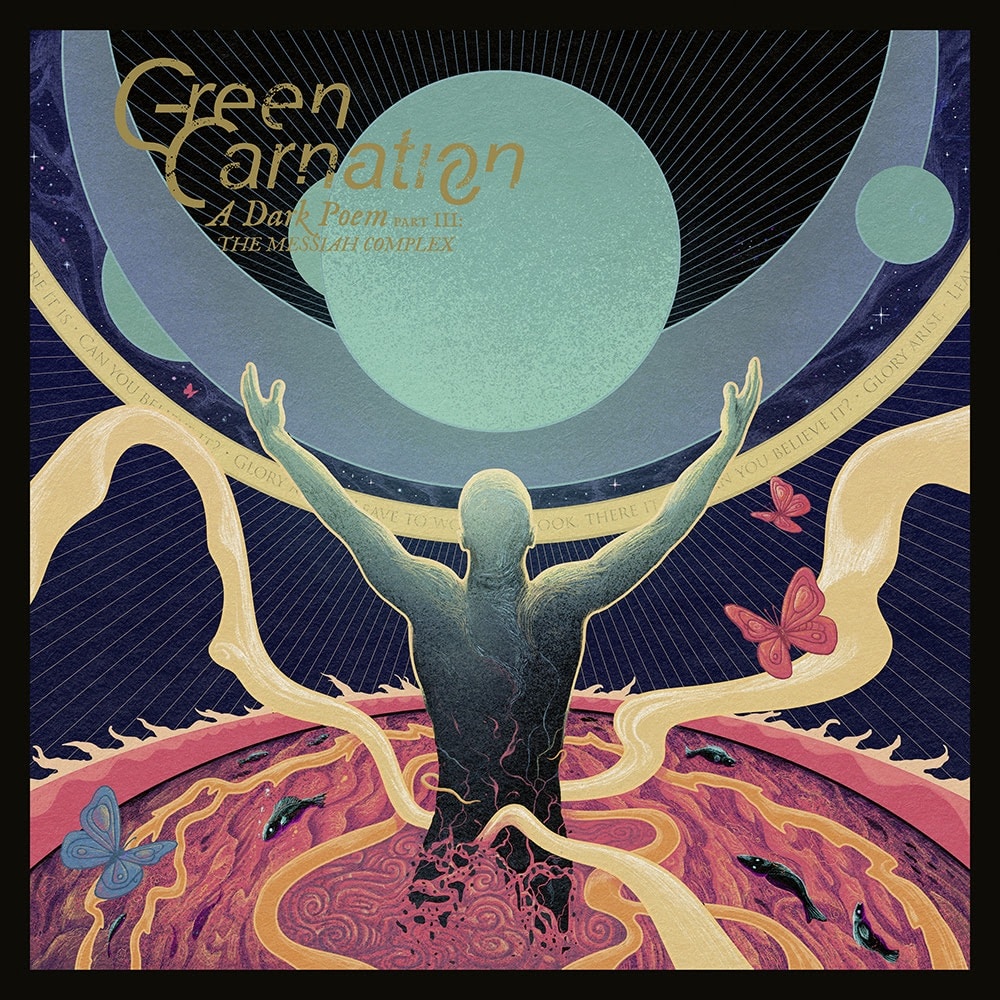
Tracklisting:
1. Unconditional Artificial Chemistry
2. The Messiah Complex
3. Broken Souls, Common Enemies
4. A Dark Poem – Orchestral Suite
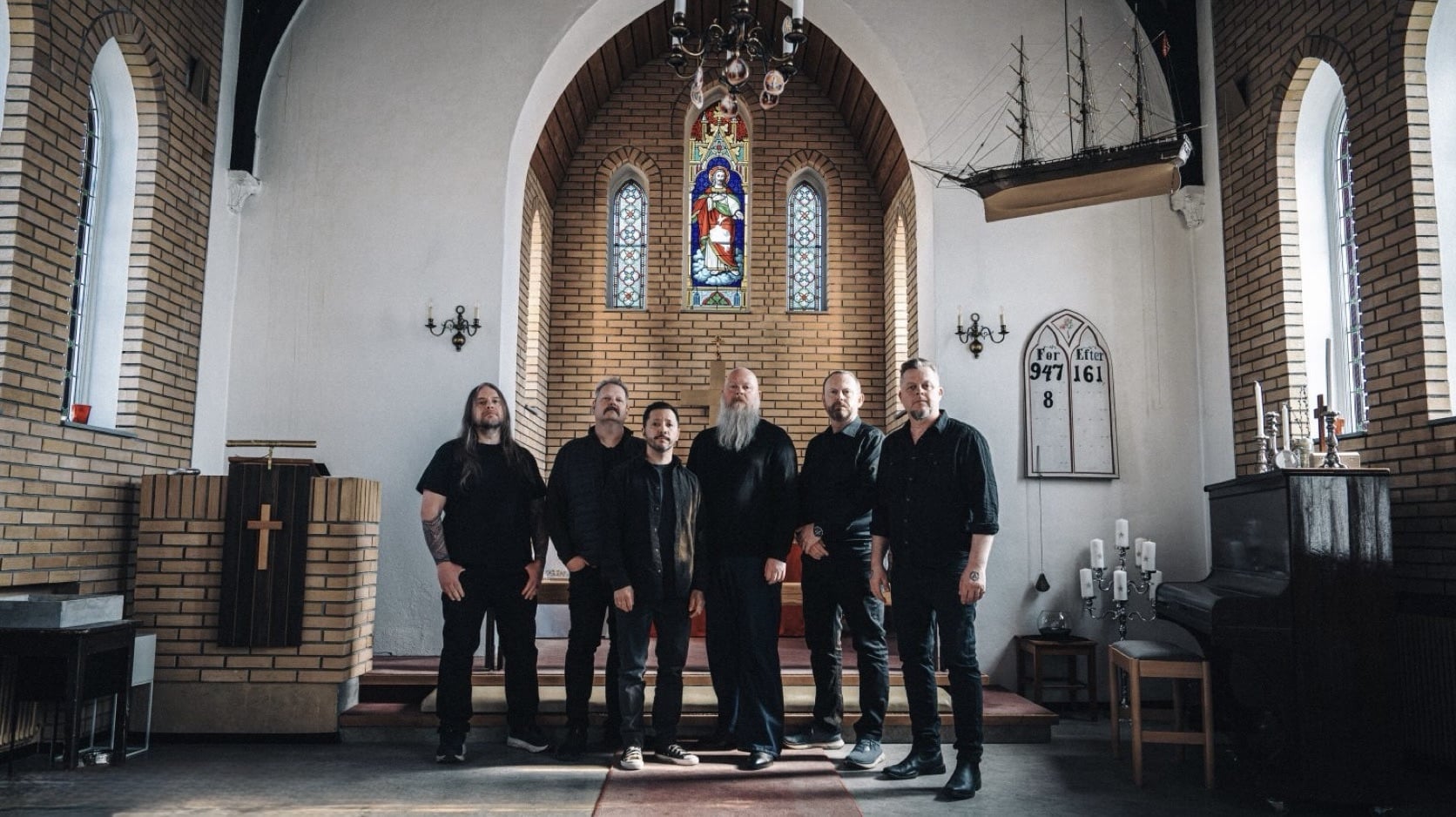
Line-up:
Kjetil Nordhus — Vocals
Stein Roger Sordal — Bass, Rhythm Guitars, Lead Guitars, Keyboards
Bjørn Harstad — Lead Guitars, Effects
Endre Kirkesola — Keyboards, Synthesizers, Organs, Effects
Jonathan Alejandro Perez — Drums
Guest Musicians:
Ingrid Ose — Flute on “Broken Souls, Common Enemies”
Kristiansand Symphony Orchestra and Opera Choir on “A Dark Poem – Orchestral Suite”
GREEN CARNATION ONLINE
About The Author
Kevin McSweeney is Metal Lair’s resident scribe of the underground, eternally rummaging through the global metal scene for riffs worth your time.
As the guiding hand behind Seven Deadly Songs every Friday, he has an uncanny knack for finding the track you didn’t know you needed, usually before finishing his pint.
Equal parts loyal, kind, and quietly razor-witted, Kevin brings deep knowledge, impeccable taste, and a steady, reliable presence to Metal Lair.
Read More From This Author:
Green Carnation Review – A Dark Poem Part 1
Green Carnation Part II Sanguis Interview with Kjetil Nordhus
Album Review: Made Flesh by Untitled With Drums

No algorithms. No fluff. No watered-down corporate metal coverage.
Subscribe to Metal Lair and get weekly underground features, Seven Deadly Songs, Deep Cuts, interviews, and original metal journalism sent directly to your inbox.

Join the patrons of Metal Lair
MetalLair.net is a metal zine muttering to itself about seo and blastbeats at 3 AM powered by caffeine, riffs, a severe lack of sleep, and a dog wondering why the human is still awake.
Sometimes it’s Kevin passing out mid Seven Deadly Songs.
Sometimes it’s digging up forgotten records no one else is talking about.
Always, it’s built for people who actually live this music.
If that sounds like you, you’re already one of us.
Supporting Metal Lair means keeping it independent, loud, and real with no corporate filters, no watered-down takes. If you want to help keep it alive…
Become a patron of Metal Lair.