Written By Lucien Drake
Sleep Token Arcus Controversy: The Masked Metal Giants Draw a Line
Sleep Token have spent years cultivating an atmosphere of secrecy, allowing their music, mythology, and elaborate visual identity to speak louder than the people behind the masks. But when another mysterious musical project began invoking the band’s origins, the famously elusive British outfit apparently decided that silence had reached its expiration date.
The Sleep Token Arcus controversy erupted after a new project called Arcus emerged with promotional material suggesting involvement from someone claiming to have co-created Sleep Token.
On October 18, 2026, Sleep Token issued an unusually direct statement through their official Instagram Story, distancing themselves from outside musical projects using their name or claiming an association with the band.
They didn’t identify anyone. They didn’t explain the circumstances. And they certainly didn’t invite a public debate.
Instead, they delivered one unmistakable message:
“What is ours is here, and here alone.”
For a band that has built an empire around mystery, those ten words carried considerable weight.
What Sparked the Sleep Token Arcus Controversy?
The story begins with Arcus, a mysterious musical project that surfaced in September 2026.
Its promotional campaign reportedly featured the tagline “From the co-creator of Sleep Token,” immediately attracting attention from fans familiar with the masked band’s carefully guarded history.
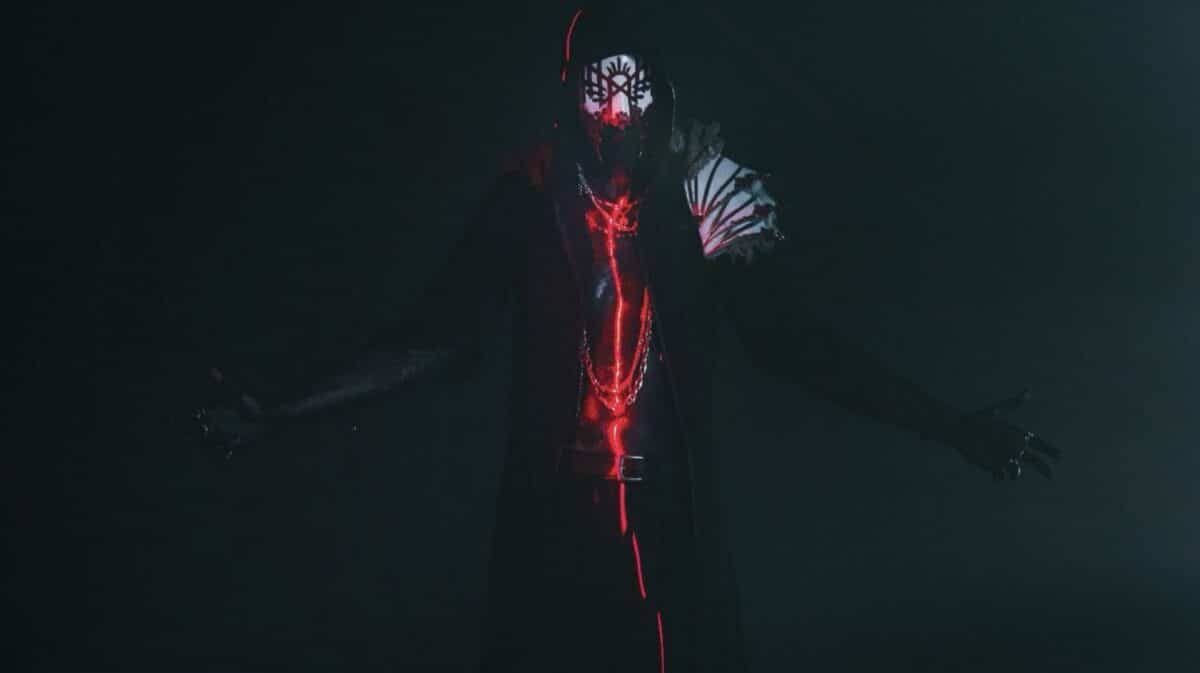
According to Metal Injection, Arcus initially released a cinematic teaser filled with occult imagery, psychological horror elements, and cryptic storytelling. At first, the footage offered little indication of whether audiences were witnessing the arrival of a band, a multimedia experiment, or something else entirely.
That question was eventually answered when Arcus released a music video for a song titled “Death.”
The project introduced vocalists Soma Leigh, Obsidian, and Eupheryx, while leaving other participating musicians unidentified.
Musically, Arcus explores territory combining atmospheric, alternative, folk, and metal influences. Its theatrical presentation and anonymous personnel also invite comparisons with Sleep Token, although those artistic similarities alone establish no professional connection between the two projects.
The controversy wasn’t simply about musical resemblance. It was about the suggestion that someone responsible for helping create Sleep Token was now involved in something new.
And that raised a much bigger question. Who gets to claim ownership of a band’s origins?
Sleep Token Issues Rare Public Statement
Sleep Token’s response arrived through Instagram on October 18.
The statement opened by explaining that the band had no connection with outside musical projects invoking its name, nor with people using that name for promotional purposes.
It further clarified that such promotional associations were not authorized or endorsed by Sleep Token.
The message concluded with the pointed declaration: “What is ours is here, and here alone.”
For an act whose public communications are typically dominated by cryptic imagery, music releases, and carefully controlled announcements, the statement was unusually straightforward.
But there is one important detail. Sleep Token never explicitly mentioned Arcus, its musicians, or any alleged former collaborator.
The connection between the announcement and Arcus has been drawn by fans and music publications, including Stereogum, Metal Injection, and ThePRP.
The timing certainly invites scrutiny. However, the identity of the statement’s intended recipient remains officially unconfirmed.
Who Is Tom Quigley, and What Is His Connection to Sleep Token?
One of the more intriguing threads in the Sleep Token Arcus controversy involves Tom Quigley, an individual reportedly associated with the band during its formative years.
According to an October 19 report from Stereogum, Quigley previously identified himself on LinkedIn as Sleep Token’s “Co-Creator & Lead Designer.”
His description reportedly claimed that he worked alongside a singer to develop significant elements of the band’s original presentation and creative identity. Quigley also indicated that his involvement with Sleep Token ended in 2018.
References to his early association with the group have appeared in discussions surrounding the band’s history. However, the extent of his creative contributions, and whether the title of co-creator accurately describes them, has not been independently established.
A person can legitimately contribute to a band’s early development without retaining an official relationship with the band years later.
Likewise, having an authentic historical association does not automatically mean that a separate project carries the original band’s endorsement.
Stereogum connected Quigley to Arcus through reports surrounding the project’s promotional campaign. Still, the precise nature of his involvement with Arcus has not been independently confirmed through a direct statement from him.
There is also no verified public evidence that Sleep Token’s announcement constitutes a legal allegation against Quigley. For now, the competing narratives leave more questions than answers.
Why the Sleep Token Arcus Controversy Has Captured Fans’ Attention
Sleep Token have never operated like a conventional metal band.
Their identities, stage personas, ritualistic imagery, and mythology are woven into an artistic world that fans have spent years interpreting.
Frontman Vessel and drummer II have become recognizable without following the usual celebrity machinery of constant interviews, personal revelations, and public appearances.
The band’s secrecy is not incidental to its presentation. It is fundamental to how audiences experience the music.
That makes any claim involving the project’s original architects particularly fascinating.
Who conceived the earliest visual concepts? Who helped develop the mythology? Where does an original collaborator’s contribution end and the band’s continuing creative ownership begin?
These aren’t questions that can be answered by an Instagram comment section, no matter how confidently somebody types.
The emergence of Arcus has reopened discussions about Sleep Token’s beginnings, but public speculation should not be confused with an established account of the band’s creative history.
Meanwhile, reports indicate that references to Sleep Token were subsequently removed from Arcus’s social media profiles.
Whether that change resulted directly from the band’s statement remains unconfirmed.
A Rare Statement After a Quiet Year
The timing adds another dimension to the story. Sleep Token have maintained a relatively low public profile throughout 2026 following the tremendous commercial success of their 2025 album Even In Arcadia.
The record propelled the band to new heights, including major chart success and widespread recognition beyond traditional heavy music audiences.
Their last reported live performance took place at Crypto.com Arena in Los Angeles on October 11, 2025.
With no subsequent album or tour announcement, fans have been watching closely for signs of the band’s next chapter.
Instead of revealing new music, however, Sleep Token briefly emerged to address the use of their name.
The Mystery Remains, but the Boundary Is Clear
At its heart, the Sleep Token Arcus controversy raises an interesting issue about artistic identity in an industry where mythology, image, and branding can become inseparable from the music itself.
Arcus has every right to establish its own musical identity. Anyone genuinely involved in Sleep Token’s early development also has a legitimate history worth acknowledging accurately.
But a historical association and a present-day endorsement are two very different things.
Sleep Token’s statement draws that distinction without elaborating on individual relationships, creative disagreements, or the circumstances behind its release.
Whether Arcus or Tom Quigley will publicly clarify the nature of their reported connection remains to be seen.
For now, Sleep Token have returned to their familiar silence. The masks remain. The mythology continues.
And whatever may have happened behind the scenes, one thing is certain: Sleep Token are determined to speak for themselves.
Sources and Further Reading
- Stereogum: Sleep Token Distance Themselves From Self-Proclaimed Co-Creator’s New Offering
- ThePRP: Sleep Token Distance Themselves From New Mystery Band Arcus
Metal Lair independently covers developments in heavy music. Reported affiliations and disputed historical claims are attributed to their respective sources and do not constitute findings of wrongdoing.
About The Author:
Lucien Drake is a writer and archivist at Metal Lair, contributing across features, essays, cultural commentary, and long-form series including Deep Cuts, Road Riffs and editorial projects exploring music, memory, and resistance.
Known for treating heavy music as living history rather than nostalgia, Drake focuses on influence over canon, context over hype, and the stories that survive outside official timelines.
Read More From Lucien Drake:
AMON AMARTH – THE ALLFATHER AWAKENS REVIEW: THE OLD GODS STILL HAVE TEETH
Metal, Censorship , and The Old War That Never Ends
The Underground Never Needed Your Approval – Only the Real Ones Survived
Before Algorithms Hunting Metal Was Bloodsport
The Metal Sex Playlist: Bang Your Head… and Each Other
No algorithms. No fluff. No watered-down corporate metal coverage.
Subscribe to Metal Lair and get weekly underground features, Seven Deadly Songs, Deep Cuts, interviews, and original metal journalism sent directly to your inbox.
Join the patrons of Metal Lair
MetalLair.net is a metal zine muttering to itself about seo and blastbeats at 3 AM powered by caffeine, riffs, a severe lack of sleep, and a dog wondering why the human is still awake.
Sometimes it’s Kevin passing out mid Seven Deadly Songs.
Sometimes it’s digging up forgotten records no one else is talking about.
Always, it’s built for people who actually live this music.
If that sounds like you, you’re already one of us.
Supporting Metal Lair means keeping it independent, loud, and real with no corporate filters, no watered-down takes. If you want to help keep it alive…
Become a patron of Metal Lair.
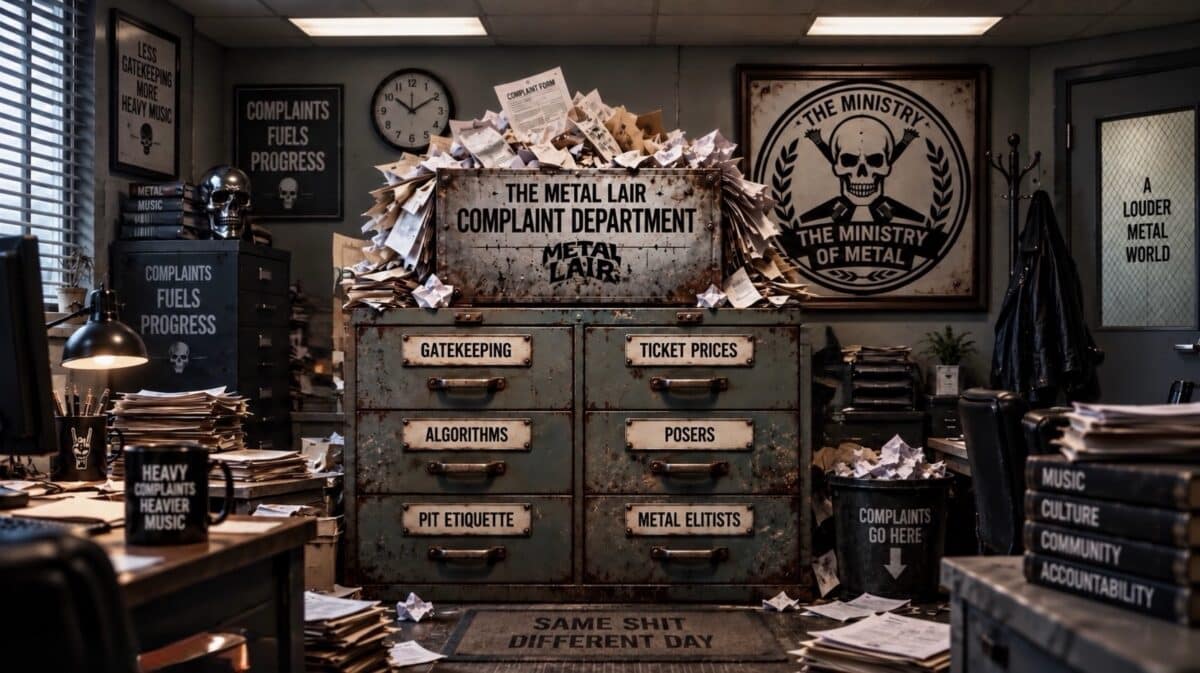
HAVE A METALHEAD COMPLAINT?
“People roundhouse-kicking” in the pit grinding your gears? Gatekeepers questioning whether you’re “metal enough”? Frustrated with getting hit in the head by peoples smelly shoes at a concert?
Whatever’s poisoning your particular corner of the metal community, file an unofficial complaint with The Metal Lair Complaint Department.
Vent your venom. Name the offense. Make your case.
Your complaint could be featured in next week’s issue of The Metal Lair Complaint Department.