Written By Chris Norris
World Metal Weekly India Edition
World Metal Weekly is where we step outside the usual rotation and explore metal scenes that deserve far more attention.
Not just the names everyone already knows, but the layers beneath them. The bands that built the scene, the artists pushing it forward, and the hidden gems still waiting to be discovered.
INDIA: ONE COUNTRY, MANY SOUNDS
For many metal fans outside India, Bloodywood may have been their first real introduction to the country’s heavy music scene.
Their collision of nu-metal, Indian folk instrumentation, rap and massive festival-ready hooks carried Indian metal into places it had rarely reached before. But Bloodywood didn’t emerge from a vacuum.
India had been cultivating an underground metal culture for decades before the rest of the world started paying serious attention.
Across cities including Mumbai, Bengaluru, Delhi, Shillong, Chennai and Kolkata, generations of musicians built scenes around heavy metal, thrash, death metal, progressive metal, groove and increasingly experimental forms of extreme music.
Some Indian bands have since crossed borders, signed international record deals and appeared on major European festival stages. Others remain fiercely underground, operating within a country whose enormous size and cultural diversity have produced something far more interesting than a single identifiable “Indian metal sound.”
There isn’t just one and that’s precisely what makes the scene worth exploring.
THE INTERNATIONAL TRAILBLAZERS
Before digging deeper underground, these are some of the names that helped carry Indian heavy music beyond the country’s borders.
Kryptos, Girish and The Chronicles (GATC), and Skyharbor have all developed audiences well beyond India, bringing very different corners of the country’s heavy music landscape onto the international stage.
Catch up on past WMW features:
Finland Edition Sweden Edition
Scotland Edition Wales Edition
Germany Edition France Edition
Chile Edition Indonesia Edition
Ukraine Edition Australia Edition
Switzerland Netherlands Edition
Each edition stands alone, but together they form a growing global map of metal scenes around the world through Metal Lair’s World Metal Weekly series.
World Metal Weekly is A Metal Lair® Original Series
World Metal Weekly is Metal Lair’s ongoing global series spotlighting metal scenes around the world.
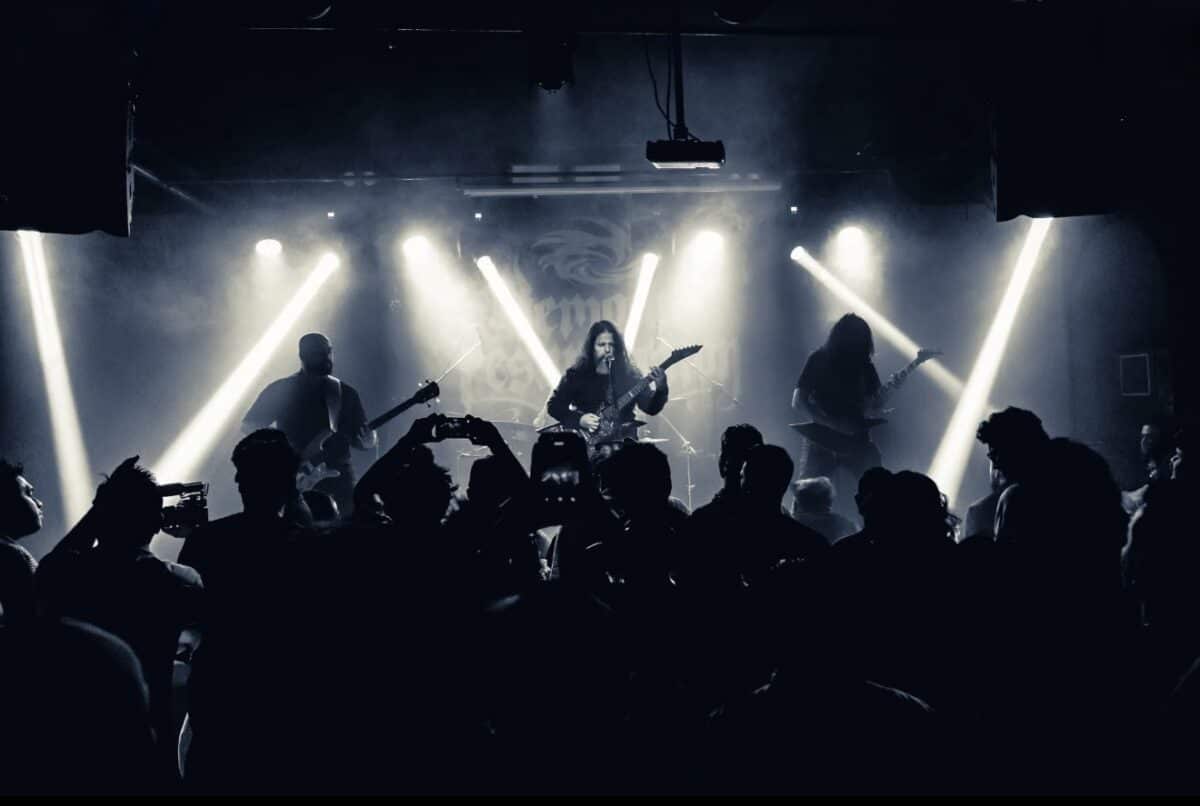
World Metal Weekly: Demonic Resurrection
City: Mumbai
Gateway Track: Krishna – The Cowherd: Dashavatar (2017)
We asked Demonic Resurrection founder Sahil “Demonstealer” Makhija to personally choose a gateway track from the band’s catalogue for anyone discovering DR for the first time.
His choice: “Krishna: The Cowherd.”
Taken from 2017’s Dashavatar, the track represents the eighth incarnation of Vishnu explored across the album and captures the collision of Indian mythology, progressive songwriting and extreme metal that became central to this era of Demonic Resurrection.
Deep Cut: Lord of Pestilence – The Return to Darkness (2010)
Clocking in at nearly 12 minutes, “Lord of Pestilence” captures Demonic Resurrection at their most expansive and compositionally daring.
The track moves through brutal death metal, atmospheric black metal and sweeping progressive structures without sacrificing the band’s symphonic grandeur. Intricate lead guitar exchanges collide with dramatic keyboard orchestration, while shifts between deep gutturals and clean vocals add another layer to a song already built around constant movement and changing dynamics.
Its length isn’t indulgence for indulgence’s sake. “Lord of Pestilence” unfolds more like an extreme metal suite, allowing individual passages to develop, mutate and eventually circle back into the larger composition.
For anyone tempted to view early Demonic Resurrection simply through the lens of the late-2000s symphonic death metal wave, this is the counterargument. DR were already thinking bigger, constructing ambitious multi-movement pieces whose scope belonged in the same conversation as the progressive and symphonic extremes explored by bands such as Opeth, Emperor and Dimmu Borgir.
Put on headphones and give it the full 12 minutes. This one isn’t background music.
Why Them:
Led by Sahil “Demonstealer” Makhija, Demonic Resurrection is widely considered one of the foundational pillars of modern Indian extreme metal.
When the band formed in 2000, India had little of the infrastructure needed to sustain an extreme metal scene. Specialized venues were scarce, dedicated metal labels and distribution networks were virtually nonexistent, and getting heavy music into listeners’ hands required considerably more than uploading a track and waiting for an algorithm to find it.
Makhija didn’t wait for an industry to appear. He helped build one.
Through Demonstealer Records, organizing gigs and physically distributing hand-packaged CD-Rs, he became part of the machinery developing around India’s emerging extreme metal underground while Demonic Resurrection grew alongside it.
Long before viral algorithms made international discovery easier, DR earned international recognition at the Metal Hammer Golden Gods Awards in 2010, winning the Global Metal award. Their growing profile eventually brought them to the UK’s Candlelight Records, placing an Indian extreme metal band on a label whose roster had included some of the most respected names in black and extreme metal.
Early Demonic Resurrection drew heavily from the European blackened death and symphonic metal traditions of bands such as Emperor and Dimmu Borgir, but the band’s identity evolved considerably beyond those foundations.
Their 2017 album Dashavatar became perhaps the clearest expression of that evolution. Built around the ten avatars of the Hindu deity Vishnu, the concept album fused the band’s symphonic death metal with elements of Indian music, including sitar, tabla and classical vocal textures. Rather than simply decorating Western extreme metal with Indian instrumentation, Dashavatar placed Indian mythology and musical traditions at the center of the record’s identity.
And if someone opened the historical textbook on how metal spread across the planet, Demonic Resurrection would literally be in the film footage.
When anthropologist and filmmaker Sam Dunn traveled the world for his 2008 documentary Global Metal, exploring how heavy metal had been adopted and transformed by cultures outside its Western birthplace, Demonic Resurrection became a prominent part of the film’s exploration of India. The band also appeared on the documentary’s soundtrack alongside names including Slayer, Sepultura and Lamb of God.
In 2010, DR pushed through another unlikely barrier when the video for “The Unrelenting Surge of Vengeance” received certification from India’s Central Board of Film Certification, clearing the way for the band’s extreme metal to reach mainstream television through VH1 India.
That international recognition was mirrored at home. In June 2014, Demonic Resurrection landed on the cover of Rolling Stone India for the magazine’s metal special, with a feature chronicling the band’s rise from a project formed in Makhija’s bedroom to one of India’s most prominent metal acts.
The timing captured just how far DR had traveled from those hand-packaged CD-R beginnings. The band was preparing to release The Demon King, embark on a month-long European tour, headline the Rolling Stone Metal Awards, and appear at Germany’s Wacken Open Air.
For a band that began when an Indian extreme metal industry barely existed, appearing on the cover of Rolling Stone India fourteen years later wasn’t merely another press mention. It was a rather spectacular receipt.
Twenty-six years after their formation, Demonic Resurrection isn’t historically important simply because they survived India’s early extreme metal underground.
They helped create the conditions in which an underground could survive at all.
From the Metal Lair Archives
Metal Lair has been following Sahil “Demonstealer” Makhija’s work for years. In our 2022 interview, Makhija discussed Demonic Resurrection’s evolution from its early Dimmu Borgir and Cradle of Filth influences toward a more progressive identity, the incorporation of Indian instrumentation and mythology on Dashavatar, and the realities of sustaining an extreme metal band from India.
Read: An Interview With India’s Metal Renaissance Man, Sahil “The Demonstealer” Makhija
Beyond the Band: Headbanger’s Kitchen
Sahil Makhija’s creative life extends well beyond Demonic Resurrection. He is also the creator and host of Headbanger’s Kitchen, his long-running food channel where metalhead energy meets a considerably more delicious form of brutality.
What began with metal musicians appearing alongside cooking segments evolved into a major independent platform of its own, with Sahil building an international audience around recipes, cooking videos and his unmistakable personality.
If you came here for Demonic Resurrection and happen to leave knowing what you’re making for dinner, consider it collateral damage.
Follow Headbangers Kitchen on YouTube
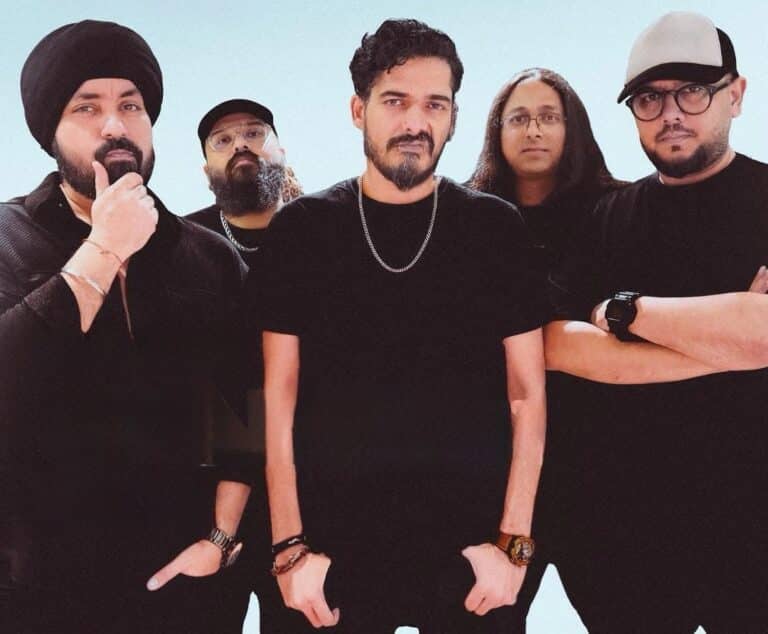
World Metal Weekly: Gutslit
City: Mumbai
Gateway Track: The Killing Joke – Carnal (2023)
If you’ve never experienced Gutslit before, “The Killing Joke” is three minutes of controlled violence that neatly distills what the Mumbai quartet does best.
The track opens ominously with an audio sample from serial killer John Wayne Gacy before detonating into razor-edged death-grind riffs, blast beats and guttural vocal brutality. There is almost no wasted movement. Gutslit gets in, inflicts the damage and gets out.
But beneath the savagery is remarkably precise musicianship, and Mark Lewis’s powerful, modern production gives every element enough definition to cut through the assault. That clarity makes “The Killing Joke” an ideal entry point for listeners approaching Gutslit for the first time without sanding down any of the band’s extremity.
Three minutes. No anesthesia.
Deep Cut: Haemorrhoidal Brain Custard – Skewered in the Sewer (2013)
Before Gutslit sharpened its attack into the technically precise death-grind heard on Carnal, there was the considerably filthier creature crawling around Skewered in the Sewer.
“Haemorrhoidal Brain Custard” captures early Gutslit in gloriously unhinged form: raw slam, goregrind savagery, guttural squeals and an almost feral sense of momentum. Where the band’s modern material attacks with surgical precision, this sounds considerably more interested in using the surgical instruments incorrectly.
It’s ugly, relentless and intentionally excessive, but buried inside the carnage is the foundation of the band Gutslit would become.
Play “The Killing Joke” first. Then come back here and hear what ten years of evolution sounds like.
Why Them:
Formed in Mumbai in 2007, Gutslit became one of the defining forces in South Asian brutal death metal, building an international reputation on technical precision, grindcore velocity and sheer physical aggression.
Their sound leaves very little room for mercy. Slamming riffs collide with chaotic blast beats, thick bass grooves and guttural vocals, but beneath the violence is a band operating with remarkable control. Gutslit isn’t chaos accidentally captured on record. The chaos is engineered.
More importantly, they helped break down geographical barriers for Indian extreme metal.
At a time when the international brutal death and grindcore circuit remained overwhelmingly centered around Europe and North America, Gutslit began carrying Mumbai’s underground onto stages far beyond India. Appearances at major European extreme-metal festivals including Obscene Extreme, Deathfeast Open Air and Brutal Assault placed them before audiences that may previously have had little exposure to India’s death metal scene.
Over the years, that reach expanded into international touring across more than 20 countries, establishing Gutslit not simply as an Indian band occasionally playing overseas, but as part of the global extreme-metal underground.
Their ambitions extended to the records themselves. Gutslit has worked with internationally recognized engineers, producers and visual artists, including Mark Lewis, Victor Bullok aka V. Santura (Tryptykon/Dark Fortress) and Eliran Kantor, refusing the notion that an independent extreme metal band operating from India should accept anything less than world-class presentation.
They don’t require an asterisk reading great for an Indian death metal band. Put them alongside brutal death metal bands from Europe or North America and the geographical qualifier becomes irrelevant.
Gutslit didn’t ask the international extreme-metal world to lower the gate. They proved they belonged on the other side of it.
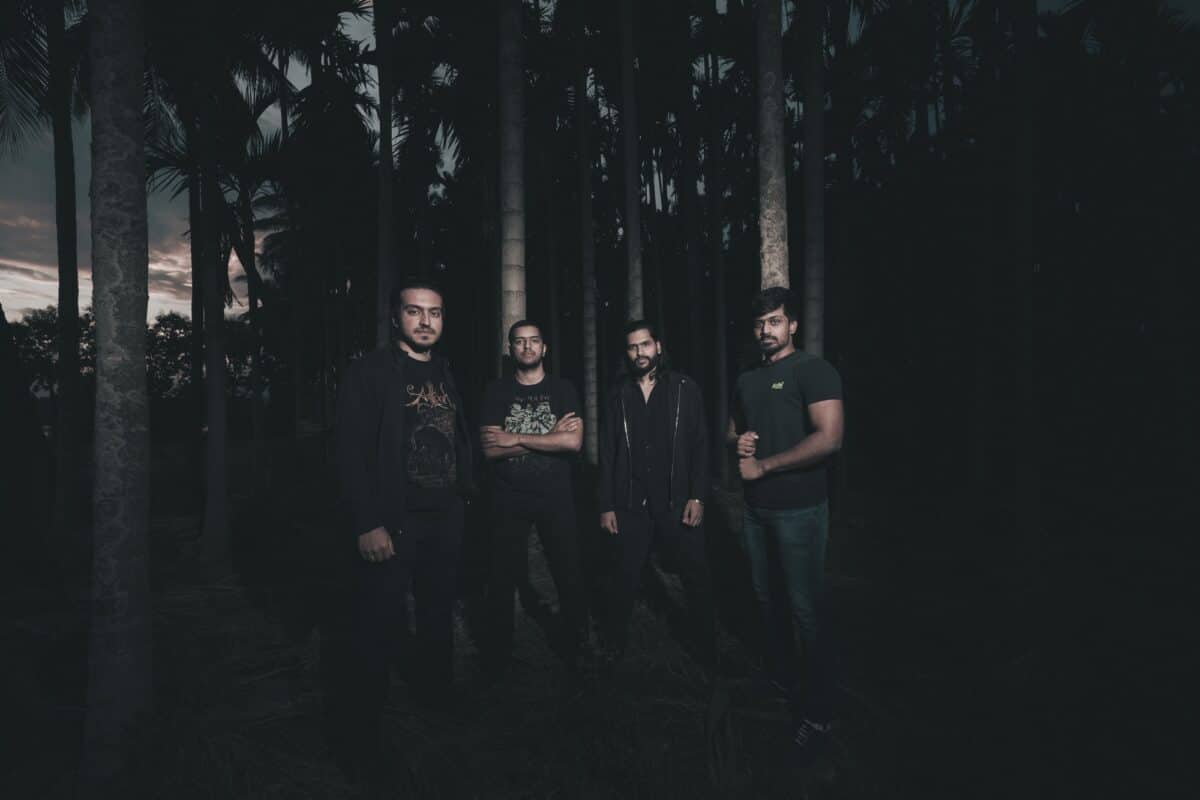
World Metal Weekly: Fallen Letters
City: Bengaluru (Bangalore), Karnataka
Gateway Track: A Familiar Absence – (2026)
If you’re meeting Fallen Letters for the first time, start here. “A Familiar Absence” captures the band at a moment of rapid evolution, pushing their atmospheric progressive metal into darker death, black and post-metal territory without abandoning the melancholy and cinematic songwriting at its core.
The track has also become an international breakthrough moment for the Bengaluru quartet, earning international attention and introducing Fallen Letters to listeners far beyond India’s underground.
Deep Cut: Beneath the Opaque Veil – Forlorn Pages EP (2024)
If “A Familiar Absence” represents where Fallen Letters are heading, “Beneath the Opaque Veil” offers an early glimpse of the progressive instincts already embedded in the band’s DNA.
A delicate, almost fragile guitar introduction gives way to an aggressive bass riff before the full band crashes into the frame, only for the song to retreat again into a softer passage beneath Vishal Naidu’s clean vocals.
His breathy, near-whispered delivery occasionally recalls the smooth atmospheric pull of Chino Moreno, providing a striking counterweight to the heavier sections.
But the real attraction is the structure. At nearly seven minutes, “Beneath the Opaque Veil” feels less like one song following a predictable trajectory than three interconnected pieces inhabiting the same body. Mellow progressive passages repeatedly fracture into heavier attacks before dissolving and rebuilding again.
It’s an early track, but the blueprint is already there: atmosphere, tension, heaviness and an unwillingness to sit still.
Why Them:
Sometimes World Metal Weekly begins with a country. This time, it began with an email.
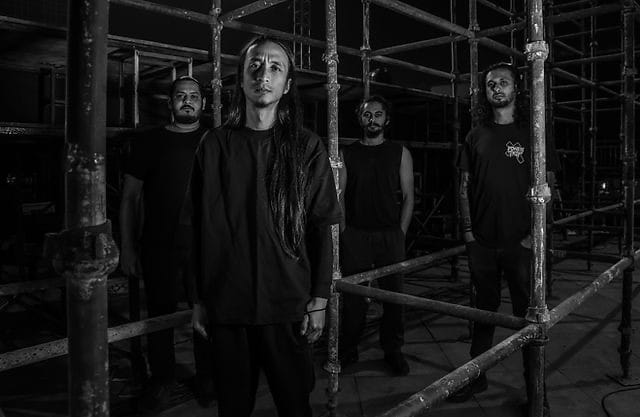
Bangalore progressive metal band Fallen Letters landed in the Metal Lair inbox with “A Familiar Absence,” a sprawling collision of progressive metal, post-metal atmosphere and darker extreme-metal textures.
The rabbit hole opened from there, because India’s underground is far too large, strange and musically diverse to stop at one song.
Fallen Letters began establishing their sound in 2024 through the singles “Remain A Memory” and “Relapse,” followed by the self-produced Forlorn Pages EP. A year later, they considerably expanded their canvas with Mindfractures, an eight-track, roughly 50-minute debut album released through Alterfate Records in September 2025 and mixed and mastered by Johan Martin at Sweden’s Punch Sector Studios.
Then came “A Familiar Absence.”
Released in 2026, the track pushed their progressive foundation into darker territory, weaving elements of death, black and post-metal into the atmospheric melancholy already embedded in their sound. The shift didn’t go unnoticed: the song earned attention from both Metal Hammer and Prog, putting this relatively young Bengaluru band in front of a much larger international progressive and metal audience.
World Metal Weekly: Godless
City: Hyderabad
Gateway Track: Empty the Graves – Swarm (2018)
If you want to understand Godless quickly, start with “Empty the Graves.” The track wastes no time, tearing forward on high-velocity deathrash riffs and relentless double-bass before dropping into the kind of massive groove designed to turn a room into a pit.
Mixed and mastered at Poland’s Hertz Studio, whose credits include Behemoth, Vader and Decapitated, “Empty the Graves” also captures something important about Godless: brutality doesn’t have to sound muddy. Every strike lands cleanly without sterilizing the music. It’s fast, vicious and remarkably controlled, giving you Godless in concentrated form.
Deep Cut: Fluxion – States of Chaos, (2021)
Where “Empty the Graves” comes charging through the front door, “Fluxion” takes its time making the room uncomfortable. The tempo drops, the atmosphere darkens, and Godless lean into an oppressive, churning death-metal groove that allows the weight of the riffs to do the damage.
It’s an excellent showcase for the songwriting growth heard across the band’s debut full-length, States of Chaos. Rather than relying on constant velocity, “Fluxion” builds tension through contrast, giving its heavier passages room to breathe before eventually erupting into a furious finish.
“Fluxion” exposes another dimension of Godless. They can absolutely flatten you with speed, but here they demonstrate something more sinister: knowing when to slow down, tighten the screws and let anticipation become part of the punishment.
Why Them:
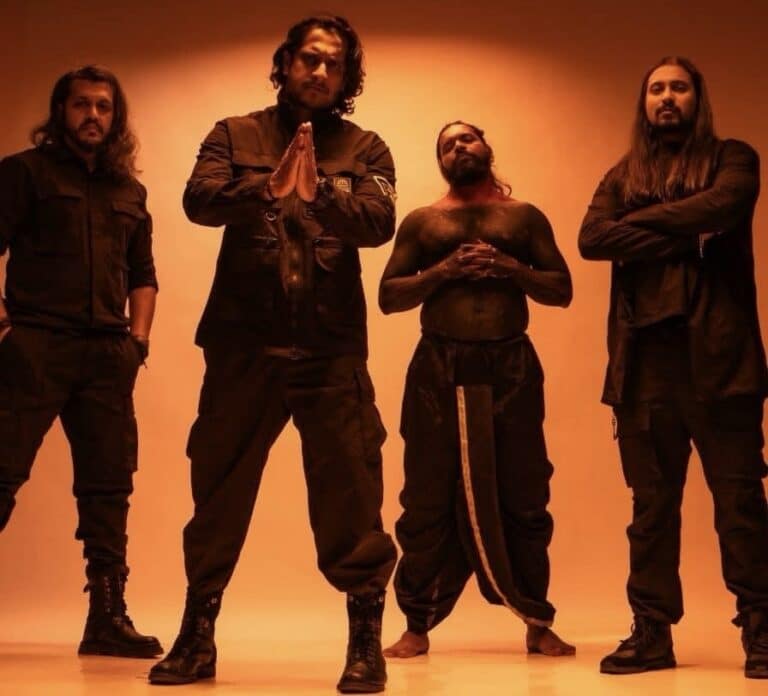
Hailing from Hyderabad, Godless have spent the past decade carving out a particularly vicious corner of India’s extreme metal underground. Their weapon of choice is deathrash: the crushing weight and guttural brutality of death metal driven at the speed and precision of thrash. There’s little interest in atmosphere or ornamentation here. Godless hit hard, move fast, and leave very little breathing room.
That brutality has always been matched by unusually high production standards. For their debut EP Centuries of Decadence (2016), Godless enlisted Psycroptic guitarist Joe Haley for mixing and mastering. They later took Swarm (2018) to Poland’s Hertz Studio, whose credits include Vader, Behemoth and Decapitated. The result is extreme metal that sounds enormous without losing the violence at its center: riffs remain sharp, drums hit with frightening clarity, and the low end lands with genuine physical weight.
At the front is Kaushal LS, whose cavernous growls give Godless much of their menace. Behind him, the band moves between death metal’s muscular grooves and thrash’s relentless forward attack, creating music built as much for the pit as the headphones.
But Godless matter beyond sheer brutality. Alongside bands such as Gutslit and Demonic Resurrection, they’re part of a generation that helped push Indian extreme metal far beyond the idea of a regional curiosity. Godless don’t need to be graded on a curve because they come from Hyderabad. Put them beside extreme metal bands from anywhere in the world and the music can take care of itself.
If your preferred form of cultural exchange involves blast beats, guttural vocals and having your vertebrae rearranged, Hyderabad has you covered.
World Metal Weekly: Zygnema
City: Mumbai
Gateway Track: Grind – Iconic (2024)
Some songs politely audition for a feature. “Grind” hijacked this one.
I hit play intending to take notes and ended up stopping everything to watch the entire video. At its core is the enormous groove-metal attack Zygnema have built their reputation on, but threaded through it are sounds rooted much closer to home: Marathi folk vocals and percussion, chant-like passages and influences drawn from South Indian Carnatic music.
Guitarist Sidharth Kadadi has described Grind as an attempt to blend heavy riffs with local sounds and traditions that would make the song more personal to Mumbai and Maharashtra. Among his inspirations was Steve Vai’s “Blood and Tears,” whose combination of Carnatic vocals and electric guitar had fascinated him since his teens. Across Iconic, Zygnema experimented further with Indian scales, percussion, ragas and konnakol, the South Indian Carnatic tradition of vocal percussion.
That cultural identity extends beyond the music. The video turns its attention toward Mumbai itself and the people who inhabit it, while the Marathi vocal refrain invokes motherhood, love, sacrifice and hard work. Against that imagery, Zygnema appear performing in an empty stadium, giving the entire thing the feeling of both a celebration and a declaration of where they come from.
“Grind” doesn’t simply demonstrate how heavy Zygnema can be. It shows what happens when the band allows Mumbai, Maharashtra and Indian musical traditions to become part of the language of that heaviness.
And sometimes the best gateway track is simply the one that makes you forget you were supposed to be working.
Deep Cut: Machine State Integrity – What Makes Us Human Is Obsolete, (2015)
To understand the road that eventually led Zygnema to Iconic, go backward nearly a decade to “Machine State Integrity.”
Here, the band’s groove-metal foundation is considerably more severe. The track locks into muscular, mid-tempo rhythms with a technical, polyrhythmic edge, while Jimmy Bhore delivers a commanding vocal performance over riffs that seem engineered to make remaining stationary physically impossible.
It captures Zygnema during a formidable period in their development, when What Makes Us Human Is Obsolete helped cement their standing within India’s heavy-music scene. There’s less of the overt Indian musical identity that would emerge more prominently in their later work.
Instead, “Machine State Integrity” lets rhythm, precision and sheer physical weight do the talking.
Put this beside “Grind” and you can hear evolution rather than reinvention. The rhythmic muscle was already there in 2015. What changed was the musical vocabulary Zygnema eventually began wrapping around it.
Why Them:
Zygnema: The Relentless Heartbeat of Mumbai Groove Metal.
If Godless represents the razor-edged deathrash end of India’s metal spectrum, Mumbai’s Zygnema bring the groove: huge rhythmic riffs, muscular percussion and the kind of low-slung heaviness built to move an entire room.
Formed in 2006, Zygnema emerged from Mumbai with music that reflected the pressure and relentless momentum of the city around them. Rather than disappearing into fantasy or abstraction, much of the band’s identity has been grounded in resilience, struggle and the daily grind, giving their groove-metal attack a distinctly lived-in quality.
Their reach eventually carried well beyond Mumbai. Zygnema won the Indian leg of the Wacken Open Air Metal Battle in 2012, earning a trip to Germany, followed by an appearance at Norway’s Inferno Metal Festival in 2013. In 2019, they pushed even farther with an ambitious 16-city European tour, building an international presence through the same DIY determination that shaped their career at home.
But Zygnema haven’t only participated in India’s metal scene. They’ve helped build places for it to exist. Through Scarfest, the band created a platform for underground acts and strengthened the club-level ecosystem that keeps heavy music alive between the country’s larger festivals.
Nearly two decades into their career, Zygnema could easily have settled into the sound that established them. Instead, their 2024 EP Iconic pushed outward, incorporating elements drawn from Indian classical music, including konnakol vocal percussion and raga-inspired ideas, into the band’s enormous groove-metal framework.
That’s what makes Zygnema particularly important to the story of Indian metal. They’ve traveled internationally without treating Western metal as a destination they needed to imitate, supported the underground that produced them, and continued searching for ways their own musical heritage can inhabit heavy music.
Zygnema aren’t simply survivors of Mumbai’s metal scene. They’re among the people who helped give it somewhere to stand.
World Metal Weekly: Against Evil
City: Visakhapatnam
Gateway Track: Out for Blood – End of the Line (2021)
If Against Evil’s mission is keeping traditional heavy metal dangerous rather than nostalgic, “Out for Blood” makes the case in a hurry.
The track charges forward on galloping rhythms, twin-guitar fire and traded lead vocals from Siri and Sravan, landing somewhere between the reckless momentum of classic speed metal and the enormous hooks of modern power metal. It’s melodic without losing its teeth and immediately accessible without sanding down the riffs.
There’s also some serious muscle underneath it: bass virtuoso Billy Sheehan contributes a guest performance to the track. But the celebrity appearance isn’t what makes “Out for Blood” work. Strip away the famous name and there’s still a hell of a metal song underneath it.
“Out for Blood” contains nearly everything you need to understand Against Evil in one shot: speed, melody, galloping rhythms, dueling vocals and a chorus engineered to follow you around afterward.
Deep Cut: Sentenced to Death – All Hail the King (2018)
If “Out for Blood” introduces Against Evil through speed and hooks, “Sentenced to Death” reveals something darker lurking underneath.
Razor-edged riffs, relentless double-kick and soaring vocals push the track toward the heavier intersection of power and thrash metal, retaining the band’s traditional-metal backbone while giving it considerably more menace.
Then Jeff Loomis enters the picture. The Nevermore and Arch Enemy guitarist contributes a guest solo, adding another burst of technical firepower to a song that hardly needed help sounding dangerous.
“Sentenced to Death” also belongs to an important period in Against Evil’s history. The album preceded the band’s 2019 European run bearing the same name, when the Visakhapatnam metallers took their music through clubs and festival stages thousands of miles from home.
This is Against Evil with the shadows lengthened. Beneath the gallops, harmonies and enormous choruses is a band capable of pushing traditional heavy metal into considerably heavier territory without losing the melody that makes it unmistakably theirs.
Why Them:
Against Evil: Visakhapatnam’s Traditional Heavy Metal Standard-Bearers.
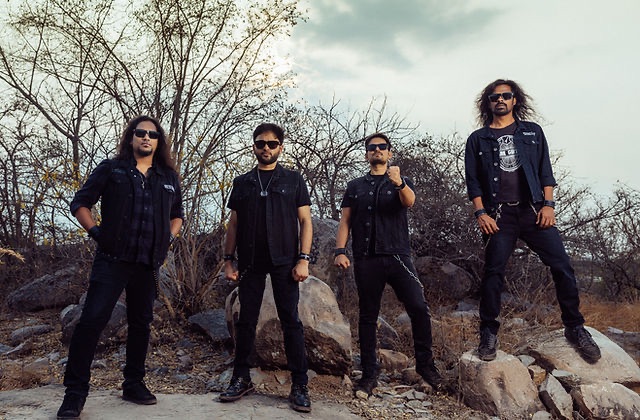
After all the death metal, groove and extremity elsewhere in India’s underground, Against Evil arrive from Visakhapatnam carrying a very different weapon: unapologetically traditional heavy metal.
Twin-guitar harmonies, galloping rhythms, speed-metal fire and enormous choruses form the band’s foundation. Against Evil draw deeply from the classic heavy-metal vocabulary of the ‘80s, but they aren’t interested in becoming a museum exhibit.
Their records have the muscular production and precision of a modern metal band while preserving the immediacy that made traditional heavy metal so addictive in the first place.
That approach found an enthusiastic audience far beyond India. Against Evil developed a particularly strong European following and eventually connected with German/Swiss label Doc Gator Records.
In 2019, backed in part by a grassroots crowdfunding effort from European metal fans, the band embarked on the 18-date Sentenced to Death European tour, bringing a Visakhapatnam heavy-metal band directly into the clubs and festivals of a continent where this particular strain of metal has remained fiercely loved.
Their growing international reputation also brought some formidable names into the studio. Nevermore and Arch Enemy guitarist Jeff Loomis contributed a guest solo to “Sentenced to Death,” while bass virtuoso Billy Sheehan appeared on “Out for Blood.”
Their recordings have also received the production treatment of Simone Mularoni at Italy’s Domination Studio, helping give Against Evil’s old-school metal instincts a thoroughly contemporary punch.
But the guest appearances and European connections aren’t what make Against Evil important here. It’s the fact that they occupy a completely different corner of India’s heavy-music landscape.
Against Evil are proof that Indian metal doesn’t have one dominant identity waiting to be neatly summarized.
From a coastal city on the Bay of Bengal came a band obsessed with galloping riffs, harmonized guitars and the eternal heavy-metal art of writing a chorus meant to be screamed back from the crowd.
Sometimes evolution means inventing something new. Sometimes it means grabbing an old torch and running like hell with it.
THE RABBIT HOLE GOES DEEPER
Six bands can barely begin to map a metal scene spread across a country as enormous and musically diverse as India. If you’re ready to keep digging, add:
- The Down Troddence: Kerala, progressive/groove metal with regional cultural influence.
- Bevar Sea: Bengaluru, doom/stoner metal. Completely different sonic territory from our main six.
- Plague Throat: Shillong, death metal. Gets Northeast India onto our map, which I really want.
- Albatross: Mumbai, theatrical/horror heavy metal. Another radically different flavor.
- Amorphia: Kerala, old-school thrash metal. Gives us proper balls-out thrash rather than deathrash or groove.
From established scene veterans to newer underground forces, consider these five names your invitation to disappear a little farther down the Indian metal rabbit hole.
And trust us: there is considerably more waiting beneath them.
INDIA DOESN’T HAVE ONE METAL SOUND. THAT’S THE POINT.
Six bands. Six cities, histories and very different ideas about what heavy music can become.
Demonic Resurrection helped build infrastructure when an Indian extreme metal industry barely existed. Gutslit carried Mumbai brutality onto international stages. Fallen Letters are part of a younger generation stretching progressive metal into increasingly darker territory. Godless turned Hyderabad into a launching point for precision deathrash. Zygnema took the relentless pulse of Mumbai and began folding Marathi and Carnatic traditions into its groove-metal machinery. And from Visakhapatnam, Against Evil proved there is plenty of room in this enormous country for galloping riffs, twin guitars and traditional heavy metal played with absolutely no apology.
And these six barely scratch the surface. That may be the most important thing to take away from this edition of World Metal Weekly.
India is not an emerging curiosity waiting for the international metal world to discover it. The scenes were already there. The bands were already playing. Records were being made, gigs organized, festivals built and underground networks held together long before much of the outside world bothered to look.
Bloodywood may have opened a particularly large door for a new generation of listeners, but behind that door is not another Bloodywood.
It is death metal and black metal. Thrash and groove. Progressive experimentation, traditional heavy metal and more.
Regional languages, mythology and musical traditions colliding with sounds imported from thousands of miles away, then being dismantled and rebuilt into something belonging to the musicians making it.
And somewhere beyond the six bands on this page, another rehearsal room is shaking in Bengaluru, another riff is being written in Mumbai, another underground show is being assembled somewhere we’ve never looked, and another band is waiting to hijack the assignment. That’s why we keep looking.
World Metal Weekly returns soon with another country, another scene, and another excuse to discover your next favorite band.
World Metal Weekly FAQ:
Q: What is World Metal Weekly?
A: A guided tour through the loudest corners of the planet. We pick a different country and six bands per stop, zero apologies for subjectivity.
Q: How do we pick the bands?
A: Taste, instinct, and a little chaos. The goal isn’t to chase hype, it’s to shine a light where the sparks are flying, whether anyone’s looking or not.
Q: Do I need a visa or a black-metal passport to follow along?
A: No paperwork required. Just headphones and questionable volume control decisions.
Q: Can bands submit music to be considered?
A: Absolutely. If you think your riffs can disturb the peace of a different continent, reach out. Worst case: we love it. Best case: we love it loudly.
Q: Does Metal Lair have any other weekly series like this?
A: Oh yes. If your appetite isn’t satisfied by one global feast, check out more from Metal Lair:
- Seven Deadly Songs – our weekly hunt for the seven must-hear new tracks.
- Metalhead Horoscopes – not your mothers horoscopes. Your weekly forecast in riffs written in metalhead culture, not retrogrades.
- Deep Cuts: Metal’s Hidden Gems – a descent into the vaults where legendary weirdness sleeps.
- A Rip in Time: Women in Metal – A series celebrating the voices, pioneers, and rule-breakers reshaping heavy music’s DNA.
- Metal Legacy Profiles – Deep-dive essays honoring artists who shaped metal’s sound, culture, and philosophy. These aren’t timelines or greatest-hits lists, but examinations of impact, conflict, evolution, and what each figure left behind.
- Ministry of Metal – A satirical authority devoted to the laws, rituals, and unspoken rules of heavy music. Features proclamations, decrees, cultural edicts, metal lore, and an original comic book series, all delivered with humor and bite.
- Road Riffs: Metal On The Map – We take metal beyond the speakers and onto the highway, exploring legendary venues, scene-defining cities, historic landmarks, local haunts, and travel stops tied to real
metal scenes around the world that every metalhead should experience.
More noise. More discovery. More excuses to stay up too late with incredible music.
About the Author
Chris Norris is the voice behind Metal Lair’s global metal coverage, World Metal Weekly. From funeral doom in the north to thrash born in the streets. Known for spotlighting bands before algorithms notice them and for writing with the precision of a scalpel… or a well-sharpened guitar pick. Vinyl collector. Night-shift journalist. Believes heavy music has no borders.
Read More From This Author:
Green Carnation Part III: The Messiah Complex Interview
Interview With The Ghoulstars: Horror Punk, VHS Culture & The Dark Overlords of the Universe
No algorithms. No fluff. No watered-down corporate metal coverage.
Subscribe to Metal Lair and get weekly underground features, Seven Deadly Songs, Deep Cuts, interviews, and original metal journalism sent directly to your inbox.

Join the patrons of Metal Lair
MetalLair.net is a metal zine muttering to itself about seo and blastbeats at 3 AM powered by caffeine, riffs, a severe lack of sleep, and a dog wondering why the human is still awake.
Sometimes it’s Kevin passing out mid Seven Deadly Songs.
Sometimes it’s digging up forgotten records no one else is talking about.
Always, it’s built for people who actually live this music.
If that sounds like you, you’re already one of us.
Supporting Metal Lair means keeping it independent, loud, and real with no corporate filters, no watered-down takes. If you want to help keep it alive…
Become a patron of Metal Lair.