Written By Sabbatha Ashvale
With the 2026 Rock & Roll Hall of Fame ceremony behind us, Rock Hall 2027 speculation has already begun. But for heavy music fans, the more interesting question is not simply who becomes eligible in 2027. It is how many influential rock and metal artists remain outside the institution.
Iron Maiden’s 2026 induction closed one particularly conspicuous chapter. It did not resolve the larger argument about how the Hall recognizes heavy music, especially artists whose influence can be measured in decades of musicians rather than in mainstream radio statistics.
Among the strongest omissions are System of a Down, Ronnie James Dio, Motörhead, Slayer, Alice in Chains, Pantera and a long roster of influential hard-rock and metal artists. Their arguments for recognition are not interchangeable. That is exactly why they deserve more than a token name-check. Metal Lair has previously examined this institutional blind spot in Metal on the Margins and tackled it with considerably less diplomatic restraint in Where Hard Rock Goes to Die and Metal Gets Melted Down.
System of a Down: A Metal Band That Changed the Language of Protest
System of a Down fused Armenian musical identity, thrash, alternative metal, unpredictable rhythmic shifts and political outrage into a sound that nobody could mistake for anyone else’s. Toxicity (2001), Mezmerize and Hypnotize (both 2005) were hugely successful without sanding away the band’s eccentricity. Their songs confronted war, state violence and historical memory while filling arenas. If originality, impact and influence are the Hall’s standards, System of a Down belongs in the conversation. It is particularly striking that 2026 inductee Rick Rubin is celebrated by the Hall for producing the band while the musicians themselves remain outside.
Ronnie James Dio: One Voice, Several Metal Eras
Ronnie James Dio’s case reaches beyond a single band. His towering performances with Rainbow, his era fronting Black Sabbath, and his work with Dio gave heavy metal some of its most enduring songs and imagery. His voice defined “Rainbow in the Dark,” “Holy Diver” and “Heaven and Hell,” while his association with the horns gesture became part of metal culture itself. Black Sabbath was inducted in 2006, but that is not a separate induction for Dio’s solo and Rainbow work. A dedicated recognition of Ronnie James Dio would acknowledge a career that shaped the genre across multiple chapters.
Motörhead: The Architects of Speed, Filth and Rock ’n’ Roll
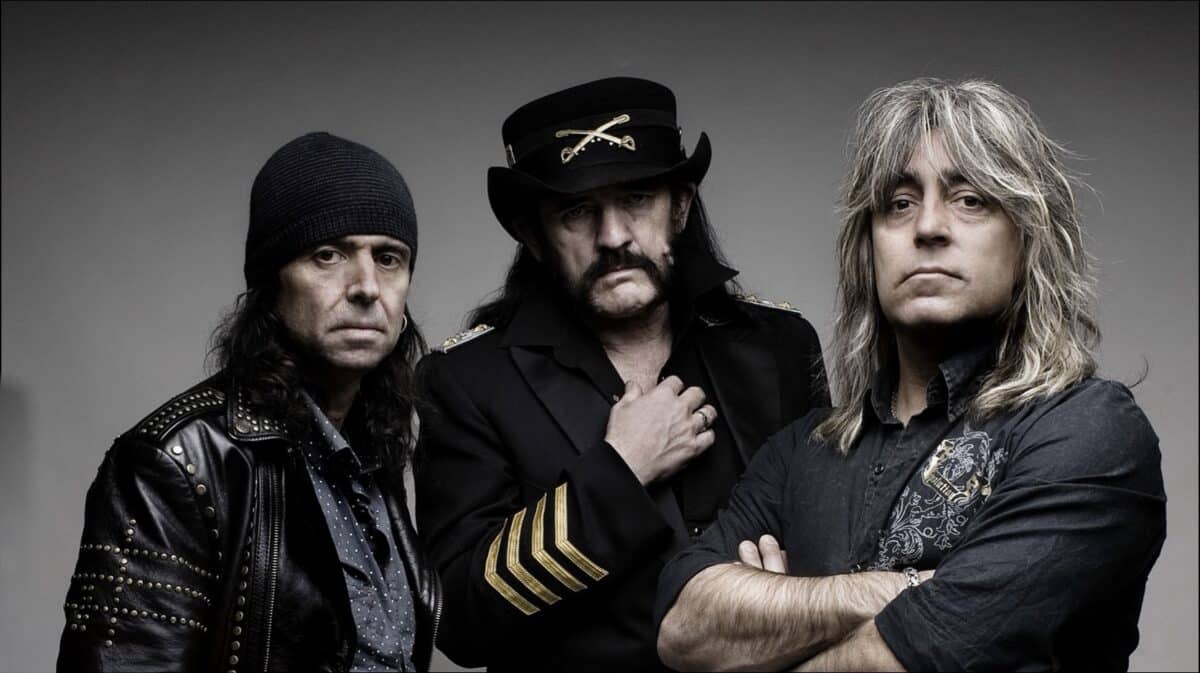
Motörhead made the border between punk and heavy metal practically irrelevant. Lemmy Kilmister insisted on calling his music rock ‘n’ roll, and records such as Overkill (1979), Bomber (1979) and Ace of Spades (1980) demonstrate why. The riffs were rooted in rock’s most primal instincts, but the speed, distorted bass and relentless attack gave subsequent generations permission to push everything further. Metallica’s reverence for Motörhead is well documented in its recordings of the band’s songs, including “Overkill” and “Damage Case” on Garage Inc. The debt runs far deeper than a handful of cover versions.
Motörhead finally appeared on the 2020 Rock Hall ballot, announced in October 2019. Initially, only Lemmy, Fast Eddie Clarke and Phil “Philthy Animal” Taylor were named. Following objections from fans and musicians, the Hall added Phil Campbell and Mikkey Dee, acknowledging the musicians who had sustained the band for much of its existence. Motörhead did not make the final induction class.
By the time that nomination arrived, all three members of the classic lineup were dead. No retrospective trophy can return the opportunity to celebrate their achievement with them in the room. The Hall can still recognize the legacy, however. A museum devoted to rock ‘n’ roll should hardly need a lesson in its own subject from Lemmy’s bass amplifier.
Slayer: The Uncompromising Architects of Extreme Metal
Slayer’s case rests on more than membership in thrash metal’s Big Four. Reign in Blood (1986), South of Heaven (1988) and Seasons in the Abyss (1990) demonstrated that extremity could accommodate precision, atmosphere and remarkable compositional discipline. Kerry King and Jeff Hanneman’s abrasive guitar language, Tom Araya’s commanding delivery and Dave Lombardo’s drumming supplied generations of extreme metal musicians with a vocabulary that stretched well beyond thrash.
Slayer also showed that uncompromising heavy music could command a substantial mainstream audience without reshaping itself to suit radio programmers. The band continued releasing records and filling major venues decades after its emergence, while its influence spread through death metal, black metal and hardcore. Its importance is not simply a question of how fast or how loud it played. It is what other musicians learned to do because Slayer had opened that door.
The Hall’s recognition of Rick Rubin makes the omission especially conspicuous. His production work on Reign in Blood deserves recognition, but so does the band that wrote and performed it. Celebrating the producer while leaving the musicians outside exposes a peculiar gap in the institution’s account of heavy music history.
Alice in Chains: The Darkness Beneath Seattle’s Revolution
Alice in Chains brought bleak harmonies, sludgy guitars and unsettling emotional weight into the heart of 1990s mainstream rock. Facelift (1990) and Dirt (1992) established a musical identity distinct from their Seattle contemporaries. Jerry Cantrell’s riffs and the intertwined voices of Cantrell and Layne Staley made tension itself a defining feature of the band’s sound. Their music could be devastating without resorting to theatrical excess.
Their acoustic material was equally consequential. In 1994, Jar of Flies became the first EP to top the Billboard 200, demonstrating an audience for the band’s quieter, more introspective side. “Nutshell” and “No Excuses” endure alongside the heavier material precisely because the emotional character of the music survived the change in instrumentation.
With Nirvana, Pearl Jam and Soundgarden already recognized by the Hall, Alice in Chains remains a conspicuous absence from the institutional history of Seattle’s musical revolution. The band’s continuation with William DuVall also deserves consideration: its legacy did not end with Staley’s death, and its subsequent work has extended a sound that remains unmistakably its own.
Pantera: Heavy Music’s 1990s Reinvention
Pantera made groove metal a major force, with Cowboys from Hell, Vulgar Display of Power and Far Beyond Driven changing the rhythmic vocabulary of heavy guitar music. Alongside Alice in Chains, the band helped carry metal through a decade when the public narrative often insisted metal was disappearing.
The Classic Rock and Metal Giants Still Waiting
Scorpions built an international hard-rock legacy over decades, from “Rock You Like a Hurricane” to “Wind of Change.” Thin Lizzy’s twin-guitar approach influenced countless metal bands, while Phil Lynott remains one of rock’s most distinctive songwriters and frontmen. UFO, particularly the Michael Schenker era, deserves similar scrutiny for shaping hard rock guitar playing. Mötley Crüe also has a case based on its role in turning Sunset Strip hard rock into a defining 1980s phenomenon, however divisive its reputation may be.
Thrash and Progressive Metal Should Not Be Invisible
Megadeth and Anthrax helped establish thrash as a global movement alongside Metallica and Slayer. Their catalogs and musical reach deserve to be weighed on influence rather than popularity contests. Tool created a singular bridge between progressive rock, alternative metal and monumental live presentation. Dream Theater made extraordinary musicianship central to a modern progressive-metal movement. These artists have very different audiences, but each helped create a musical vocabulary other bands continue to speak.
Beyond the Obvious Names
Styx, Kansas and Boston deserve a serious look for their contributions to 1970s arena and progressive hard rock. The Smashing Pumpkins and Stone Temple Pilots merit consideration for reshaping guitar-driven alternative rock. Faith No More’s restless genre-blending anticipated some of the most adventurous heavy music of the 1990s, and Korn helped open the door for the nu-metal explosion. There are reasonable debates to be had about priority and influence; pretending these artists were marginal to rock’s evolution is not a reasonable position.
Women Who Rocked the World and Are Still Waiting Outside the Hall
The Rock Hall’s omissions are not exclusively male. Several trailblazing all-female or female-fronted bands remain uninducted as groups, even though they helped transform hard rock, metal, punk and alternative music. This is not a claim that all these acts were equally influential, nor an invented list of 2027 nominees. It is a case for taking their achievements seriously. Metal Lair’s ongoing A Rip in Time: Women in Metal series has been documenting the history behind many of these names.
The Runaways: The Girls Who Refused to Behave
Long before rock’s biggest stages regularly welcomed women with distorted guitars, the Runaways were tearing through the 1970s with the kind of swagger the business usually reserved for boys. Their legacy goes beyond “Cherry Bomb”: Joan Jett, Lita Ford, Cherie Currie, Sandy West and Jackie Fox became proof that young women could define a hard-rock identity rather than merely decorate it. Joan Jett & the Blackhearts were inducted in 2015, but the Runaways themselves have not received a band induction. Explore Metal Lair’s Women in Metal: The Dangerous Ones and The Powerhouses for related coverage.
Girlschool: New Wave of British Heavy Metal Pioneers
Girlschool were not a novelty act on the sidelines of the New Wave of British Heavy Metal. They were part of the scene’s fabric, sharing stages with Motörhead, releasing records that became cult touchstones, and showing how a fiercely self-directed all-female band could thrive in heavy music. They have yet to receive Rock Hall induction. Metal Lair revisits their place in the history of heavy women in The Dangerous Ones and The Sisterhood.
Vixen: The Women Who Entered the Hair-Metal Arena
Vixen took the melodic hard rock of the late 1980s into the charts with “Edge of a Broken Heart” while playing in a scene heavily dominated by male bands. They were hardly the first women to rock, but their mainstream presence mattered to aspiring guitarists and drummers who could finally see themselves on MTV’s hard-rock rotation. The Hall has not inducted Vixen. Read Metal Lair’s The Sisterhood for more of the band’s place in the larger story.
L7: No Permission, No Apologies
L7 fused punk’s confrontational spirit with grunge and the dense heft of metal. The band’s biting humor, jagged riffs and refusal to be packaged into a polite stereotype made it a formative presence in alternative heavy music. The group remains outside the Hall. Metal Lair has covered L7 in The Unruly Ones and in its 2027 farewell-tour coverage.
Hole: A Difficult, Influential Alternative-Rock Legacy
With Live Through This and Celebrity Skin, Hole helped force abrasive, emotionally volatile female-fronted rock into the mainstream. Courtney Love’s public controversies have sometimes overwhelmed conversations about the band’s music, but critical assessment should separate artistic contribution from celebrity spectacle. Hole have not been inducted. Their omission belongs in any serious discussion of the alternative-rock era. Metal Lair has already given Courtney Love a dedicated feature in A Rip in Time: Women in Metal | The Sovereigns, including an examination of her work with Hole.
The Bangles: Rock History Is Bigger Than Metal
The Bangles were not a metal band, but their musicianship, harmonies, songwriting and guitar-driven power pop helped give all-female bands a broader mainstream presence in the 1980s. Their continued absence from the Rock Hall also raises questions about what kinds of women’s rock achievements the institution chooses to celebrate. Metal Lair’s Women in Metal: The Architects provides related historical context.
The comparison is instructive: the Hall has inducted Heart (2013), Joan Jett & the Blackhearts (2015) and the Go-Go’s (2021), yet recognizing those achievements does not automatically tell the whole story. The Runaways, Girlschool, Vixen, L7, Hole and the Bangles each contributed differently, and a stronger Hall would assess them on their own terms. These are examples of uninducted groups, not an exhaustive account of every overlooked woman in rock. The Hall’s exhibition history offers another perspective, explored in Metal Lair’s Sisters of Scream coverage. Exhibition recognition and induction, however, are two different things.
For verified induction records, consult the Rock & Roll Hall of Fame official archive. For more profiles and history, follow Metal Lair’s Women in Metal series.
Rock Hall 2027: Recognition Is Not the Same as a Nomination
None of these names is being reported here as an official 2027 nominee. The Rock Hall generally requires a first commercial release at least 25 years before nomination, and eligibility alone does not guarantee a ballot spot. The institution also has different induction categories, so the distinction between a Performer induction and Musical Excellence recognition is meaningful. Judas Priest received a Musical Excellence Award in 2022, for example, rather than a Performer induction. Soundgarden entered as Performers in 2025, and Iron Maiden followed in 2026. They should not be counted among the current omissions.
For the Hall’s official inductee record and categories, see Rock & Roll Hall of Fame’s inductee archive. For wider consideration of eligible rock and metal artists, see Loudwire’s analysis. Metal Lair previously covered Iron Maiden’s 2026 induction.
The latest crop of newly eligible artists also offers interesting possibilities. Audioslave, My Chemical Romance, Fall Out Boy and The Black Keys are among the rock acts entering the conversation. Eligibility is not the same as an actual nomination, and no 2027 ballot has been announced.
That caveat matters. This is an examination of potential candidates, not a report that those artists have been selected. There is no merit in inventing certainty before the Rock Hall announces the nominees.
The Hall has gradually broadened its definition of rock, and some of that expansion has been worthwhile. Yet expansion should not become an excuse for ignoring the genres that carried the sound into the next generation. If metal’s architects are important enough to influence everyone else, they are important enough to be considered on their own terms.
The 2027 ballot will eventually reveal whether those lessons have been absorbed. Until then, the most useful discussion is not who deserves another campaign of outrage. It is which musical legacies have genuinely earned recognition, and why the institution still struggles to acknowledge some of them.
Source: Original reporting.
ABOUT THE AUTHOR
Sabbatha Ashvale is Metal Lair’s resident wildfire in eyeliner. A music journalist and storyteller who writes like she’s swinging a torch through the catacombs of heavy music. She’s equal parts historian and shit-stirrer.
Her work focuses on artistry, history, and the often overlooked creators who define metal’s evolving future. She brings depth, grit, and a razor sharp perspective to every piece she writes.
Read More From This Author. Dive Deeper With:
The Most Anticipated Metal Albums of 2027
Unveiling Ageism in Music: The Climate Towards Legendary Hard Rock and Metal Artists
FILE A COMPLAINT WITH THE METAL LAIR COMPLAINT DEPARTMENT
Have a metal-related grievance that needs official investigation?
Bad concert etiquette? Venue bullshit? Festival fuckery? A trend in metal that needs to die? An industry annoyance? Something that’s been pissing you off since 1987? Have a complaint against Metal Lair?
FILE YOUR COMPLAINT
File it with the Complaint Department. Remmy may investigate your grievance in a future installment.
Selected grievances may be investigated, mocked, dissected or otherwise subjected to the questionable judgment of Remmy Chillmister in a future edition of The Metal Lair Complaint Department.
Submission does not guarantee investigation. Remmy has a substantial backlog of things that piss him off.

No algorithms. No fluff. No watered-down corporate metal coverage.
Subscribe to Metal Lair and get weekly underground features, Seven Deadly Songs, Deep Cuts, interviews, and original metal journalism sent directly to your inbox.

Join the patrons of Metal Lair
MetalLair.net is a metal zine muttering to itself about seo and blastbeats at 3 AM powered by caffeine, riffs, a severe lack of sleep, and a dog wondering why the human is still awake.
Sometimes it’s Kevin passing out mid Seven Deadly Songs.
Sometimes it’s digging up forgotten records no one else is talking about.
Always, it’s built for people who actually live this music. If that sounds like you, you’re already one of us.
Supporting Metal Lair means keeping it independent, loud, and real with no corporate filters, no watered-down takes. If you want to help keep it alive…
Become a patron of Metal Lair.
1 thought on “Rock Hall 2027: Could Slayer, Alice in Chains or Motörhead Finally Get Their Due?”