Written By Lucien Drake
There is a peculiar comfort in knowing that somewhere in Connecticut, Jamey Jasta is still finding new reasons to be absolutely furious.
Six years after Weight of the False Self, Hatebreed return with Fatal Paradox, released November 6, 2026, through BLKIIBLK. Eleven tracks, approximately 35 minutes, and enough metallic hardcore ammunition to make a demolition contractor reconsider his career choices.
This Hatebreed Fatal Paradox album review presents an interesting contradiction. This is a band whose entire musical identity revolves around refusing defeat, yet whose greatest creative challenge might be escaping the gravitational pull of its own established formula.
Fatal Paradox succeeds through conviction rather than reinvention. There are familiar breakdowns, serrated thrash riffs, shouted declarations of resistance, and the occasional unexpected detour. Beneath the aggression, however, the songwriting reveals more deliberate contrasts in pacing and arrangement than a cursory description of Hatebreed’s sound might suggest.
Produced by longtime collaborator Zeuss alongside the band, the record also arrives after significant personnel changes, including the departure of founding bassist Chris Beattie. Guitarist Wayne Lozinak’s recovery from a brain tumor adds another difficult chapter to the circumstances surrounding its creation.
For Hatebreed, survival has always been more than a lyrical slogan.
Hatebreed Fatal Paradox Album Review: Track-by-Track Breakdown
Kill Count Increase
The opening track wastes little time establishing the album’s intentions. A comparatively ominous introduction gives way to thrash-driven acceleration, with galloping guitars and the sort of rhythmic violence that has become Hatebreed’s calling card.
The arrangement eventually shifts toward a punishing breakdown, demonstrating how the band uses contrasting tempos to create impact. There is little interest in easing anyone into the proceedings.
As an opening statement, “Kill Count Increase” establishes the record’s central language: speed, confrontation, and controlled brutality.
The Carrion Choir
“The Carrion Choir” brings Hatebreed’s hardcore instincts to the foreground. The song combines rapid-fire riffing with emphatic rhythmic interruptions, creating the push-and-pull that makes this style so effective in a live setting.
Its gang-vocal character reinforces the communal dimension of Hatebreed’s music. These songs may concern personal battles, but their delivery transforms individual frustration into collective defiance.
The track’s strength is its economy. Rather than pursue elaborate composition, it concentrates aggression into a compact, immediately recognizable attack.
Decisions Become Destinies
Here, the band leans more heavily into its thrash-metal influences.
“Decisions Become Destinies” uses staccato rhythmic patterns, driving bass passages, and a prominent guitar solo that gives the arrangement an unexpectedly traditional metal flavor.
That solo is particularly interesting because Hatebreed’s identity has never depended upon instrumental exhibitionism. Their guitars generally serve the groove rather than demand the spotlight.
The combination of classic thrash vocabulary and hardcore rhythmic discipline makes this one of the record’s more distinctive compositions.
Total Invincible
The title is practically a mission statement.
“Total Invincible” favors speed and blunt-force execution, moving between aggressive passages and the heavier rhythmic punctuation associated with beatdown hardcore.
There is a certain absurd grandeur to Hatebreed’s vocabulary of absolute resistance. Nobody is literally invincible, of course. Human beings are frustratingly breakable creatures.
But the music operates on emotional exaggeration rather than biological accuracy. Its purpose is to make vulnerability feel temporarily negotiable.
Fatal Paradox
The title track provides a welcome shift toward more deliberate pacing.
Rather than depend entirely on speed, “Fatal Paradox” emphasizes groove and the tension created by slower, weightier rhythmic movements.
Lyrically, the song confronts dishonesty, manipulation, and structures of power. This gives the record’s combative language a broader target than the usual catalog of personal enemies.
The interesting paradox is that Hatebreed’s music sounds relentlessly confrontational while frequently communicating a profoundly restorative message.
Anger becomes the delivery system for resilience.
Still a Threat
“Still a Threat” operates in heavier, more deliberate territory, balancing mid-tempo grooves with familiar hardcore rhythmic patterns.
The title invites an obvious interpretation, particularly considering the considerable history behind the band. But the more interesting reading concerns the difference between aggression as youthful rebellion and aggression as an established artistic discipline.
Hatebreed no longer need to prove that they can play heavy music.
The question is whether they can continue making that heaviness meaningful. Here, rhythmic control appears more important than novelty.
Sacrifice Season (Featuring John Tardy)
The album’s most compelling collaboration brings Obituary vocalist John Tardy into Hatebreed’s particular brand of organized hostility.
Atmospheric sounds of sirens and urban disorder introduce a composition that moves between hardcore velocity and crushing death-metal weight.
Tardy’s unmistakable vocal character introduces a different species of menace, contrasting with Jasta’s more direct, commanding delivery.
The pairing also illustrates the porous boundary between death metal and metallic hardcore. Both styles understand the physical impact of rhythm, although they approach vocal expression from different traditions.
“Sacrifice Season” stands out as one of the album’s most adventurous arrangements without abandoning its fundamental identity.
Truth Is a Lion
“Truth Is a Lion” returns to the record’s core combination of muscular riffing, compact songwriting, and confrontational momentum.
The title offers another example of Hatebreed’s preference for bold, declarative imagery. Subtlety is not necessarily absent from their music, but it rarely gets invited to operate the microphone.
Musically, this is territory the band knows intimately.
Its success depends less upon discovering a new direction than upon making familiar structures feel purposeful rather than automatic.
This is crucial when considering an album built so confidently around an established sound.
Make the Demons Obey
The thrash influence becomes especially pronounced on “Make the Demons Obey,” with forceful riffing and an aggressive rhythmic approach that brings Slayer’s influence into the conversation.
Yet the song’s title also captures Hatebreed’s recurring psychological framework.
The demons are not merely external antagonists. They can represent fear, doubt, addiction, destructive impulses, or whatever else threatens to gain control of an individual’s life.
Jasta’s writing frequently converts inner turmoil into the vocabulary of physical confrontation.
It is hardly delicate therapy, but that has never been the central idea.
None Left to Save
At more than six and a half minutes, “None Left to Save” represents a notable departure from Hatebreed’s customary preference for short, concentrated bursts.
Its expanded running time allows the band to explore a more sustained arrangement, giving the album a broader final statement before the closing cover.
This is perhaps the track that raises the most interesting question about Hatebreed’s future.
Could their established rhythmic language support longer, more structurally adventurous compositions?
The existence of “None Left to Save” suggests there may be room to explore that possibility without sacrificing the band’s identity.
Poison Planet (Corrosion of Conformity Cover)
Hatebreed close the album by revisiting “Poison Planet,” originally recorded by Corrosion of Conformity.
The selection is particularly appropriate. Early Corrosion of Conformity helped establish the musical territory where hardcore punk and metal could exchange influences without asking permission from either camp.
Hatebreed’s version brings that lineage back into focus, connecting the band’s contemporary sound to the crossover tradition that helped make it possible.
Rather than functioning as an arbitrary bonus, the cover provides a useful historical punctuation mark.
Sometimes the most revealing statement a band can make is acknowledging where its musical language originated.
The Strength and Limitation of the Hatebreed Formula
The central question in this Hatebreed Fatal Paradox album review is not whether the band has abandoned its identity. They clearly have not.
The more worthwhile discussion concerns how effectively they operate within it.
Across the critical reception, certain observations recur: Jasta’s forceful vocal presence, the album’s exceptionally aggressive rhythmic character, Zeuss’s production, and the variations in pacing that prevent the material from becoming entirely uniform.
There are also reasons to resist declaring every familiar Hatebreed maneuver a revolutionary achievement.
The band has spent its career refining a musical vocabulary built around cathartic repetition, physical energy, and motivational confrontation. That vocabulary has limits. Not every breakdown represents a fresh discovery, and sheer heaviness cannot automatically substitute for memorable songwriting.
Yet there is something artistically legitimate about refining an established identity rather than abandoning it to satisfy expectations of reinvention.
Fatal Paradox appears most convincing where that discipline intersects with genuine variation, particularly on “Decisions Become Destinies,” “Sacrifice Season,” and the extended “None Left to Save.”
Final Assessment: Familiar Weapons, Renewed Conviction
This Hatebreed Fatal Paradox album review arrives at a familiar conclusion: the band’s ninth studio album does not present itself as an elaborate stylistic transformation.
Instead, Fatal Paradox reinforces the qualities that established the Connecticut band as one of metallic hardcore’s defining forces while allowing occasional glimpses of broader compositional ambition.
The critical consensus has been strongly favorable, although the album’s commitment to a familiar formula remains its most obvious limitation.
Perhaps its most interesting achievement is that Hatebreed’s relentless rhetoric of resistance has not become completely detached from the realities of struggle, loss, and personal endurance.
Their music still speaks in absolutes, even when life offers very few.
And beneath all the breakdowns, threats, and motivational declarations, there remains a stubbornly human proposition: survival is not always dignified, elegant, or particularly pleasant.
Hatebreed recently announced a series of stadium shows with Slipknot in 2027, including an appearance at Wembley Stadium in London. Those dates are below. The band is also currently touring Europe. All dates are here.
HATEBREED ON TOUR:
WITH SLIPKNOT:
7/3 — London, UK — Wembley Stadium
9/8 — Buenos Aires, Argentina — Estadio Huracán
9/12 — Santiago, Chile — Estadio Nacional
9/14 — Lima, Peru — Estadio Nacional
9/16 — Bogotá, Colombia — Vive Claro

Fatal Paradox Tracklist:
1.Kill Count Increase
2.The Carrion Choir
3.Decisions Become Destinies
4.Total Invincible
5.Fatal Paradox
6.Still A Threat
7.Sacrifice Season (feat. John Tardy)
8.Truth Is A Lion
9.Make The Demons Obey
10.None Left To Save
11.Poison Planet

HATEBREED ARE:
Jamey Jasta — Vocals
Wayne Lozinak — Guitar
Frank Novinec — Guitar
Matt Byrne — Drums
Carl Schwartz — Bass
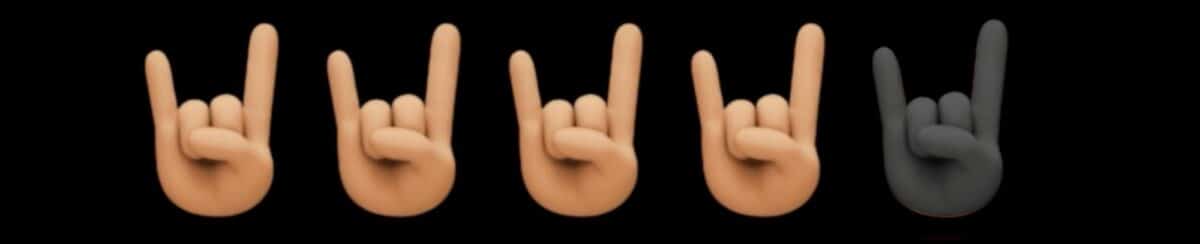
Metal Lair Rates Fatal Paradox 4 out of 5 Metal Horns
HATEBREED ONLINE:
For more Hatebreed-related coverage, revisit Metal Lair’s November 6 edition of Seven Deadly Songs, where Kevin McSweeney highlights the album’s release.
You can also explore our earlier coverage of Jamey Jasta’s collaboration with Exodus vocalist Steve “Zetro” Souza.
Fatal Paradox is available now through BLKIIBLK. Visit Hatebreed’s official website for additional information.
Album details: Hatebreed | Fatal Paradox | BLKIIBLK | November 6, 2026 | 11 tracks.
About The Author:
Lucien Drake is a writer and archivist at Metal Lair, contributing across features, essays, cultural commentary, and long-form series including Deep Cuts, Road Riffs and editorial projects exploring music, memory, and resistance.
Known for treating heavy music as living history rather than nostalgia, Drake focuses on influence over canon, context over hype, and the stories that survive outside official timelines.
Read More From Lucien Drake:
AMON AMARTH – THE ALLFATHER AWAKENS REVIEW: THE OLD GODS STILL HAVE TEETH
Metal, Censorship , and The Old War That Never Ends
Rock & Metal Website Directory: 192 Publications Worldwide
The Metal Sex Playlist: Bang Your Head… and Each Other
Before Algorithms Hunting Metal Was Bloodsport
FILE A COMPLAINT WITH THE METAL LAIR COMPLAINT DEPARTMENT
Have a metal-related grievance that needs official investigation?
Bad concert etiquette? Venue bullshit? Festival fuckery? A trend in metal that needs to die? An industry annoyance? Something that’s been pissing you off since 1987? Have a complaint against Metal Lair?
FILE YOUR COMPLAINT
File it with the Complaint Department. Remmy may investigate your grievance in a future installment.
Selected grievances may be investigated, mocked, dissected or otherwise subjected to the questionable judgment of Remmy Chillmister in a future edition of The Metal Lair Complaint Department.
Submission does not guarantee investigation. Remmy has a substantial backlog of things that piss him off.
No algorithms. No fluff. No watered-down corporate metal coverage.
Subscribe to Metal Lair and get weekly underground features, Seven Deadly Songs, Deep Cuts, interviews, and original metal journalism sent directly to your inbox.
Join the patrons of Metal Lair
MetalLair.net is a metal zine muttering to itself about seo and blastbeats at 3 AM powered by caffeine, riffs, a severe lack of sleep, and a dog wondering why the human is still awake.
Sometimes it’s Kevin passing out mid Seven Deadly Songs.
Sometimes it’s digging up forgotten records no one else is talking about.
Always, it’s built for people who actually live this music.
If that sounds like you, you’re already one of us.