Written By Chris Norris
Faith, Fury and the Uncomfortable Questions Behind 30 Silver
Black metal has never been particularly comfortable with Christianity. Its history includes movements defined by religious opposition, yet its musical language has also been adopted by artists whose convictions stand in direct contrast to those traditions.
Australian musician Craig Bannerman occupies that unlikely intersection.
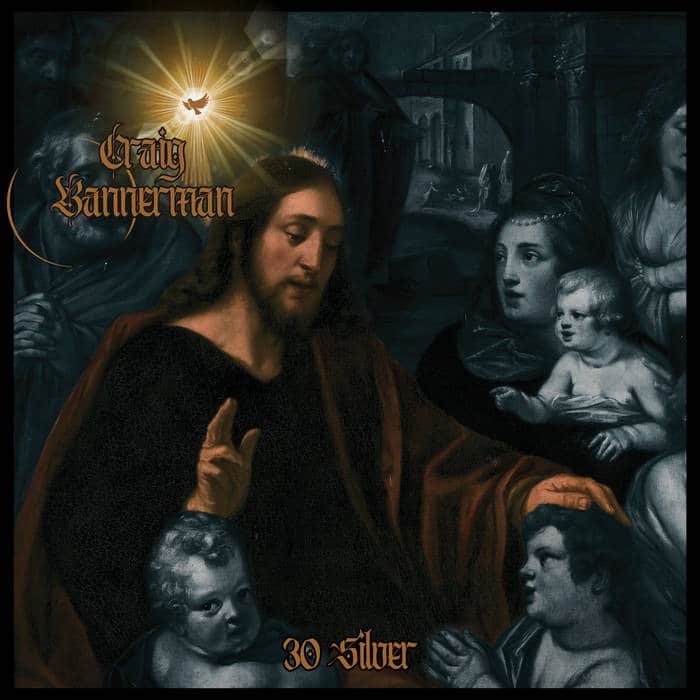
In this Craig Bannerman interview, Metal Lair explores the creative and spiritual convictions behind 30 Silver, a nine-track album released October 12, 2026, that combines blackened melodic death metal, orchestral arrangements and biblical Scripture.
Based in Melbourne, Bannerman approaches composition as an expression of Christian worship rather than simply a musical exercise. His work embraces the aggression and darkness associated with extreme metal while exploring suffering, betrayal, judgment, sacrifice and redemption.
The album’s title references the thirty pieces of silver associated with Judas Iscariot’s betrayal of Jesus Christ. Across its nine compositions, Bannerman draws from biblical passages that confront the consequences of human choices, the anguish of suffering and the relationship between faith and mortality.
One of the record’s more unusual elements appears in O Death, Where Is Thy Sting?, which incorporates Neville Chamberlain’s 1939 announcement of Britain’s entry into World War II. The collision of historical catastrophe and biblical reflections on death offers a revealing glimpse into Bannerman’s approach to composition.
Yet the larger questions extend beyond religion. Can a genre be defined by its sound without being bound to its historical ideology? Can listeners connect with music whose spiritual convictions they don’t share? And what happens when artistic decisions are understood not merely as creative choices, but as expressions of faith? For Bannerman, these questions are inseparable from his music.
Metal Lair spoke with him about 30 Silver, the relationship between Christianity and black metal, the challenges of composition, and his conviction that even the most ferocious music can serve as an expression of worship.
Craig Bannerman Interview With Metal Lair
Metal Lair: 30 Silver unfolds across nine tracks, but its title immediately evokes betrayal through the thirty pieces of silver associated with Judas Iscariot. Why did you choose that particular image to frame an album addressing such a broad range of Scripture, suffering, judgment and redemption?
Craig Bannerman: The theological and spiritual focus of my album 30 Silver is the person of Jesus Christ.
I deliberately designed the presentation of the album to reveal His perfect, loving character, juxtaposed against what He was worth to some: thirty pieces of silver.
But the thirty pieces of silver are not merely a historical reference to Judas Iscariot. They represent a question that confronts every person: What is Jesus Christ worth to you?
There is another layer to the presentation. It is a direct confrontation with genre expectations. The album cover is unashamedly warm, presenting the invitation of love. Christ, the Light of the World, is depicted blessing children.
Who do you suppose those children are?
They are you and I. Christ taught that we must become as little children to enter the Kingdom of Heaven.
But the presentation doesn’t end with the cover.
Look at the CD artwork, included with the album download. On the disc you will see Judas hanging in the Field of Blood, his entrails spilled. Lift the disc, and beneath it you will find the betrayal of love with a kiss. Turn the inlay over, and you will see the cost of that love: the sacrifice of Jesus Christ for our sins.
The entire presentation brings together the broad range of Scripture explored throughout the nine compositions: Who He is, why He came, and what our redemption cost Him.
But there is another question: What is He worth to us?
The gospel is the free gift of God, purchased not with silver or gold, but with the precious blood of Christ. Yet how many are unwilling to surrender even their comforts to follow Him?
Christ said that whoever would follow Him must deny himself, take up his cross daily and follow Him.
The tragedy of Judas is not confined to Judas. Men still weigh Christ against what they possess, what they desire, and what they are unwilling to lose.
And so the album presents Christ in His perfect love, the cost of our redemption, and a question that cannot simply be dismissed as ancient history.
Will you receive the One who gave Himself freely for you, or will you keep your thirty pieces of silver?
Metal Lair: You combine the aggression of blackened melodic death metal with orchestral arrangements and passages of considerable emotional restraint. How do you decide when a composition needs overwhelming heaviness and when a quieter musical moment might communicate something more effectively?
Craig Bannerman: It’s not something I consciously choose, at least not in the way people might imagine in terms of pre-planning. My compositions are primarily a process of discovery.
Sometimes I begin with a biblical concept that is particularly upon my heart at that time in my walk of faith.
Musically, my compositions are predominantly rhythmically driven by guitar. I write most of my songs on an acoustic guitar before developing, translating and recording the arrangements with distorted electric guitars.
During recording, everything generally begins with a metronome and my guitar rhythm. There are exceptions, such as the opening of For dogs have compassed me, but my point is that the music begins naked, without a fully conceptualised composition.
Once I’ve established the rhythmic foundation, perhaps with some basic drum grooves to help establish the feel, I begin writing the lead melodies. This is a beautiful part of the process for me, because expression begins to emerge from what was initially a bare rhythmic structure.
Sometimes I discover that distortion simply won’t work with certain intricate guitar passages, particularly delicate fingerpicked harmonies. These limitations contribute to the eventual structure of the song, but they also introduce new possibilities. What might initially seem like a limitation can create the freedom to explore more delicate orchestration.
And so, as the composition gradually takes shape through this process of discovery, the music itself begins to reveal its thematic and scriptural placement.
I would also distinguish between musical restraint and emotional restraint. A quieter passage is not necessarily expressing less emotion. Sometimes the most delicate musical moments carry the greatest emotional weight, Tarry Ye Here, for example.
But none of this occurs independently of my relationship with God. My early morning prayer as I awaken is, “Lord, help me make this song beautiful for You. Guide me into Your will.”
So while people may hear aggression or blackened metal, I hear love for God.
Metal Lair: The album includes both Outer Darkness and Crown of Life, compositions dealing with dramatically different spiritual outcomes. How did you approach the musical contrast between judgment and hope, and was it important that these opposing themes existed within the same record?
Craig Bannerman: I’d add I Never Knew You to your list, as it also deals with the reality of judgment.
Retrospectively, as this album developed through a process of prayer and discovery, I can see how these compositions came to stand alongside one another. But when I finished Outer Darkness, Crown of Life wasn’t even a thought. I wasn’t consciously planning a contrast between judgment and hope.
Outer Darkness has a rather interesting history. I discovered an old recording of mine from around April 2009, when I was still a babe in Christ, and I wanted to complete what I had begun all those years ago.
Musically, the bridge also reflects a more recent dream I had involving complex rhythms. But thematically, I was trying to convey something much older: a recurring dream I experienced as a child.
In that dream, I would find myself falling into what I can only describe as an eternal vortex of darkness, accompanied by an overwhelming spiritual and emotional sense of separation from everything that is good.
I wanted to communicate something of that experience through the composition.
So the musical character of Outer Darkness wasn’t developed as a deliberate contrast to Crown of Life. They emerged independently, through very different experiences and stages of my life.
What we have, ultimately, is the gospel.
John 3:16 declares:
“For God so loved the world, that he gave his only begotten Son, that whosoever believeth in him should not perish, but have everlasting life.”
Consider also the spoken words at the conclusion of Crown of Life, taken from James 1:12:
“Which the Lord hath promised to them that love him.”
But the album doesn’t end with Crown of Life. It concludes with If I be lifted up from the earth, drawing upon John 12:32:
“And I, if I be lifted up from the earth, will draw all men unto me.”
Jesus Christ is the Judge of all. All power and authority in heaven and earth have been given to Him by the Father. He sits at the Father’s right hand, and He is worthy to open the scroll and break its seals.
He is both Saviour and Judge.
To circle back to your question, these opposing themes, as you describe them, are in fact inseparable. They are both revealed in the gospel of Jesus Christ.
Musically, after Crown of Life, I wanted an orchestral worship composition to allow the listener, and myself, to decompress.
So I asked the Lord, “Lord, help me make a beautiful worship song for You.”
And He provided.
The musical contrast was born out of love for the listener and my own desire to worship God.
Metal Lair: In O Death, Where Is Thy Sting?, you incorporate Neville Chamberlain’s announcement of Britain’s entry into World War II. You’re bringing together a historical declaration of war and a biblical declaration of victory over death. What relationship were you drawing between those two moments, and did you consider the possibility that listeners might interpret the connection differently than you intended?
Craig Bannerman: If I remember correctly, the introduction to O Death, Where Is Thy Sting? didn’t originally contain Neville Chamberlain’s declaration. It was a late addition, after I began developing the visual concept for the music video around the Second World War, particularly the chaplains who accompanied soldiers into battle.
War is deeply personal to many people, and what I was attempting to communicate through the visuals was its spiritual senselessness, the suffering it produces, and the disconnect between collective declarations and celebrations of victory and the human cost of that victory on all sides, while today’s youth bear witness to both its legacy and its celebration.
A nation may declare victory, but what of the dead? What of the injured — physically, emotionally, spiritually and psychologically? What of the soul? What of those who have lost their sons, their fathers, their brothers? The suffering does not simply disappear because victory has been declared.
In a very fundamental sense, we are looking at Cain killing Abel.
But relationally, consider the biblical declaration in 1 Corinthians 15:55:
“O death, where is thy sting? O grave, where is thy victory?”
What victory does death hold over those who belong to Jesus Christ? He has conquered death. He will raise those who belong to Him, and to be absent from the body is to be present with the Lord.
Here we encounter a very different victory.
The song has multiple layers of meaning, particularly through its visual presentation. The original single has an accompanying music video, and I’ll also be releasing a video for the album’s updated mix and master.
I’ve deliberately left elements of the visual narrative open to interpretation.
Why do you suppose chaplains had a role in war? And what about that famous saying, “There are no atheists in foxholes”?
What is Christ able to forgive?
The answer is all sin to the repentant heart.
When men are confronted with their own mortality, questions of life, death, sin, forgiveness and eternity become profoundly personal.
I’m quite aware that listeners may interpret the historical imagery differently. War carries different meanings and personal histories for different people, and I don’t intend to dictate every interpretation.
But at the heart of the composition is the distinction between the victories of men, so often purchased at the cost of human life, and the victory of Jesus Christ over death itself, purchased at the cost of His own life.
For those who belong to Him, the grave does not have the final victory.
Metal Lair: Black metal has a complicated cultural history, particularly concerning Christianity. Have you encountered resistance from listeners because of the way you combine the genre with your faith? And do you believe a musical genre should be defined primarily by its sound, its history or the beliefs of the people creating it?
Craig Bannerman: I’ve encountered resistance, but I’ve also found open doors to share my faith through the music.
I don’t personally see music as merely “sound” when men are composing. I believe spirit is more real than matter, and that what a person creates can express something of their heart, soul, spirit, convictions and spiritual identity, but may also reflect spiritual influences greater and more powerful than themselves.
Definitions are ultimately questions of identity. Some prefer to identify a genre by its sound, others by its history, others by its ideology or spiritual character. I think all these things contribute to how we understand a genre, but they don’t necessarily determine what an individual artist must express through it.
Personally, I prefer the term unblack metal because it identifies what I’m doing with the genre. I’m not attempting to conceal my faith, nor am I particularly concerned with conforming to expectations about what black metal ought to represent.
I’m here to redeem.
Consider the words of Joseph to his brothers in Genesis 50:20:
“But as for you, ye thought evil against me; but God meant it unto good, to bring to pass, as it is this day, to save much people alive.”
I believe that what men have used for evil can be turned towards good, even the musical language of a genre historically associated with hostility towards Christianity.
And consider the words of Jesus Christ in Matthew 16:18:
“…upon this rock I will build my church; and the gates of hell shall not prevail against it.”
Why should I concede an entire musical language to those who would use it against Christ?
I would rather take what has been used to blaspheme His name and use it to glorify Him, in an attempt to preach the gospel to those who have an ear to hear within darkness.
“To the weak became I as weak, that I might gain the weak: I am made all things to all men, that I might by all means save some.” – 1 Corinthians 9:22
Metal Lair: You’ve described your songwriting as an act of worship, guided by faith rather than commercial expectations. But making music also involves judgment, revision and sometimes rejecting ideas. How do you distinguish between a musical decision that needs improvement and something you believe you’re spiritually called to preserve?
Craig Bannerman: I’m learning that it depends on what the music is saying.
Some of my compositions carry what I would describe as a “Do Not Touch” sign, because of the overall atmosphere captured during their creation, which has matured and taken on greater significance with time.
Nothing is ever perfect, and I constantly wrestle with wanting to present the music as beautifully and faithfully as I can, treating it as a living work.
But there is a danger in refinement. Something can become technically better while losing something of the original expression that made it special.
So I don’t have a clear answer or a fixed set of rules. Some things are better left untouched, while others can be improved. Part of the process is learning to recognise the difference.
I don’t consider any of my projects completely closed books, apart from the original singles, which I preserve as representations of the creative work at the time of their completion.
If you look through my catalogue, you’ll see singles and albums. The albums are generally those individual compositions brought together and presented as a complete body of work, often with further refinement.
Perhaps I can offer a rather unusual analogy.
The singles are like fragments of ancient biblical manuscripts, representing spiritual preservation, retaining the original work as it existed at the time. The albums are like translations, bringing those fragments together into a complete body of work while allowing for improvements.
And as I learn the Greek better, the translation may undergo further refinement!
Metal Lair: Your compositions draw extensively from Scripture. Does working with established biblical passages ever impose creative limitations, or does interpreting those passages through extreme metal challenge you to find more inventive ways of expressing their meaning?
Craig Bannerman: Sometimes I wrestle with multiple scriptural possibilities. Occasionally, a passage I initially considered no longer fits as the music begins to reveal itself through the compositional process. The songs are never fixed until they are complete.
I’m dependent upon God. Every morning during the creative process, my prayer is:
“Lord, help me make this beautiful for You. Help me make this honouring to You. Guide me into Your will, O Lord.”
As for limitations, there are many, particularly those I recognise in my own musical abilities and the tools available to me.
One example is the screaming vocals. I use virtual instruments containing prerecorded vocal phrases, which can say a great deal while communicating very little in terms of actual words. The same applies to some of the female vocal phrases. I arrange these elements to create atmosphere and emotional expression around the spoken Word of God.
There are certainly creative limitations in this process. Even talking about them makes me a little anxious, because I can imagine possibilities that I don’t yet know how to realise.
But I also believe that all things are possible with God, and that every work eventually comes to its conclusion.
There will even come a time when the guitar can no longer be recorded by my outward man.
As Paul writes in 2 Corinthians 4:16:
“For which cause we faint not; but though our outward man perish, yet the inward man is renewed day by day.”
So while I encounter limitations in my ability to communicate Scripture through music, I don’t necessarily see Scripture itself as the limitation.
Rather, it is an inexhaustible source of truth that I am continually learning to express, within the limitations of my own abilities, understanding and time.
Metal Lair: Extreme metal frequently explores anguish, isolation, mortality and human suffering, themes that also appear throughout the Bible. Do you think there’s an overlooked emotional connection between the intensity of extreme metal and the darker passages of Scripture?
Craig Bannerman: Overlooked by whom?
I’m certainly not the first Christian to express biblical themes through extreme metal.
Overlooked by the institutional Church? Perhaps. Or perhaps the connection is recognised, but certain musical expressions are considered more appropriate outside the corporate worship of the gathered brethren.
I’m sure my grandmother wouldn’t particularly want her Sunday worship to consist of tremolo picking and blast beats while singing about Calvary, when a beautiful organ, choir and orchestra can communicate that same emotional intensity in an entirely different way.
But you never know, do you? Perhaps she’s my biggest supporter!
I think the connection is quite natural. Scripture does not shy away from anguish, isolation, suffering or death. Consider Job in his affliction, the lamentations of David, or the sorrow of Jesus Christ in Gethsemane.
These are not emotionally restrained accounts of human suffering. They confront us with some of the deepest experiences of the human soul.
Extreme metal provides one musical language through which those realities can be expressed, but it certainly doesn’t have exclusive ownership of emotional intensity.
From David’s harp to a solitary voice, an organ, a choir, an orchestra or a wall of distorted guitars, all can communicate something profound.
Ultimately, what matters to me is not how extreme the musical expression is, but whether it faithfully carries the truth of what is being presented, for the purpose of worshipping God.
Metal Lair: In your earlier interviews, you’ve emphasized the importance of allowing your faith to guide the creative process. Have you ever begun writing a composition with one musical or spiritual intention, only to discover that the finished piece expressed something entirely different from what you originally envisioned?
Craig Bannerman: Oh yes, as we’ve touched on in earlier questions. There was one song that changed day by day towards its completion. I can’t recall which one now, but yes!
However, what is important is what I’ve stated previously: I am dependent upon God to guide me.
Metal Lair: Some listeners approach music primarily through its emotional impact, while others pay close attention to the philosophy or ideology behind it. For someone who doesn’t share your religious beliefs but genuinely loves extreme metal, what would you hope they take away from 30 Silver?
Craig Bannerman: The cover of the album, and the passion of the work that went into presenting it.
Metal Lair: The relationship between Christianity and black metal raises an interesting question about artistic identity. Do you feel that labels such as Christian black metal and unblack metal help listeners discover your work, or can those classifications create unnecessary boundaries around what you’re trying to express?
Craig Bannerman: Traditionally, black metal established boundaries that distinguished it from death metal. And black metal, like the Protestant Church, has branched off for numerous reasons.
Two of those protests are Christian black metal and unblack metal, and surprisingly (although not really), there are boundaries there too. Some who identify with unblack metal consider Christian black metal a contradiction in terms, while others see black metal primarily as a musical classification.
For the sake of my brethren, whom I love in our Lord, I carry both labels.
So yes, identity can create both boundaries and opportunities for discovery.
Let every man examine himself, really.
What is it you conform to?
And if you say nothing, I don’t believe you.
Monty Python, Life of Brian (1979):
- Brian: “Look, you’ve got it all wrong! You don’t need to follow me. You don’t need to follow anybody! You’ve got to think for yourselves! You’re all individuals!”
- The Crowd (in unison): “Yes, we’re all individuals!”
- Brian: “You’re all different!”
- The Crowd (in unison): “Yes, we are all different!”
- A lone voice from the back: “I’m not.”
- The Crowd: “Shh!”
But in all seriousness, I believe there is someone who is worth following: the Good Shepherd.
Metal Lair: Your music deals with difficult subjects including suffering, abandonment, judgment and death, yet your personal faith provides a framework of hope and redemption. Do you think music sometimes needs to leave listeners uncomfortable rather than offering them immediate reassurance or resolution?
Craig Bannerman: When I release singles, yes, I sometimes leave the listener without easy reassurance or resolution. But that is not outside the context of my broader body of work, or the context of the Bible itself, which is readily available in the modern world.
For example, if someone were exposed to Outer Darkness and had ears to hear the judgment of Christ upon “all things that offend, and them which do iniquity” (Matthew 13:41), I’m not concerned with that person’s comfort. I’m concerned for the salvation of their soul.
Metal Lair: You’ve already established a distinctive combination of extreme metal and orchestral composition. Looking beyond 30 Silver, are there musical directions, instruments or compositional ideas you haven’t yet explored that you’d like to incorporate into future work?
Craig Bannerman: Considering the sheer physical toll that creating 30 Silver has taken on me, at this point I’d love nothing more than to hear the rustling of people’s Bible pages after they’ve encountered the album.
Craig Bannerman’s approach to extreme metal challenges conventional boundaries between musical identity, personal conviction and artistic expression. Whether listeners share his faith or not, 30 Silver offers a distinctive perspective on the relationship between spirituality and the intensity of heavy music.
Metal Lair thanks Craig Bannerman for his thoughtful, candid responses and for sharing the creative and spiritual convictions behind his music.
Tracklist:
1.How Long O LORD
2.For dogs have compassed me
3.O death, where is thy sting?
4.Outer Darkness
5.Angelos Satana
6.I Never Knew You
7.Tarry Ye Here
8.Crown of Life
9.If I be lifted up from the earth
John 3:16 (KJV)
“For God so loved the world, that he gave his only begotten Son, that whosoever believeth in him should not perish, but have everlasting life.”
Psalm 22:16 (KJV)
“For dogs have compassed me: the assembly of the wicked have inclosed me: they pierced my hands and my feet.”
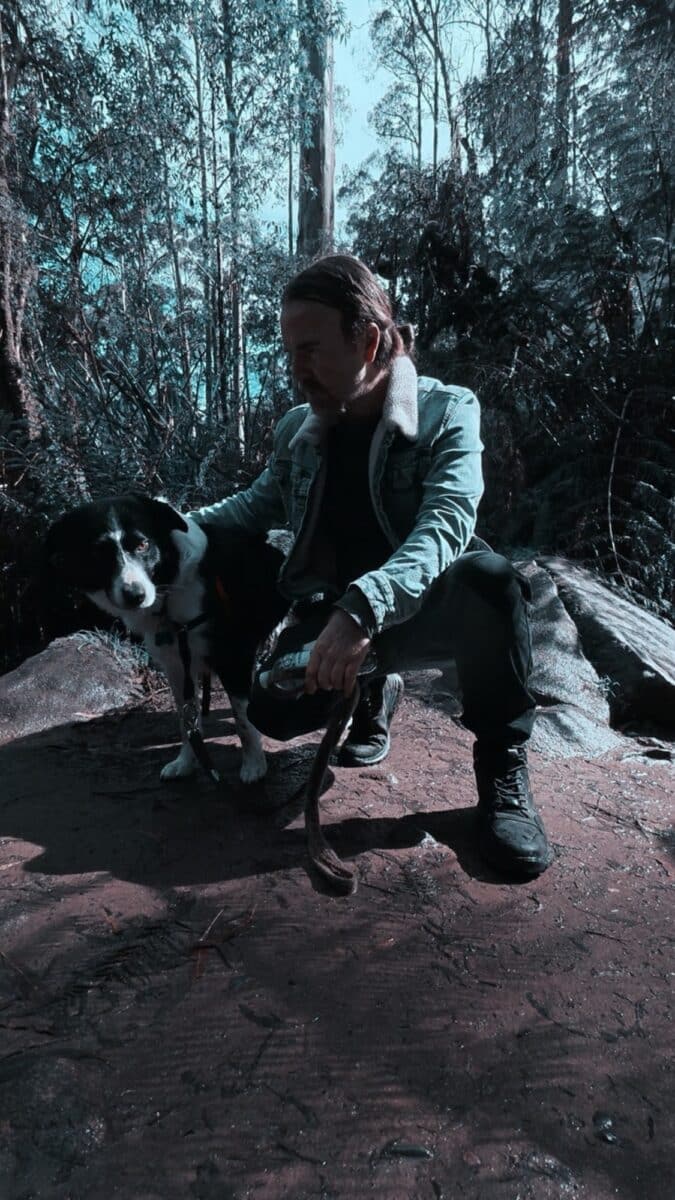
Photography: Craig Bannerman (within budget)
Craig Bannerman Online
About the Author
Chris Norris is the voice behind Metal Lair’s global metal coverage, World Metal Weekly. From funeral doom in the north to thrash born in the streets. Known for spotlighting bands before algorithms notice them and for writing with the precision of a scalpel… or a well-sharpened guitar pick. Vinyl collector. Night-shift journalist. Believes heavy music has no borders.
Read More From This Author:
ISVIDD Interview: A Renaissance Man, Nordic Melancholy and the Art of Black Metal
Art of Shock Interview: Creatively Fearless and Unapologetically Metal
The Konsent Interview: Ales Campanelli on Control, Conformity and the End of the System
GÅTE Sigil Interview: Folklore, Magic, Eurovision and a New Chapter
No algorithms. No fluff. No watered-down corporate metal coverage.
Subscribe to Metal Lair and get weekly underground features, Seven Deadly Songs, Deep Cuts, interviews, and original metal journalism sent directly to your inbox.
Join the patrons of Metal Lair
MetalLair.net is a metal zine muttering to itself about seo and blastbeats at 3 AM powered by caffeine, riffs, a severe lack of sleep, and a dog wondering why the human is still awake.
Sometimes it’s Kevin passing out mid Seven Deadly Songs.
Sometimes it’s digging up forgotten records no one else is talking about.
Always, it’s built for people who actually live this music.
If that sounds like you, you’re already one of us.
Supporting Metal Lair means keeping it independent, loud, and real with no corporate filters, no watered-down takes. If you want to help keep it alive…
Become a patron of Metal Lair.
FILE A COMPLAINT WITH THE METAL LAIR COMPLAINT DEPARTMENT
Have a metal-related grievance that needs official investigation?
Bad concert etiquette? Venue bullshit? Festival fuckery? A trend in metal that needs to die? An industry annoyance? Something that’s been pissing you off since 1987? Have a complaint against Metal Lair?
FILE YOUR COMPLAINT
File it with the Complaint Department. Remmy may investigate your grievance in a future installment.
Selected grievances may be investigated, mocked, dissected or otherwise subjected to the questionable judgment of Remmy Chillmister in a future edition of The Metal Lair Complaint Department.
Submission does not guarantee investigation. Remmy has a substantial backlog of things that piss him off.