WORLD METAL WEEKLY SWEDEN EDITION
Written By Chris Norris
Sweden doesn’t rise, it unfurls. Cold forests, midnight highways, and cities humming with distortion. This country forges metal with the precision of a craftsman and the fury of a storm that learned to speak.
Every genre that touches Sweden comes out sharpened. Melodic death with teeth, black metal with grandeur, prog with cosmic ambition, modern metal with molten core.
If there’s a sound the rest of the world tries to imitate, chances are it was born somewhere between Stockholm’s concrete and the ghostlight of the northern woods.
These are some of the bands carrying the fire forward. the innovators, the veterans, the youngbloods, the architects of chaos and beauty.
Catch up on past WMW features:
World Metal Weekly is A Metal Lair Original Series

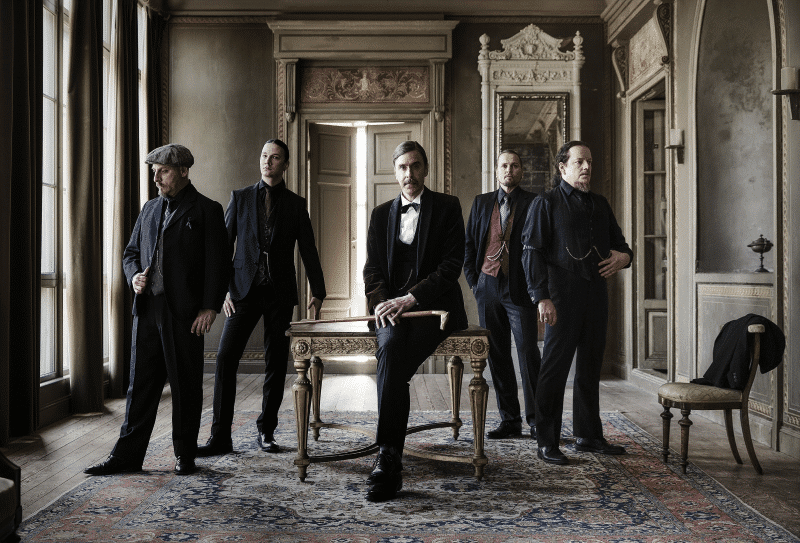
World Metal Weekly: Opeth – Reigning Phoenix Music
City: Stockholm
Gateway Track: Ghost of Perdition
Deep Cut: By the Pain I See in Others (Opeth’s strangest, most unsettling maze. The song casual fans never touch, but lifers pray in) “By the Pain I See in Others” is the perfect deep cut because it reminds you where they came from: labyrinthine riffs, cursed lullabies, and that feeling of being lost somewhere beautiful and vaguely dangerous.
Why Them:
Because every country has that one band who didn’t just shift the landscape, they cracked the Earthly shell and rearranged the plates. Opeth is Sweden’s big bang. The before/after. The “oh, this is different” moment that changed a thousand vocalists’ lives and ruined their sleep schedules.
Mikael didn’t stop growling. he molted. He stopped growling on albums, not onstage.
He outgrew the cocoon, walked out clean-voiced, and half the internet acted like he’d committed blasphemy. But here’s the truth: Opeth has always been a moving target. You don’t follow them for consistency, you follow them for the places they drag you.
Sweden has many heavyweights. Opeth is the compass they all secretly check.

World Metal Weekly: Amon Amarth – Metal Blade Records
City: Tumba
Gateway Track: Twilight of the Thunder God
Deep Cut: “Demo 1” Light of Death (1991) — Released Under Their Original Name, Scum.
Label: Self-released Era: When Amon Amarth didn’t even know they would become Amon Amarth Style: Primitive grind / proto-death metal Tracks: “Warriors of the Past” “Epitaph” “Light of Death”
Why it’s the rarest. This is the Holy Grail of their entire history.
Only a handful of these demo tapes still exist, floating around in the dark ether of die-hard tape traders, private collectors, and that one guy on Discogs who wants $600 for a copy that might not even play.
Back then, they weren’t yet Viking warlords. They were Scum, a raw, explosive grind-influenced act still learning to wield the weapons they’d eventually conquer the world with. Hearing this demo is like touching the first ember before the bonfire.
Why Them:
Because sometimes you need metal that feels like a war chant echoing off fjords. Massive, heroic and unapologetically larger than life. Amon Amarth isn’t just a band; they’re a cinematic experience. They took Viking mythology, stripped it of the cosplay, and turned it into something thunderous, melodic, and unmistakably Swedish.
They’re also hitting the road soon with a lineup so stacked it might actually cause structural damage to every venue built before 2001. Orbit Culture, Soilwork and Amon Amarth in headliner mode. That’s not a tour, that’s a moving earthquake.
Nobody does melodic death metal with this level of swagger. Nobody writes riffs that feel like oars slamming against cold northern water. Amon Amarth is the sound of mythology waking up hungry.

World Metal Weekly: Orbit Culture – Century Media Records
City: Eksjö
Gateway Track: Nensha
Deep Cut: Arrival (the primordial version of the band. Fierce, unpolished, and pulsing with the DNA of everything they’d later become)
Why Them:
Because if Sweden’s melodic scene were a long lineage of warriors, Orbit Culture is the new champion dragging a flaming greatsword behind him. Everything about their sound feels forged, not written. The low end chugs that rattle your ribcage, the volcanic roars, the stadium-sized choruses, the atmosphere thick enough to swim in.
They’re supporting Amon Amarth on tour. Some groups open, Orbit Culture erupts. They’ve got that rare balance of brute force modern metal and eerie, almost spiritual melody, like they’re channeling something older, heavier, and colder than they are.
If the future of Swedish metal had a pulse, this band is where it’s beating hardest.

World Metal Weekly: Soilwork – Nuclear Blast Records
City: Helsingborg
Gateway Track: Stabbing the Drama
Deep Cut: The Pittsburgh Syndrome. Bonus track on the Japanese and limited EU editions of Sworn to a Great Divide (2007) Collected on Death Resonance (2016), Soilwork’s B-sides & rarities album.
For years, this track existed only on import-only editions. A weird, aggressive, absolutely ferocious outlier that most fans never even knew existed. It wasn’t on the worldwide album release, wasn’t promoted, and lived in collector purgatory until Death Resonance finally gave it a home. Even then, most casual listeners never touched the compilation.
Why Them:
Because Soilwork is the band you show people when they say Swedish metal all “sounds the same.” No, this is what it sounds like when a group takes Gothenburg’s melodic blueprint and injects rocket fuel, jazz phrasing, and unhinged groove into its bloodstream.
They’re supporting Amon Amarth on tour but let’s be honest. Soilwork could headline any night and absolutely own the room. Björn’s vocals shift from steel toothed screams to soaring cleans with the kind of ease that makes lesser vocalists reconsider life choices. And those riffs? They snap, twist, and explode like they’re designed in a lab to knock vertebrae out of alignment.
Soilwork is the band that kept evolving long after their peers got comfortable. They don’t chase trends, they outrun them.

World Metal Weekly: Yngwie Malmsteen – Music Theories Recordings
City: Stockholm
Gateway Track: Rising Force
Deep Cut: Power and Glory (Takada’s Theme) Japanese-exclusive bonus track on The Seventh Sign (1994)
Written specifically as the entrance theme for Japanese pro wrestler & MMA fighter Nobuhiko Takada.
This track never made it to Western pressings. If you didn’t own the Japanese import of The Seventh Sign or tape trade like a maniac in the ’90s you didn’t even know it existed. For years, fans outside Japan had no clue Yngwie wrote an entrance theme for a fighter.
No neoclassical hurricane, no 500-mph arpeggios. Instead, it’s a heavy, slow, ritualistic instrumental built around the repeated stadium chant: “Ta-ka-da! Ta-ka-da!” It’s so stylistically odd for Yngwie that it never landed on any best of, reissue, or compilation. It just stayed hidden. A weird little artifact frozen in the era of puroresu heroes and VHS glory.
Why Them:
Because sometimes Sweden doesn’t give you a band, it gives you a phenomenon. Yngwie didn’t just play guitar fast, he altered the gravitational rules around it. He walked into the ’80s shred scene like a comet and every other guitarist just had to deal with the fallout.
Neo-classical metal wasn’t supposed to work. Not at stadium volume. Not with this much attitude. Not with this much silk, fire, and ego.
But Yngwie made it iconic. He took Paganini, Bach, Vivaldi, and shoved them into a Marshall stack until they screamed. And somehow, it worked. No one, and I mean no one has ever made a Stratocaster sound so arrogant and so godlike at the same time.
He’s lived in Miami for years now, scaring palm trees with Ferrari exhaust notes, but Sweden will always claim him. Rightfully so. Every time a guitarist tries to sweep-pick themselves into oblivion, they’re chasing a ghost with a scalloped fretboard. Yngwie is the original “more is more.”

World Metal Weekly: Mörk Gryning – Season of Mist
City: Stockholm
Gateway Track: Tusen år har gått
Deep Cut: When Moonshine Is the Only Light. Demo (1993) – the band’s first, self-released cassette. Practically lost media, predating all known official material.
This song comes from an ultra-rare 1993 demo tape, hand-duplicated, self released, and distributed in microscopic quantities. This predates their legendary debut and captures the band while they were still forging their identity in the shadows.
While Demo ’94 has tracks that occasionally surface in the wild, this 1993 material is almost mythical. “When Moonshine Is the Only Light” has never been reissued, never compiled, never remastered. It exists only on those original tapes, most of which are lost, decayed, or buried in private collector vaults.
It’s one of those tracks where even veteran fans say, “I heard about it… but I’ve never actually heard it.” That’s how deep this cut goes.
Authors Note: There’s no official upload of this 1993 demo anywhere online. The original cassette is almost mythical at this point. The version linked here (uploaded by longtime YouTube user evigkyla) is the closest and most accurate circulating rip we could find. Until the band or label ever resurfaces the tape, this is as close as anyone outside the archives is going to get.
Why Them:
Because Sweden’s black metal scene isn’t just forests and frost. Sometimes it’s pure speed, spite, and sorcery, all wrapped in riffcraft sharper than a sacrificial dagger. Mörk Gryning are one of those bands who helped define the second wave’s Swedish flavor. Melodic where it matters, chaotic where it counts, and always just a little unhinged.
They were teenagers when they dropped Tusen år har gått, and it hit like a stone tablet dropped from Valhalla, fully formed, fully confident, fully feral. Their sound is a reminder that Swedish black metal was never just atmospheric. It could be technical, violent, and spellbinding all at once.
If Norway had the mythos, Sweden had the musicianship and Mörk Gryning were right there at the front, painting runes in the firelight while the rest of the world was still figuring out blast beats. They’re cult for a reason, the real ones know.

World Metal Weekly: Darkane – Massacre Records
City: Helsingborg
Gateway Track: The Sinister Supremacy
Deep Cut: Convicted – July 1999” demo (holy grail — nearly impossible to find)
Before Darkane became one of Sweden’s precision engineered thrash machines, they were just a pack of Helsingborg maniacs hammering riffs into a four track and praying the walls didn’t collapse. “July 1999” comes from that primordial era.
The band’s lone 1998 CD-R demo, burned in microscopic quantities and fronted by none other than Björn “Speed” Strid before Lawrence Mackrory ever stepped into the booth. It’s the sound of Darkane still mutating. Raw, jagged, and totally unpolished, this version of “July 1999” is basically a fossil.
A rare glimpse of the band’s DNA before Rusted Angel slammed the door open and Nuclear Blast catapulted them into the international scene. Fewer than a thousand fans have even stumbled onto the demo rip online which makes this cut one of the deepest, dustiest corners of the Darkane vault.
Why Them:
Because Darkane is what happens when Sweden takes melodic death metal, removes the “melodic” safety net, injects it with thrash, prog, industrial tension, and then hands it to musicians who treat rhythm like a weapon. They never chased trends — they built their own strange, mathematical temple inside the genre.
Where other bands lean on atmosphere, Darkane leans on precision with polyrhythmic drumming, angular riffwork, and vocals that sound like a scientist screaming inside a collapsing reactor.
They’re the bridge between Gothenburg’s melodic heart and Meshuggah’s mechanical chaos. But with their own twisted sense of melody threading through the carnage.
If Sweden’s metal scene were a machine, Darkane would be the hidden gear making the whole thing grind and roar.
Sweden doesn’t shout to be heard, it radiates. Every band here carries that strange blend of discipline and wildness. A kind of melodic brutality that only this country seems able to summon.
This is a scene that doesn’t follow trends, it creates them. A place where riffs feel engineered, emotions feel ancient, and even the quiet moments hit with the weight of myth.
From the titans to the new beasts, Sweden remains one of metal’s true north stars. Steady, fierce, and impossible to ignore.
World Metal Weekly FAQ:
Q: What is World Metal Weekly?
A: A guided tour through the loudest corners of the planet. One country per week, seven bands per stop, zero apologies for subjectivity.
Q: How do we pick the bands?
A: Taste, instinct, and a little chaos. The goal isn’t to chase hype, it’s to shine a light where the sparks are flying, whether anyone’s looking or not.
Q: Do I need a visa or a black-metal passport to follow along?
A: No paperwork required. Just headphones and questionable volume control decisions.
Q: Can bands submit music to be considered?
A: Absolutely. If you think your riffs can disturb the peace of a different continent, reach out. Worst case: we love it. Best case: we love it loudly.
Q: Does Metal Lair have any other weekly series like this?
A: Oh yes. If your appetite isn’t satisfied by one global feast, check out:
- Seven Deadly Songs – our weekly hunt for the seven must-hear new tracks.
- Metalhead Horoscopes – your weekly forecast in riffs, not retrogrades.
- Deep Cuts: Metal’s Hidden Gems – a descent into the vaults where legendary weirdness sleeps.
- A Rip in Time: Women in Metal –
A series celebrating the voices, pioneers, and rule-breakers reshaping heavy music’s DNA.
More noise. More discovery. More excuses to stay up too late with incredible music.
About the Author
Chris Norris is the voice behind Metal Lair’s global metal coverage, from funeral doom in the north to thrash born in the streets. Known for spotlighting bands before algorithms notice them and for writing with the precision of a scalpel… or a well-sharpened guitar pick. Vinyl collector. Night-shift journalist. Believes heavy music has no borders.
Support Metal Lair
Metal Lair runs on passion, riffs, and far too much coffee. If you enjoy the interviews, reviews, and recurring series, you can support the site here: