Written By Kevin McSweeney
Let us kick off this review with a quote from our very own Chris Norris, who had the pleasure of interviewing Tamás Kátai, the multi-talented musician behind Thy Catafalque, just last month.
Few projects in experimental metal have followed a creative path quite like Thy Catafalque. For more than two decades, Hungarian composer and multi-instrumentalist Tamás Kátai has approached music without conventional boundaries, drawing from black metal, progressive rock, electronic experimentation, folk traditions, and influences that resist easy classification.
The downside to this is the fact that projects that “resist easy classification” make for bloody difficult reviews!
XIII: Sárga erdő is absolutely no exception to this. As the title suggests, it is the thirteenth full-length release for Thy Catafalque, released courtesy of Season of Mist on November 20th.
The thirteenth is unlucky for the reviewer trying to get to grips with it, such is the extent of its complexity, but it’s lucky for everyone else.
Tamás Kátai is a two-time Hungarian Grammy winner, and a seriously talented multi-instrumentalist, and he has enlisted the help of no fewer than thirty guest musicians for this album, which is the first Thy Catafalque release to feature live drums, courtesy of Árpád Szenti. As a (shit) drummer myself, this pleases me immensely.
The title translates into English as: “Yellow Forest”. Let us be glad it’s not yellow snow, though I’m sure there’s plenty of that in the hills around Budapest at this time of year. Now, with no further puerile jokes, and no small amount of trepidation, I will go through the tracks in a manner that, if I’m not careful, might prove to be the actual catafalque of my journalistic career.
Thy Catafalque XIII: Sárga erdő Track-by-Track Review
Búcsú a piros madártól
It means “farewell to the red bird” in English, apparently. I’ve had to bid “slán go fóill” to many a “cailín rua” in my time, and to be perfectly honest, it’s usually a relief, but I digress.
The album’s opening track was also its lead single. The song sounds like a mash up of My Dying Bride’s The Cry of Mankind and Stevie Wonder’s Higher Ground, as performed by the Red Hot Chili Peppers. You couldn’t conceive of such a thing? Neither could I before I pressed play.
The folksy lead melody has a certain sense of whimsy to it, which is juxtaposed with the forcefulness of the music in general, especially when the harsh vocals of Bálint Bokodi come in.
It goes Sabbathy for a while, then settles in a groove metal chug, adorned with mournful strings, including Noam Dayan’s kamancheh. Krisztián Varga contributes lead guitar. In fact, there’s a whole bunch of instruments deployed that are unconventional within metal. We’ll be here all day if I try to identify them. It’s an emphatically proggy way to open the album’s account.
Ég-anyám, föld-apám
It means “Sky mother; Earth father”, apparently. The black metal lineage is very much in evidence on this track, and in fact, there is a palpably gothic atmosphere to it.
I’m tempted once again to refer to My Dying Bride, primarily because it’s an easy point of reference for me. Lazy journalism at its finest!
The sombre strings add a melancholy air to the composition, which also features Brandon Wilkins on bassoon and alto flute and Gábor Dudás on vocals, and I can’t help but note that it’s in 3/4 time for the most part. I’ve always imagined the Danse Macabre to take the form of a waltz. Shorter and more straightforward than the opening track, it is majestic in its mournfulness.
Dunnák alatt kék mező
That’s “Beneath the Quilts, a Blue Field”, in English. That’s not what I tend to find under my quilts. Unfortunately, it’s usually just my own gelatinous slumbering mass.
It’s perhaps an incongruous title for a song that commences with space-age synths and a funky beat. There’s the benefit of those live drums. It almost sounds like Kraftwerk at times.
We have the female lead vocals of Ivett Dudás, with gorgeous harmonies and some lovely saxophone courtesy of Patricio Böttcher on this track, and the syncopated beat holds the whole thing together nicely. It’s far removed from metal, of course, but I’ve got a feeling there’s going to be plenty more of that to come, so no need to concern ourselves unduly.
Szitakötő
This title translates into English as “Dragonfly”. It starts with more space-age synths, and they form an accompaniment to what is otherwise a sitar solo by Chithrinie Nirupama lasting just over a minute. It makes for a pleasant interlude.
Suhamló éji fák
The title of this track translates into English as “Nighttime Trees Gliding Away”, which makes me think of The Ent in Lord of The Rings. The dying embers of Szitakötő are drawn out over the meaty guitar riff that kicks this muscular bit of metal into life.
The baritone vocal delivery of Gábor Dudás brings Rammstein to mind. It shifts to gothic rock towards the middle of the song, with the violins of Peter Voronov and Maria Grigoryeva adding emotional gravitas. Krisztián Varga also contributes lead guitar.
Further grandeur is added by the spoken word performance by Anikó Für over a closing section that sounds somewhat like a Type O Negative vignette.
Puszta
This means “The Plain”, which is not anywhere near as bad as I feared, and is a paean to the Hungarian landscape. It comes out of its corner with teeth clenched and fists raised, with a muscular mid-paced riff and harsh vocals by Lambert Lédeczy.
It is sludgy in character and the growls on the chorus are positively ursine. We also get a sumptuous solo from Krisztián Varga and double-kick drumming. That’s for the first three minutes or so, after which all this yields to ethereal synths and haunting female vocals performed by Annamari Oláh.
The track is brought to a close in this manner, but, for the first few minutes, we got that return to metal that I was craving earlier. We got it in the previous track, to be fair. I don’t know why I’m labouring the point.
Sirató
This one means “Lament”, apparently. It’s a title that, naturally, has me expecting something sombre. I’m thinking something along the lines of doom metal, especially as I likened earlier tracks to My Dying Bride.
What we get is an elegant, elegiac melody and vocals from Gergely Balla that are chanted as much as sung, bringing to mind The Hu. In fact, it’s almost like monastic plainsong.
Even as the music intensifies, as it does at numerous points, it remains hauntingly mournful. The track also features Dan Rowland on oboe d’amore. There’s something about the solo that reminds me slightly of Jeff Wayne’s War of The Worlds. Actually, a reworking of that classic album would be an interesting project for Thy Catafalque.
Cseremisz
This title refers to the Mari, an indigenous people of Eastern Europe. The track is a jaunty number that reminds me of Boney M’s Rasputin, or, more accurately, the Turisas cover thereof.
It is performed with a whole host of traditional instruments, including Anikó Barna on citera and koboz, Dmitry Karev on accordion and Dario Cei on flute, and features vocals from Bálint Bokodi. The addition of the 20-member male voice choir, the Male Choir of Tiszaföldvár (Tiszaföldvári Férfi Kórus in Hungarian), is a powerful one.
It sounds like a song that is centuries old, obviously by design, yet it is a new composition. It is cinematic in scope and utterly enthralling.
I particularly liked the guitar solo, which has something of a 1960s James Bond soundtrack about it. Who knows? Maybe it could be the theme song a future Robert Pattinson film set in Hungary.
Sárga erdő
This is, of course, “Yellow Forest”. I’ve already done the micturition-related joke in the opening chapters. I’d better not risk being so insensitive again.
The title track is a lengthy one, extending to over ten minutes in duration. Again, it features a multitude of traditional instruments, with Efim Braylovskiy on alto saxophone, Kelly O’Donohue on brass and Bálint Bokodi among the guest vocalists. It begins in an eerie and atmospheric manner, with footsteps heard, presumably making their way through the forest.
It is as slow as funeral doom metal, but, while it is haunting, it is not bleak. It gets distinctly heavy at around the five-minute mark, with thrashing guitars and double-kick drums following a sweet solo from Krisztián Varga.
This continues for much of the rest of the track. The album rarely gets this heavy. We return to the eerie atmospherics to close, with stirring strings from violinist Victor Morales (who also contributes piano) and cellist Michaela Lilla Bos and haunting female vocals by Martina Veronika Horváth.
Tömbök
This one means “Masses”, apparently. It starts with an unnerving synth sound, which ushers in the heaviest track of the album, in which extremity is to the fore. The black metal roots are in evidence with the blast beats, rapid riffing and harsh vocals. Gábor Veres and Ivett Dudás provide guest vocals.
Things take a turn for the surreal around half way through, when we switch to something like a folk dance complete with flute accompaniment from Dario Cei.
Following this, we return to an earlier riff that is complete with Cannibal Corpse trills, and the track, which features lead guitar contributions from Krisztián Varga and Zoltán Vigh, is concluded with a solo and ride cymbal work that matches the intricacy of the guitar playing. Gotta love those live drums!
Kút vizén nap forog
The penultimate song is called “The Sun Turns on The Well’s Water” in English. Quite what the water has done to make the sun turn on it is unclear.
We start with the sounds of the forest before slipping into a syncopated beat under guitars with gloomy gothic tones.
The harmonised vocals of Ivett Dudás and Gábor Dudás are a far cry from the growls and roars of the previous track. We get into Muse territory when the proggy synths take over from the guitars briefly.
A solo comes courtesy of saxophonist Ibrahim Danbaba, and it’s an incongruous but enjoyable touch. Guitars and trumpets (courtesy of Kelly O’Donohue) exchange the honours thereafter. Francesco Pisciotta contributes the string arrangement. They certainly keep you on your toes. What could possibly be coming next?
87 tavasz, 87 ősz
The last track is what’s coming next, and it’s called “87 Springs and 87 Autumns” in English. The final song doesn’t quite go on for that long, though it is a lengthy number, weighing in at over ten minutes.
Again, it is cinematic in scope, sounding at first like the soundtrack to a Spaghetti Western. I was half-expecting an ocarina.
It takes just under two minutes to get heavy, with pummeling drums and furious riffs accompanying harmonised male vocals from Gábor Dudás and Antal Cseh. It’s bizarre to hear this later accompanied by what sounds like a flute.
There’s operatic vocals over the funky beat in the middle section of the song, and again we find synchronised intricacy between guitar and drums. Breno Machado contributes lead guitar, and Michele Fortunato plays trombone on this track.
There’s a string section featuring violinist Oleg Bezuglov over frantic death metal drumming, and later some classical Spanish guitar from Daniele Belli, sounding not unlike the sort of fare you’d get from labelmates Impureza.
The transition from female vocals by Martina Veronika Horváth to trumpet solo by Kelly O’Donohue over strummed Spanish guitar is a surprisingly sedate way to bring to an end an album that has taken us in many different directions across the Hungarian landscape.
Let’s close with another quote from the interview with Tamás Kátai by Chris Norris:
“Kátai makes clear that experimentation remains central to his work … his curiosity about music remains undiminished.”
That much is evident. It’s as baffling at times as it is brilliant, and while it’s an album I’m unlikely to return to often, I thoroughly appreciate the complexity and the sheer scale of the ambition.
After thirteen albums in a career characterised by experimentation that stretches back to the late 1990s, it would have been very easy to play it safe.
I’m not even sure what playing it safe would even look like for Kátai. His knowledge of the concept is probably equivalent to my knowledge of the Hungarian language, and that is very little knowledge indeed.

Metal Lair awards XIII: Sárga erdő by Thy Catafalque four devil horns out of five
Get Thy Catafalque – XIII: Sárga Erdo Here:

Track list:
1. Búcsú a piros madártól
2. Ég-anyám, föld-apám
3. Dunnák alatt kék mező
4. Szitakötő
5. Suhamló éji fák
6. Puszta
7. Sirató
8. Cseremisz
9. Sárga erdő
10. Tömbök
11. Kút vizén nap forog
12. 87 tavasz, 87 ősz
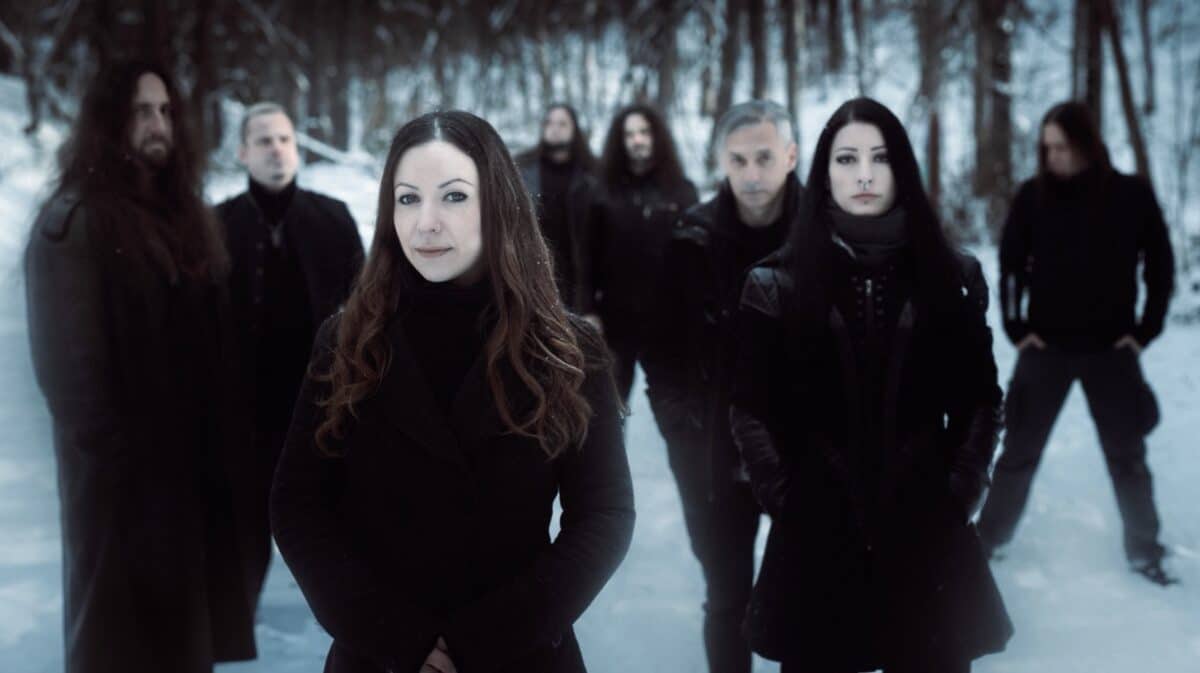
Thy Catafalque Line-up:
Tamás Kátai: Guitar, Bass, Keyboards & Vocals
Guest Musicians For Thy Catafalque’s XIII: Sárga erdő:
Maria Grigoryeva: Violin (5)
Victor Morales: Violin & Piano (9)
Oleg Bezuglov: Violin (12)
Michaela Lilla Bos: Cello (9)
Francesco Pisciotta: String Arrangement (11)
Noam Dayan: Kamancheh (1)
Dmitry Karev: Accordion (8)
Dario Cei: Flute (8, 10)
Brandon Wilkins: Bassoon & Alto Flute (2)
Dan Rowland: Oboe d’Amore (7)
Kelly O’Donohue: Trumpet, Trombone & Flugelhorn (9, 11, 12)
Michele Fortunato: Trombone (12)
Patricio Böttcher: Alto Saxophone (3)
Efim Braylovskiy: Alto Saxophone (9)
Ibrahim Danbaba: Saxophone (11)
Source: Season of Mist official album press release, November 19, 2026
Thy Catafalque Online:
About The Author
Kevin McSweeney is Metal Lair’s resident scribe of the underground, eternally rummaging through the global metal scene for riffs worth your time.
As the guiding hand behind Seven Deadly Songs every Friday, he has an uncanny knack for finding the track you didn’t know you needed, usually before finishing his pint.
Equal parts loyal, kind, and quietly razor-witted, Kevin brings deep knowledge, impeccable taste, and a steady, reliable presence to Metal Lair.
Read More From This Author:
ALBUM REVIEW: PRAELIA BY C E L A V I
Saor Caledonia Album Review: Scotland’s Black Metal Reborn
Look What Happened – Weak Minds for the Weekend EP Review
Leng Tch’e Hammered Into Collapse EP Review: Five Minutes of Grindcore Brutality

No algorithms. No fluff. No watered-down corporate metal coverage.
Subscribe to Metal Lair and get weekly underground features, Seven Deadly Songs, Deep Cuts, interviews, and original metal journalism sent directly to your inbox.

Join the patrons of Metal Lair
MetalLair.net is a metalzine muttering to itself about seo and blastbeats at 3 AM powered by caffeine, riffs, a severe lack of sleep, and a dog wondering why the human is still awake.
Sometimes it’s Kevin passing out mid Seven Deadly Songs.
Sometimes it’s digging up forgotten records no one else is talking about.
Always, it’s built for people who actually live this music. If that sounds like you, you’re already one of us.
Supporting Metal Lair means keeping it independent, loud, and real with no corporate filters, no watered-down takes. If you want to help keep it alive…
Become a patron of Metal Lair.
HAVE A METALHEAD COMPLAINT?
“People roundhouse-kicking” in the pit grinding your gears? Gatekeepers questioning whether you’re “metal enough”? Frustrated with getting hit in the head by peoples smelly shoes at a concert?
Whatever’s poisoning your particular corner of the metal community, file an unofficial complaint with The Metal Lair Complaint Department.
Vent your venom. Name the offense. Make your case.