Written By Caine Blackthorn
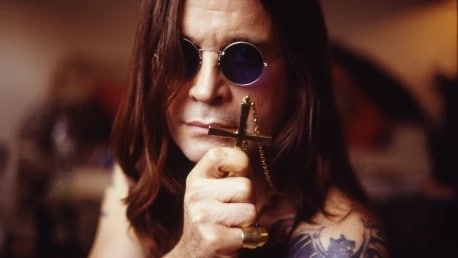
The heavy metal community has always been fiercely protective of its gods. When Ozzy Osbourne passed away, a devastating void was left at the core of the culture. Yet less than a year later, the Prince of Darkness has found himself at the center of a furious digital resurrection debate.
The announcement by Sharon and Jack Osbourne at the 2026 Licensing Expo that they are partnering with tech firms HYPERREAL and Proto Hologram to create an interactive, life-sized “Digital Ozzy,” complete with verified vocal cloning and algorithmic conversational abilities, has set the internet ablaze.
For a scene built on the visceral reality of sweat, blood, tube amplifiers, and human imperfection, the idea of an AI-driven Ozzman feels to many like the ultimate corporate betrayal.
Metal Lair previously explored the announcement itself and the immediate fan reaction in “Ozzy Osbourne To Return As An A.I. Avatar And Metalheads Aren’t Sure How To Feel About It.”
As debate around Digital Ozzy continues to intensify, the conversation has expanded far beyond one artist and into larger questions about technology, creativity, legacy, and the future of music itself.
But as battle lines are drawn between traditionalists and technology advocates, the conversation is exposing a much larger ideological divide that extends far beyond heavy metal itself.
The House of Osbourne: Legacy at All Costs
To understand why the Osbourne family is pushing into the digital frontier, you first have to understand how they view the Ozzy legacy.
This is not simply about merchandise, licensing agreements, or another revenue stream. Sharon and Jack Osbourne have framed the project as an effort to preserve one of rock’s most influential cultural figures for future generations.
Jack Osbourne described the venture as mapping the “digital DNA” of his father, compiling decades of authenticated footage, interviews, recordings, and public appearances into a persistent digital entity that could theoretically exist indefinitely.
From the estate’s perspective, future generations would not simply read about the Godfather of Heavy Metal in history books. They would be able to stand in front of a volumetric display, ask questions, hear stories, and experience something that resembles a conversation with Ozzy himself.
For a larger-than-life figure who spent more than fifty years defying expectations and remaining a permanent fixture of popular culture, the family sees the project as a logical extension of that legacy.
To supporters, this is preservation. To critics, it is something else entirely.
The Backlash: Purists, Prophecies, and Skynet
The reaction from many corners of the rock and metal community has been immediate and often hostile.
Heavy metal has long positioned itself as a genre rooted in authenticity, imperfection and expression.
It is a genre that celebrates the human element: the imperfections of a live performance, the strain in a vocalist’s voice, the subtle timing fluctuations of a drummer, and the unpredictable chemistry that exists between musicians onstage.
To many fans, those imperfections are not flaws. They are the very things that make the music feel alive.
The resistance to AI often operates on several levels at once.
The Purist Revolt
To traditionalists, art requires a human soul behind it. Replicating Ozzy’s unmistakable voice, personality, or stage presence through machine learning can feel less like preservation and more like imitation.
Critics argue that no amount of data can recreate the lived experiences, instincts, mistakes, and spontaneity that made Ozzy Osbourne who he was.
For these fans, the technology risks reducing a cultural icon to a highly sophisticated simulation.
The Terminator Complex
Rock & metal culture has always maintained a healthy distrust of technological overreach.
Across forums, comment sections, and social media, concerns quickly move beyond music and into broader questions about artificial intelligence itself.
References to dystopian science fiction, autonomous systems, deepfakes, surveillance technology, and the erosion of human authenticity are increasingly common.
To some observers, Digital Ozzy is not simply an entertainment product. It is another step toward a future where corporations can own, replicate, and monetize personalities indefinitely.
The Economic Anxiety
Beyond the philosophical concerns lies a more practical fear.
Artificial intelligence is already reshaping conversations around employment and creative work.
Writers, actors, voice actors, musicians, visual artists, photographers, designers, coders, and countless other professions are confronting questions about automation and replacement.
The concern extends beyond whether AI can imitate creativity. It centers on whether businesses will choose imitation over human labor.
If technology allows estates, corporations, and entertainment companies to continuously generate content using digital versions of deceased icons, critics argue that it may further concentrate attention, resources, and opportunities around established brands while making it harder for emerging artists to compete.
Whether those fears prove justified remains an open question, but they are undeniably part of the current debate.
The Ground Floor Pivot: AI as the Underground Equalizer
While the mainstream industry wrestles with the ethics of digital resurrection, a very different conversation is taking place in the underground.
For independent bands, solo projects, DIY labels, and self-funded musicians, AI is often viewed through a far more practical lens.
The financial reality of operating an independent metal band has never been easy. Recording costs, merchandise production, touring expenses, promotional materials, album artwork, video production, and marketing all require money that many underground artists simply do not have.
Historically, commissioning artwork, layouts, visual assets, or promotional content could cost hundreds or even thousands of dollars before a single record was sold.
For many smaller bands, that expense represents a significant barrier to entry.
This is where artificial intelligence has become a controversial but increasingly common tool.
AI-generated artwork, video assets, design concepts, translations, promotional materials, and visual mockups can allow independent artists to create professional looking content at a fraction of traditional costs.
Supporters argue that these tools are not replacing opportunities that would otherwise exist. They are enabling projects that may never have been financially possible in the first place.
In that sense, AI functions as an economic equalizer, lowering barriers for artists who lack industry backing or substantial budgets.
Critics, however, counter that this convenience may come at the expense of the very creative professions that helped build the culture in the first place.
The Uncomfortable Question
Perhaps the most fascinating aspect of the debate is that both sides raise legitimate concerns. Digital Ozzy forces uncomfortable questions that extend well beyond one artist, one family, or even one genre. Who owns a person’s identity after death?
Where is the line between preservation and exploitation?
Can a digital recreation ever be considered authentic?
Should technology be used to extend cultural legacies indefinitely?
And if artificial intelligence helps struggling creators gain access to tools they could never otherwise afford, does that change the ethical equation?
There are no easy answers.
The Unholy Alliance
Ultimately, metal finds itself caught in a remarkable paradox. On one end, we face a future where corporate estates can digitally reanimate cultural icons, creating an endless cycle of the past that some fear could transform music history into a perpetual theme park attraction.
On the other end, the very same technology is providing independent creators with tools that allow them to compete in an increasingly crowded digital world.
Whether Digital Ozzy becomes a revolutionary milestone, a cautionary tale, or simply a short-lived curiosity remains to be seen.
What is certain is that the boundary between code and culture has been permanently breached.
The debate is no longer about whether artificial intelligence will influence the future of music.
The debate is about how much of that future people are willing to accept.
About The Author
Caine Blackthorn writes music news, trending topics, commentary, and feature pieces for Metal Lair with a focus on the shifting culture surrounding rock and heavy metal. From rising ticket prices and touring collapse to legacy artists, industry absurdity, and the changing soul of live music, his work blends sharp observation with the grit, humor, and frustration of the scene itself. Whether covering modern chaos or metal history, Caine approaches heavy music as something lived through, not simply reported on.
Read More From This Author:
EVERY BAND IS NOW A CONTENT CREATOR
No algorithms. No fluff. No watered-down corporate metal coverage.
Subscribe to Metal Lair and get weekly underground features, Seven Deadly Songs, Deep Cuts, interviews, and original metal journalism sent directly to your inbox.

Join the patrons of Metal Lair
MetalLair.net is a metal zine muttering to itself about seo and blastbeats at 3 AM powered by caffeine, riffs, a severe lack of sleep, and a dog wondering why the human is still awake.
Sometimes it’s Kevin passing out mid Seven Deadly Songs.
Sometimes it’s digging up forgotten records no one else is talking about.
Always, it’s built for people who actually live this music.
If that sounds like you, you’re already one of us.
Supporting Metal Lair means keeping it independent, loud, and real with no corporate filters, no watered-down takes. If you want to help keep it alive…
Become a patron of Metal Lair.
1 thought on “Digital DNA or Artificial Sacrilege? The Battle Over Ozzy’s Immortal Avatar”
Comments are closed.