Written By Caine Blackthorn
Something ugly is happening to live music right now.
Not the fun kind of ugly either. Not corpse paint ugly. Not “somebody broke their nose in the pit and kept crowd surfing anyway” ugly.
This is financial-collapse ugly.
The kind where ticket prices climb so high that fans quietly stop buying, tours begin vanishing off calendars, and bands who once lived on the road suddenly sound exhausted, burned out, injured, broke, or all four simultaneously.
And honestly? A lot of people in heavy music are starting to feel it.
Rock and metal tour cancellations are becoming increasingly common as rising costs and collapsing ticket sales continue hammering the live music industry.
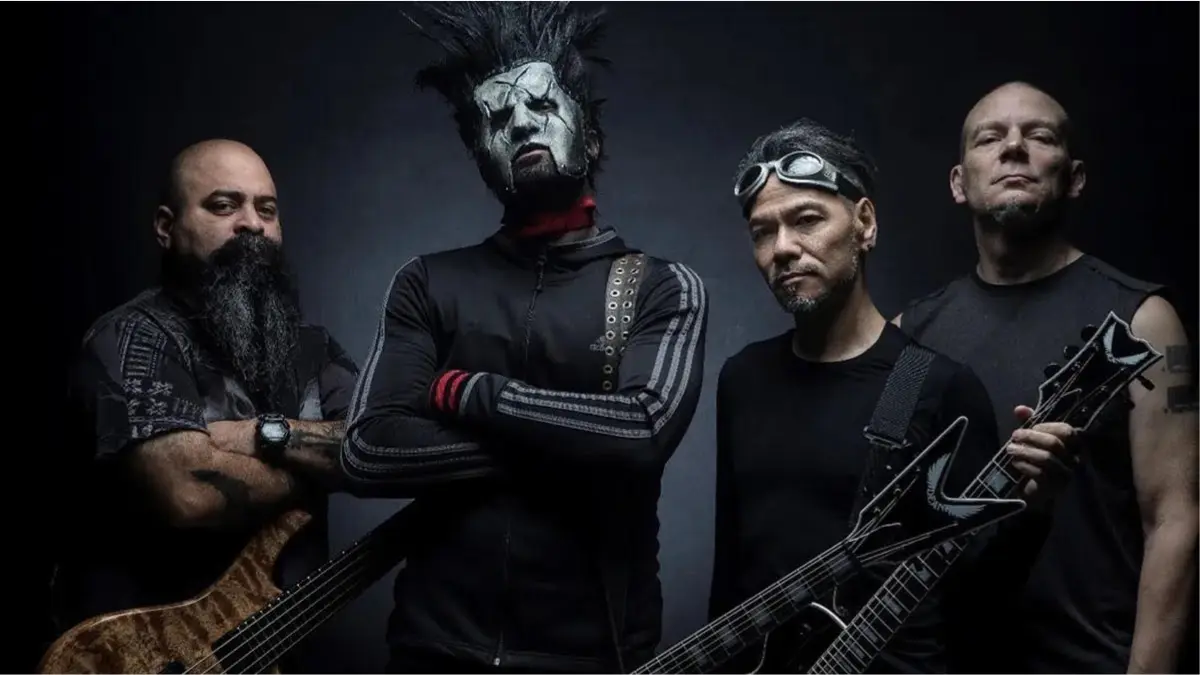
This week alone, industrial metal veterans Static-X abruptly cancelled all remaining 2026 tour dates following recent appearances at Welcome To Rockville and Sonic Temple.
The band cited serious medical issues, with members bluntly acknowledging they are “just a bunch of old men with parts that need fixing.”
That statement hit fans hard because beneath the humor sits a brutal truth:
touring in 2026 is absolutely destroying people.
Physically. Financially. Mentally. And Static-X are far from the only warning sign.
Across rock and metal, summer touring schedules are beginning to show signs of strain, with quiet cancellations, underperforming ticket sales, downsized venues, postponed runs, and increasingly anxious conversations about whether the modern touring model is even sustainable anymore.
Because while fans stare in horror at $300 floor tickets and service fees that look like ransom demands typed by Ticketmaster supervillains, bands themselves are getting crushed by a touring economy that feels fundamentally broken.
Diesel prices remain sky-high. Crew shortages continue hammering the industry. Bus rentals, hotels, visas, insurance, gear transport, and stage production costs have exploded.
Meanwhile venues are still demanding aggressive merchandise cuts, in some cases taking 15% to 30% of shirt and vinyl sales directly from artists.
Which is especially insane when you realize merch has become one of the last reliable ways many bands actually make money on tour.
Imagine sweating through a 90-minute set every night while a corporation quietly grabs a chunk of every hoodie sold at the table afterward.
That’s modern touring and the result is a vicious cycle nobody seems able to stop. Bands raise ticket prices because costs are skyrocketing.
Fans stop buying because prices become absurd. Shows underperform and tours quietly disappear.
The Silent Headliner: Macroeconomics
To understand why the seats are empty, you have to look past the venue doors. The live music crisis isn’t happening in a vacuum; it is the direct fallout of a working-class economic chokehold.
We are living through a financial perfect storm. Inflation has sent the baseline cost of existing, groceries, utilities, and gas into the stratosphere. Rent prices and mortgages have ballooned to predatory levels.
For the average music fan, disposable income didn’t just shrink; it was completely obliterated. Luxuries are the very first thing to get cut when a trip to the supermarket feels like a stick-up.
To survive the baseline squeeze, millions of people turned to credit cards just to cover necessities. But with interest rates sitting at brutal highs, that temporary lifeline quickly mutated into a debt trap.
When people are dodging collections calls and watching minimum payments devour their paychecks, a $300 concert ticket stops being entertainment and becomes fantasy.
Add to that a broken healthcare system where even “good” insurance carries deductibles so high that people skip the doctor just to avoid out-of-pocket ruin, and the picture becomes starkly clear. The cost of simply staying alive is bleeding the audience dry.
Fans aren’t staying home because they lost interest in the music; they are staying home because the modern cost of living has forced them into a corner where they have to choose between catching a live set or paying rent.
Beyond Metal: The Warning Signs Are Everywhere
Anyone dismissing rising tour cancellations as isolated incidents needs to look beyond the metal world entirely. The pressure is bleeding across genre lines.
Actor and Americana-rock artist Kiefer Sutherland recently cancelled the entire U.S. leg of his Love Will Bring You Home tour while openly citing poor ticket sales, something artists almost never admit publicly.
Instead of hiding behind the industry’s usual “unforeseen circumstances” language, Sutherland stated directly:
“With great disappointment I am going to have to cancel the U.S. leg of my tour due to very low ticket sales. I don’t think it’s fair to the people who bought tickets, or the venues, to play to half-empty houses.”
That level of blunt honesty is rare in an industry obsessed with perception management.
And the pressure isn’t stopping there.
Major pop acts including the Pussycat Dolls and Meghan Trainor have also scaled back or scrapped major touring plans after confronting the increasingly brutal economics surrounding modern live entertainment.
This is no longer just a niche problem affecting rock bands or struggling underground tours.
From club-level metal acts to mainstream crossover artists, the financial pressure surrounding live music is becoming harder to ignore both for fans, promoters, venues, and performers alike.
Why Rock and Metal Tour Cancellations Keep Increasing
Recent cancellations have only intensified those concerns. Drowning Pool’s planned South American tour was abruptly scrapped this month after local promoters publicly cited low ticket sales across multiple cities. The band themselves pointed toward logistical complications and missed deadlines instead, highlighting the increasingly fragile reality behind modern touring.
Either way, the situation reflects the same growing pressure facing artists everywhere:
rising costs, economic instability, audience fragmentation, and shrinking room for error when entire international tours depend on consistent ticket movement across every market.
Everybody loses except the corporations processing “convenience fees” large enough to qualify as financial abuse.
The conversation has become so toxic that artists are now publicly arguing about who is responsible for the pricing disaster.
One of the loudest ongoing debates this year has centered around the increasingly heated back-and-forth involving Yungblud and Machine Gun Kelly as musicians, fans, promoters, and industry insiders all point fingers over who exactly turned concerts into luxury purchases. And honestly? Fans are exhausted.
Fans tolerated the increases for years because the prices climbed gradually enough to normalize the shock. But eventually the industry crossed a psychological line where audiences collectively stopped and said:
“Wait a minute… this is insane.”
For decades, heavy music built itself on accessibility. Metal was supposed to be the music of outsiders, weirdos, working-class kids, social outcasts, angry teenagers, and exhausted adults looking for catharsis under flashing lights and walls of amplifiers.
Now some concert tickets require the financial planning of a minor surgical procedure.
That’s why Yungblud’s Bludfest has started attracting so much attention. Instead of embracing the increasingly bloated corporate touring model, Yungblud has positioned the festival as a direct rejection of it.
The 2026 version expands internationally into the Czech Republic while keeping standard ticket prices relatively affordable compared to many mainstream arena packages.
More importantly, he has openly challenged the idea that fans should simply accept astronomical prices as unavoidable.
“If I own my own thing, I can see things literally spread out,” Yungblud explained regarding the festival’s structure.
“I’ll make money in other places, but it was a very big point for me to only break-even on the music and pay the artists what they should be paid. I don’t want to ask someone, ‘This is a good cause, will you come and do it for a little bit less?’ I was like, ‘What’s your fee?’ I wanted to show it can be done this way.”
And that right there may be the real battle forming underneath modern live music. Not just ticket prices but control.
Because fans are increasingly asking why concerts suddenly feel less like communal cultural experiences and more like algorithmically optimized financial extraction events sponsored by beverage companies and dynamic pricing software.
Meanwhile musicians are caught in the middle trying to survive an industry where streaming destroyed album revenue, touring became mandatory income, and touring itself is now becoming financially unstable.
It’s not sustainable. Not for fans. Not for smaller bands. Not for aging musicians whose bodies are breaking down after decades on the road.
And not for a music culture that once prided itself on connection, chaos, sweat, and human experience over corporate optimization.
The terrifying part is that this might only be the beginning.
Because if the current model keeps collapsing under its own greed, the future of live music may split into two extremes:
massive luxury-tier arena spectacles for wealthy fans… and smaller DIY scenes desperately trying to rebuild the sense of community the industry slowly priced out of existence.
And honestly?
A lot of metalheads would probably choose the sweaty DIY club over a $1200 “premium experience package” anyway.
About The Author
Caine Blackthorn writes music news, commentary, and feature pieces for Metal Lair with a focus on the shifting culture surrounding rock and heavy metal. From rising ticket prices and touring collapse to legacy artists, industry absurdity, and the changing soul of live music, his work blends sharp observation with the grit, humor, and frustration of the scene itself. Whether covering modern chaos or metal history, Caine approaches heavy music as something lived through, not simply reported on.
Read More From This Author:
AFTER 10 YEARS OF SILENCE, ANTHRAX SOUNDS REBORN ON CURSUM PERFICIO
ALBUM REVIEW: SEPULTURA – THE CLOUD OF UNKNOWING
Metal Legacy Profiles: Chuck Schuldiner
No algorithms. No fluff. No watered-down corporate metal coverage.
Subscribe to Metal Lair and get weekly underground features, Seven Deadly Songs, Deep Cuts, interviews, and original metal journalism sent directly to your inbox.
Join the patrons of Metal Lair
MetalLair.net is a metal zine muttering to itself about seo and blastbeats at 3 AM powered by caffeine, riffs, a severe lack of sleep, and a dog wondering why the human is still awake.
Sometimes it’s Kevin passing out mid Seven Deadly Songs.
Sometimes it’s digging up forgotten records no one else is talking about.
Always, it’s built for people who actually livethis music.
If that sounds like you, you’re already one of us.
Supporting Metal Lair means keeping it independent, loud, and real with no corporate filters, no watered-down takes. If you want to help keep it alive…
Become a patron of Metal Lair.