Written By Kevin McSweeney
Mallavora What If Better Never Comes album review. Metal Lair takes a deep dive into the debut release from Bristol’s rising alt-metal force.
If you know the city of Bristol in the South West of England – I myself am an occasional visitor – then you’ll know it to be a place with a thriving arts scene that absolutely fizzes with an invigorating youthful energy.
You’ll also know it as a place that has firmly established itself in recent years as one of the bastions of progressive politics in the UK.
It will be no surprise to those familiar with the place that it should produce a band such as Mallavora, “a blazing force in alt-metal.”
According to their label; a passionate and highly politicised group of young musicians who campaign vociferously for the rights of the Disabled (vocalist Jess Douek has fibromyalgia and guitarist Larry Sobiraj has Long COVID) and who defend the marginalised and oppressed in every aspect of their artistic endeavours.
It’s astonishing to think that What if Better Never Comes?(available from March 27th via Church Road Records) is their debut album, given how much attention the band has already garnered.
The title isn’t a case of them wondering if they’re going to peak artistically with a strong debut album, as bands sometimes do. (I would offer Machine Head and Korn as two admittedly debatable examples.)
Rather, it’s that difficult question that all people facing serious illness and disability have to ask themselves: what if I don’t get better? What if the good health that others take for granted will never be granted to me?
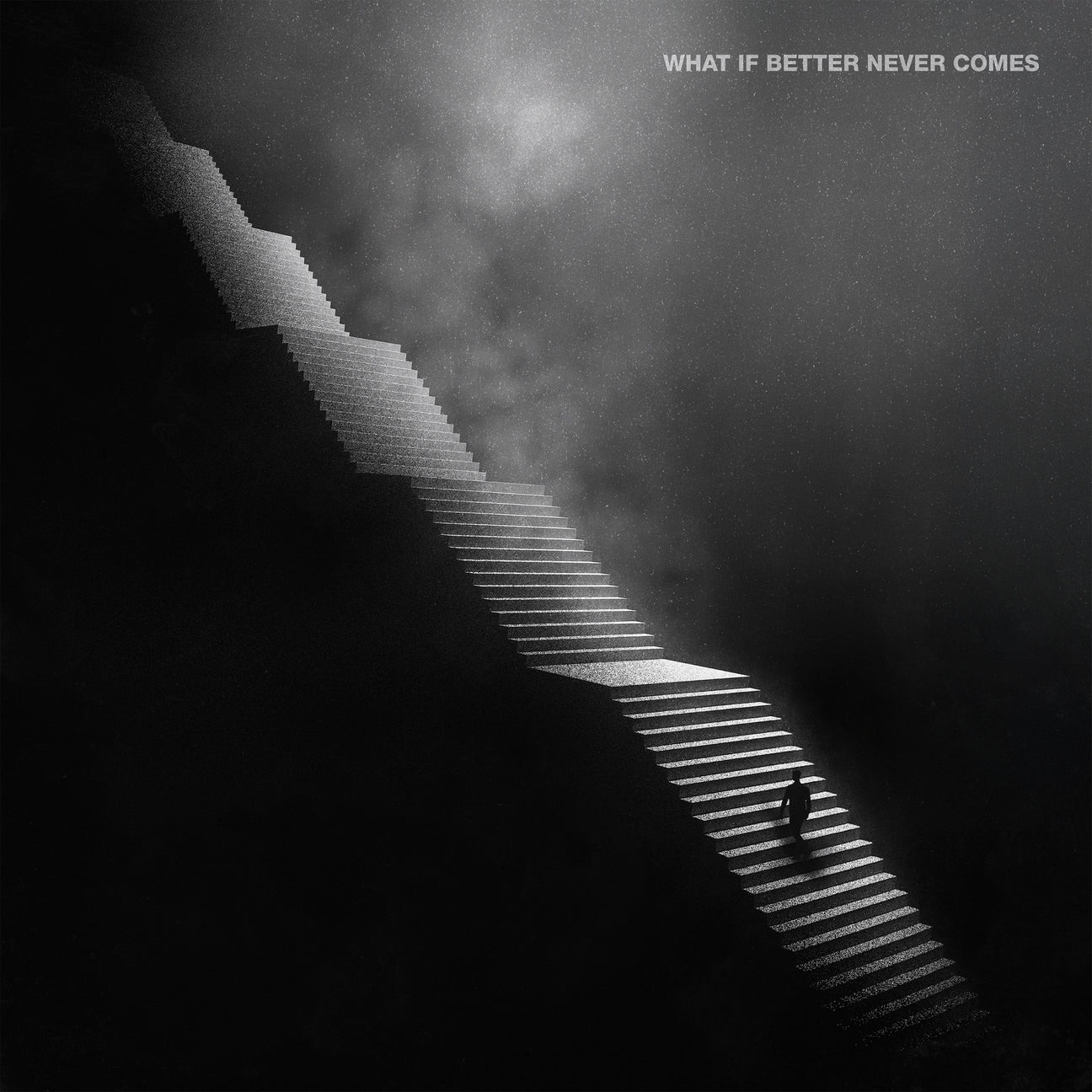
The cover art depicts this in the form of a solitary figure, shrouded in darkness, who seeks to ascend a seemingly almost insurmountable staircase. I understand this keenly, having experienced serious illness myself. I recovered, but there were times when death seemed like the more likely outcome.
Having already seen Mallavora live, we can confirm the intensity on What If Better Never Comes? isn’t just studio polish – it translates just as powerfully on stage.
The track Prologue sets out the stall straight from its ominous opening strains. It is dark, brooding and menacingly heavy, but imbued with exotic melodic sensibilities that justify the frequent comparisons with System of a Down (as does the often highly political nature of the band’s lyrics).
Mallavora’s sound is augmented by Douek’s Middle-Eastern Jewish background just as the legendary Armenian-American outfit’s sound is enriched by their cultural heritage.
From then on, the singles come thick and fast. First up is Smile, a diatribe about the treatment of Disabled people in modern British society, which was discussed at length in our Mallavora interview with the band, published on November 6th 2025 following the single’s release.
To quote the band from the corresponding press release:
“We wanted to capture the urgency, fury, and righteous rage we feel about how society continues to treat Disabled people.” Mission accomplished!
Next up is Waste, another furious piece of invective, directed this time at the patriarchy. Again, quoting the band in the single’s press release:
“The track confronts misogyny and the impossible expectations placed on women. It’s scathing, sharp, and almost gleeful in its indictment of this pervasive societal sickness.”
Continuing in a feminist vein, we have Lilith & Esther, featuring “fairy metal” artist Banshee. Quoting again from the single’s press release:
“We connected with Banshee online and instantly loved the ethereal, haunting quality to her vocals. We wrote a track with her in mind and were very excited when she agreed to feature on it.
In Lilith & Esther, we delve deeper into our cultural influences and draw strength and power from these ancient heroines.”
All three songs adhere to the template set out in the Prologue- searing, visceral metal blended with soaring, culturally-enriched melody. Douek’s star quality shines through.
Her harsh vocals are passable; her clean vocals are exceptional. Her aura is one of righteous indignation tempered with undeniable charisma. It’s the fourth of the singles that stands apart from the rest, however.
Hopeless is “an emotional cinematic opus” in the words of the record label, in which we encounter Douek at her most vulnerable, a far cry from the ferocious anti-patriarchal warrior queen who confronts us on Waste.
“We wrote this song at a time when everything just felt too hard, and the challenges we face felt insurmountable. We learned that it’s ok to let your guard down, take off your brave face and accept that there really is no such thing as certainty.
Staring down the possibility that things might not get better can be terrifying, and feels so hard to do. But it’s not about abandoning hope altogether.
Rather, it’s about letting go of things that we don’t have any control over, and trying to find the balance between acceptance and hope.
We know hopelessness can be incredibly lonely, so we hope this song provides some solace and connection for anyone who relates to its meaning.”
It’s one of the highlights of the album, and hints at the great commercial potential the band would have if they were to lean into the melody and dispense with the vitriol that might scare away a mainstream audience.
I can’t see that happening, however. It’s the strength of emotion that makes the performance so compelling. I can’t see them reining that in, somehow.
The vulnerability continues with Break, a short and poignant little number that, despite its title and brevity, is not intended as an interval.
One thing the lyrics manage to break is my heart.
I guess this world just wasn’t made for bodies quite like mine. I guess I’m scared. ‘Cause I’m about to break. The more I try, the more I fall behind
This chimes with the experience articulated by Douek in our interview with her, when she talked of:“…struggling everyday to navigate a world that wasn’t built for you.”
I guess I’m feeling for the Douek that I met, whom I found to be charming and personable, despite the prickly and confrontational public persona.
She was warm and welcoming towards me, despite the fact that, as a fat, balding, rubicund-jowled, straight, white middle-aged man, I couldn’t look more like the physical manifestation of everything this band stands against if I fucking tried!
(I hasten to add that my physical appearance is a reflection not so much of my character as my poor lifestyle choices. I might look like a Reform voter, but I’m most certainly not!)
There is no such vulnerability expressed in Birth of a Sun, in which the lyrics speak of being “bodiless” with “power limitless … Far beyond … Body parts”.
There is a sense of ascending beyond physical limitations to achieve great things, a statement of intent perhaps for what Douek wishes to achieve through her music.
Who could possibly bet against her? It occurred to me during this song that her clean vocals reminded me of Ofra Haza. The blending of Mizrahi and Western singing styles by the “Madonna of The East” is similar to the vocal techniques deployed here.
It might be my imagination, but Sick seems to be a little bit heavier than everything else so far, with the Slipknot-style crescendo for an intro and the strings and kick drums in perfect lockstep, echoing mid-90s Fear Factory.
I’ve said very little thus far about the three members of Mallavora who aren’t Jess Douek.
This is because they are three accomplished musicians operating in perfect unity, always performing in service of the song. Never allowing their instrumental prowess to be displayed ostentatiously.
You know the way you only notice a referee in a football match if they’re having a bad game? When they’re performing well, they don’t draw attention to themselves but enable the players to shine.
Walking The Edge of The Knife reminds me of Faith No More, specifically on Angel Dust when their sound took a darker turn.
It’s a sound that suits them better than their heavier material, in my opinion. It just feels more authentically them, especially as the heaviness subsides and the vocals take on an almost spectral quality. It might be the best song on the album.
Or could that in fact be Empty? The song starts with a bright, shimmering, seventh chord-driven melody that wouldn’t have been out of place in the so-called Britpop era.
I could imagine it being performed by Sleeper, PJ Harvey or Echobelly. Its apparent ebullience contradicts the darkness of the lyrical tone, but that was often the case with those aforementioned 90s bands anyway.
The music darkens to match the tone as the song progresses. I liked how the tribal drums came in just as there was a mention of the jungle in the lyrics.
That was a nice touch! Not for the first time, they demonstrate how they have the attributes to leave metal behind and operate in future on the darker side of commercial viability.
It’s an option, but again, it’s not one I could honestly see them taking. Their righteous anger burns too intensely for that, as they demonstrate when the song gets heavy towards the end.
Things continue in a similar vein with the dark and delicate strains of Make The World Wait, and I find myself having to acknowledge that I’m enjoying this run of songs much more than the singles at the start of the album.
Emphatic statements of intent as they were, there’s something of a lowering of the guard here that enables a glimpse at something more soulful and real.
It’s difficult for me not to read the lyrics in the context of Douek’s Jewish identity. The opening lyrics state:
Nobody lives here. They left long ago. Such little air here. Those you look for are gone
Could this represent a response to Nazis searching for Jews on the part of those brave souls who hid them during the Holocaust? I’m not sure, but if the thought of those atrocities were not terrifying enough for a Jewish person, there is the horrifying realisation that they deemed the Disabled unworthy of life also.
Similarly, when a person who is both Disabled and Jewish sings: “I will not be burned/To keep you warm” in Host, thoughts inevitably turn to that most horrific of crimes against humanity.
The song is a tough nut to crack lyrically. I have certain theories, but none I’d be brave enough to put in print.
Musically, the song is more melodic than heavy, with a tone more despondent than indignant, like a hard-edged London Grammar.
This brings us to the album’s closer, and title track. It’s a brave choice for a new band to conclude their debut with a song over nine minutes in duration, but this clearly isn’t a band prone to taking the path of least resistance.
It doesn’t feel elongated for the sake of it. Rather, it is necessary to do the nature of the subject matter justice.
We are immersed in a cinematic realm of sound reminiscent of White Pony-era Deftones. It is dark yet compelling, beguilingly bleak.
The lyrics are painful to hear, for reasons adumbrated earlier with regard to the album’s title.
That said, I couldn’t help but smile at the couplet: “She died so regrettably/From toxic positivity.” I get it! It’s the fucking platitudes that kill you!
So there you have it. It’s an emphatic opening statement from this promising band: brutal, yet beautiful; powerful, yet poignant; Hellish and Heavenly in equal measure.
It’s confrontational, yet vulnerable, challenging, yet commercially viable, in some aspects at least.
It’s all these contradictions and more, from a band that seems primed for mainstream success, yet their quintessence is a deep, burning, visceral fury that would render them utterly unpalatable to such an audience.
It’s going to be interesting to see how they develop from here, so keep an eye on them. I have no doubt that even better is sure to come.
This Mallavora What If Better Never Comes? album review highlights a debut that balances fury, vulnerability, and cinematic weight.
Metal Lair awards What If Better Never Comes? by Mallavora four and a half devil horns.

Purchase Mallavora – What If Better Never Comes? Here:
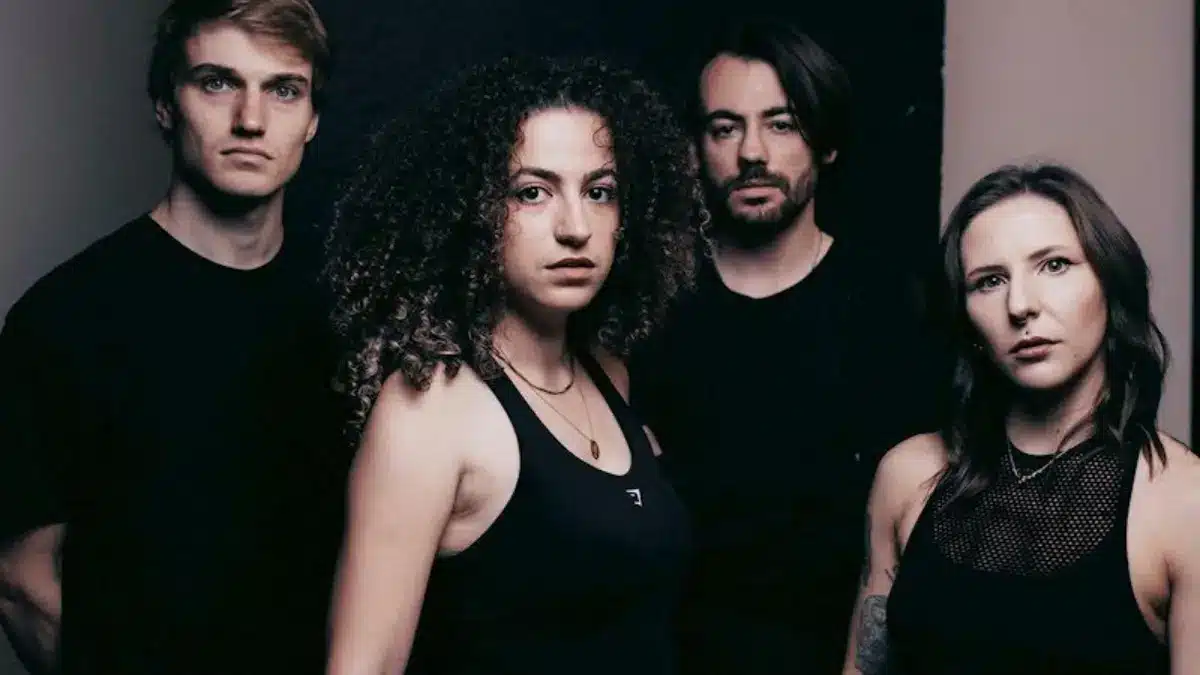
Line-Up:
Jess Douek – Vocals
Larry Sobiraj – Guitar
Ellis James – Bass
Sam Brownlow – Drums
Tracklisting:
1. Prologue
2. Smile
3. Waste
4. Lilith & Esther (feat. Banshee)
5. Hopeless
6. Break
7. Birth of a Sun
8. Sick
9. Walking The Edge of The Knife
10. Empty
11. Make The World Wait
12. Host
13. What if Better Never Comes?
MALLAVORA ONLINE:
About The Author
Kevin McSweeney is Metal Lair’s resident scribe of the underground, eternally rummaging through the global metal scene for riffs worth your time.
As the guiding hand behind Seven Deadly Songs every Friday, he has an uncanny knack for finding the track you didn’t know you needed, usually before finishing his pint.
Equal parts loyal, kind, and quietly razor-witted, Kevin brings deep knowledge, impeccable taste, and a steady, reliable presence to Metal Lair.
Read More From This Author:
Night Thieves: Metaxis Album Review
Matador – Above, Below And So Album Review
Support Metal Lair
MetalLair.net is a metal zine muttering to itself about seo and blastbeats at 3 AM while scheduling posts – powered by caffeine, riffs, and a severe lack of sleep and a dog wondering why the human is awake again.
And occasionally, Kevin falling asleep on his keyboard while writing album reviews and Seven Deadly Songs.
If you enjoy the interviews, reviews, features and recurring series, you can support the site here: