Written By Chris Norris
GÅTE have always understood that folklore is not a museum piece. In their hands, old stories breathe, bleed, mutate and return wearing new skin.
With SIGIL, the Norwegian band push that instinct even further, building an album where ancient language, traditional instrumentation, industrial textures, heavy guitars and stark electronic elements coexist without feeling stitched together for effect. The result is a record that feels less like a collection of songs and more like a world gradually revealing its own internal mythology.
That mythology was not entirely planned.
As Magnus Børmark explains, much of SIGIL’s larger narrative only became visible once the album was finished. What began as an open creative process rooted in Norwegian folk tradition evolved into something darker, stranger and ultimately more hopeful, moving through grief, disappearance, restlessness, survival and renewal.
In this GÅTE SIGIL Interview with Metal Lair, Magnus Børmark and Gunnhild Sundli discuss the creative evolution of SIGIL, the living power of folklore, the haunting imagery behind “Mi Jord,” the legend of Jostedalsrypa, Eurovision’s impact on privacy, the symbolism behind the album’s title and why the Wild Hunt may already be galloping through our smartphones.
And somewhere between dying worlds, merciless hurdy-gurdies and children surviving the impossible, one idea keeps resurfacing: even after something disappears, life has an irritating habit of beginning again.
GÅTE SIGIL Interview: Folklore, Survival and the World Behind the Album
Metal Lair: SIGIL feels deliberately immersive, almost like it wants the listener to step into a world rather than simply hear a sequence of songs.
When you were making the record, were you thinking cinematically, visually, or narratively about how that world should feel?
Magnus: We went into the process very openly. We knew from the beginning that we wanted to write everything from scratch.
In the past, we have often worked more directly with existing lyrics and melodies from traditional Norwegian folk songs, but this time we wanted to open up the creative space and see what could happen if we allowed ourselves to create something new from something old.
So rather than reproducing the tradition, we wanted to use it as a foundation and a source of inspiration.
The old stories, folklore, traditional ways of shaping melodies and even the language gave us something to create from, but we didn’t really know where it would take us.
What was fascinating was that the larger narrative of the album really emerged afterwards. When the album was finished, we suddenly discovered how strongly the songs were connected, and that there was a very clear thread running through the whole record.
That was really exciting, because we hadn’t planned it that way from the beginning. In a way, we discovered the world of SIGIL ourselves once we had created it.
Metal Lair: GÅTE often pulls ancient Norwegian folklore into a modern musical world. When you reach back into Norwegian folklore for a song, what makes one old story feel alive enough to drag into the present?
Gunnhild: I think what makes an old story feel alive is when we recognize something of ourselves in it. People hundreds of years ago experienced many of the same fundamental things that we do – fear, grief, longing, joy, loss, and the desire for something more.
What I find so powerful about folklore is that it can speak about these things without becoming too obvious or trivial.
The stories give us images, symbols and supernatural worlds that allow us to explore something deeply human without having to explain everything directly.
For me, there is also a very personal connection to this tradition. I grew up singing these old folk songs, and the language, the melodies and the tonality feel almost like my musical mother tongue.
It is a musical language that has been with me for as long as I can remember. So when we started writing our own lyrics and melodies, it felt very natural to carry that language with us.
We are creating something new, but I don’t have to leave my musical mother tongue behind in order to do that. The old stories, the language and the tonality can still be part of what we create today.
And when we find an old story that reflects something we recognize in ourselves or in the world around us, that’s when it becomes interesting for Gåte. It doesn’t really feel like bringing something dead back to life. It feels more like discovering that it was still alive.
Metal Lair: Sannsiger just won the Grand Prize in the World category of the John Lennon Songwriting Contest, and you’ve described it as a new direction for GÅTE. Is there something especially satisfying about being rewarded for taking a creative risk rather than playing it safe? And congratulations, by the way.
Magnus: Thank you! Yes, especially because “Sannsiger” began as a rather strange guitar loop on my (Magnus) phone, recorded while I was working on music for a theatre production. It was in a bar of seven, covered in effects, and apparently had ambitions beyond my camera roll.
I brought that recording into the studio, added nyckelharpa, and followed where it wanted to go. Eventually it became a song about people who speak truths nobody wants to hear.
There is something lovely about that particular song being heard. It encourages us to trust the things that make us curious, even before we can explain them.
Metal Lair: Mi Jord imagines the earth not raging against humanity, but quietly taking a final breath and withdrawing. Why did that image of departure feel more powerful to you than destruction or apocalypse?
Magnus: An angry Earth still has a relationship with us. There is someone to argue with, someone we might persuade to give us another chance. The thought of her simply leaving feels much more devastating.
In “Mi Jord,” the soul of the Earth departs her body: Everything might still be standing, but the presence that made it alive is gone.
We are quite good at imagining spectacular destruction. It is harder to sit with that absence. You cannot negotiate with an empty room.
Metal Lair: On “Mi Jord,” you pair hurdy-gurdy and mandola with heavy guitars and stark electronics. What was it about this song that made you reach for that particular mix of old and modern instrumentation?
Magnus: “Mi Jord” started with an electronic, industrial foundation from our producer. The lyrical theme grew out of that foundation like a dandelion through concrete.
I began imagining the Earth drawing her final breaths, taking form as winds from the east, west, south and north. Once the lyrics were there, the music needed some tenderness.
The mandola tremolo has this rural, pastoral quality that creates a beautiful tension against the industrial sound. A lot of the percussion in the verses is actually me hitting different parts of the mandola, even the bridge, for those metallic sounds.
So the same instrument brings both tenderness and some of the machinery. The hurdy-gurdy, though…that is a merciless instrument! Possibly only rivalled by the bagpipe!
Having that in there really demands your attention and gives the song an irrevocable sense of urgency.
Metal Lair: Jostedalsrypa exists in several tellings, with the surviving girl sometimes described simply as wild and bird-like, and in other versions almost transformed by that imagery.
Which version of the legend did you draw from for the song, and what was it about that particular narrative that stayed with you?
Magnus: The lyrics to Jostedalsrypa were written by the Norwegian author Erlend Skjetne, whom we have collaborated with quite a lot. I asked him if he could write something inspired by the legend of Jostedalsrypa.
I don’t know exactly which version of the legend he used as his starting point, but what I remember very clearly is what happened when Jon Even and I sat down at the piano with the lyrics in front of us.
Jon Even had some chords ready, and the melody came very naturally from the words. We recorded ourselves on a phone, and that very first time we played and improvised together, the song basically appeared in its entirety.
It was almost as if the melody was already there, hidden somewhere inside Erlend’s beautiful words, and we just had to find it.
Metal Lair: Eurovision brought GÅTE a level of international visibility that can change the relationship between an artist and the public almost overnight.
Did you find yourself embracing that attention, or did it make you more protective of your private life and more conscious of where you draw the line between the person and the performer?
Magnus: I think I’ve always had a fairly clear distinction between my private life and my life as an artist. But of course, after Eurovision, the amount of attention increased enormously, and it was quite intense for a long period of time.
I’m not always comfortable with that kind of attention. I actually like being able to disappear a little and to have a clear distinction between “now I’m at work” and “now I’m not.”
And I think there is an interesting conflict in being an artist today, because there is this constant expectation that we should always be visible, especially on social media.
We’re encouraged to share more and more of ourselves and our lives. For me, that’s probably one of the parts of being an artist that I wish wasn’t such a big part of the job. I love being on stage and communicating through music, but I don’t necessarily feel the same need to be visible all the time.
Metal Lair: The title SIGIL carries associations with magic, ritual, intention and symbols charged with meaning. For you personally, are those ideas primarily symbolic and rooted in folklore, or do you feel that certain symbols or rituals can still carry real power?
Magnus: For me, symbols can feel almost tactile, sometimes more so than words. I wouldn’t necessarily describe that as power. A shape can open a doorway into a particular atmosphere or state of being, without having to explain anything.
Music does something similar. It can take us beyond our thoughts and the limits of who we think we are, into a much larger space we can explore for ourselves. That connection feels timeless.
To me, it brings us closer to our true selves. Our sigil is a visual doorway into the same realm that our music opens up. Working with art means working with something you can never fully define.
You make something that gives you a sincere experience, then put it out into the world, hoping it allows someone else to discover something for themselves. Symbols are a magically simple form of communication, just like music.
Metal Lair: Looking at SIGIL as a whole, is there an idea or emotional thread running through the album that you think listeners might miss on a first listen?
Magnus: I think there is a journey running through the album that we didn’t fully recognize ourselves until it was finished. The first half feels darker and more restless.
There are stories about people being drawn away from themselves, about death, loss, and this constant human search for something more.
But as the album moves forward, something changes. It becomes quieter, and I think it starts asking a different question: when something is lost, what is left – and what can begin from there?
For me, there is a kind of life force running underneath the whole album. Even though many of the stories are dark, I don’t experience SIGIL as a hopeless album.
By the time we reach Jostedalsrypa at the very end, we are left with something incredibly vulnerable – a child who has survived when almost everything around her has disappeared. And yet there is life.
Something continues. I think that is one of the most important threads in the album for me: when something is lost and something new has to begin, life somehow finds a way forward.
Metal Lair: If one song from SIGIL became the blueprint for a dystopian society, which song would you choose, and why would that be the world you’d want to build?
Magnus: “Oskorsreia,” although I would rather not be appointed mayor! It is our version of the Wild Hunt: endless appetite, distraction, everyone being swept along without quite knowing where they are going.
Give the riders smartphones and we are alarmingly close already. The frightening part is that we help keep the whole thing moving ourselves, one more scroll at a time. It would make an excellent dystopia and a terrible place to live.
If I actually had to build a world from this album, I would sneak “Jostedalsrypa” into the plans: something fragile surviving, with the possibility of beginning again.
Metal Lair: “Thank you so much for taking the time to speak with Metal Lair. We really appreciate it, and congratulations again on the new album and the award.”
This GÅTE SIGIL Interview reveals an album shaped by folklore, loss, survival and the stubborn possibility of beginning again.
For all the darkness moving through SIGIL, GÅTE do not seem particularly interested in surrender.
Death, absence, environmental collapse, restless spirits and human distraction all haunt the record, but beneath them runs something stubbornly alive. A melody hidden inside an old story. A dandelion breaking through concrete. A child surviving after almost everything else has vanished.
Perhaps that is what makes SIGIL feel so powerful.
GÅTE are not simply resurrecting Norwegian folklore or decorating modern songs with ancient imagery. They are treating tradition as a living language, something capable of changing shape without losing its memory.
And if SIGIL carries a message beneath all its shadows, it may be the one Magnus returns to near the end of our conversation: when something is lost and something new must begin, life somehow finds a way forward.
Even, apparently, after the Wild Hunt gets Wi-Fi.

Tracklist:
1. Bergteken
2. Oskorsreia
3. Sannsiger
4. Nokon
5. Bòd frå djupet
6. Strandvaskar
7. Songen
8. Aude
9. Mi Jord
10. Jostedalsrypa
Production Credits:
Recorded at MagnuStudio; Øra Studio.
Produced by Kristian Fanavoll Tvedt & Magnus Børmark.
Mixed & Mastered by Jacob Hansen at Hansen Studios
Cover Art:
Martine Solstad Larsen (Sigil Artist); Martin Kvamme (Cover Art and Design).
Photography:
Ole Ekker
The upcoming fall tour will bring GÅTE to nine cities across Norway, plus one date in Istanbul, Turkey. During this ten date run, they will perform “Sannsiger”, along with other new songs and fan favourites from their celebrated discography.
GÅTE Tourdates 2026:
October 23 – Trondheim, Norway @ Havet
October 30 – Drammen, Norway @ Union
October 31 – Oslo, Norway @ Sentrum Scene
November 5 – Haugesund, Norway @ Høvleriet
November 6 – Stavanger, Norway @ Folken
November 7 – Bergen, Norway @ Verftet
November 12 – Skien, Norway @ Parkbiografen
November 13 – Moss, Norway @ Verket Scene
November 14 – Hamar, Norway @ Festiviteten
November 21 – Istanbul, Turkey @ IF Performance
GÅTE are also performing an acoustic set as special guests for Wardruna at the Nordic Night event in Oslo on June 13.
GÅTE (acoustic) at Nordic Night
Saturday, June 13 – Grefsenkollen, Norway (with Wardruna, Mari Boine, Sara Parkman + Aeverstaden) [TICKETS]
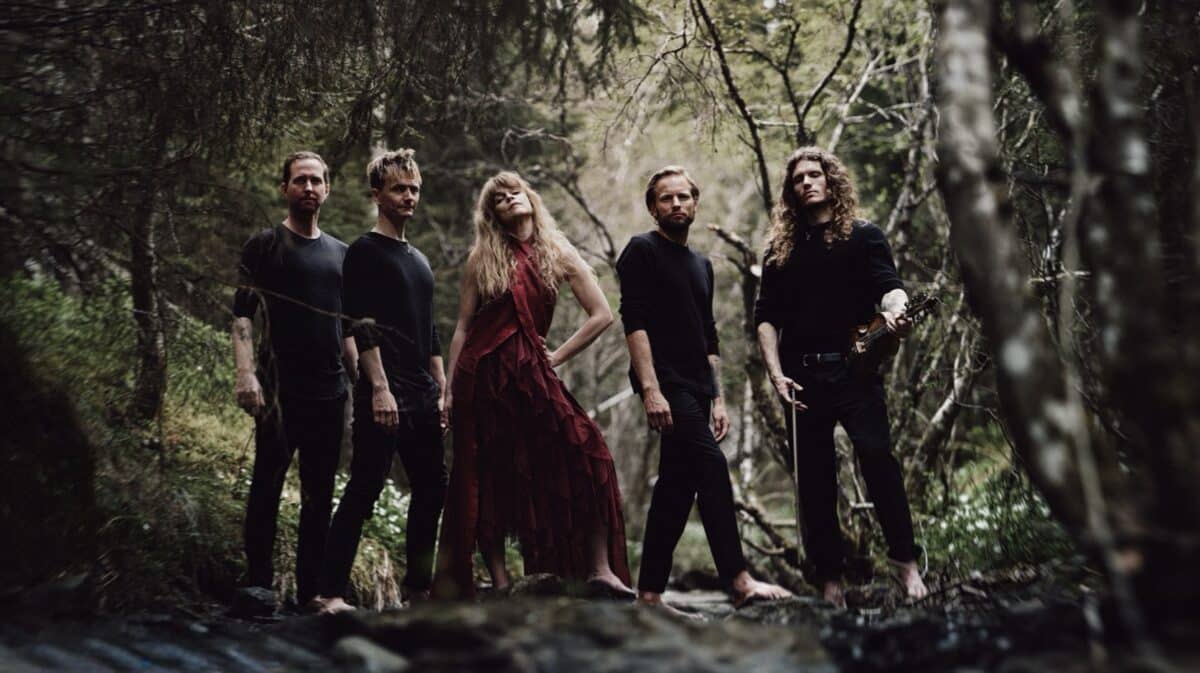
Line-up:
Gunnhild Sundli — Vocals
Magnus Børmark — Guitars, Nyckelharpa, Sounds, FX, Programming, Percussion,
Backing Vocals
Jon Even Schärer — Drums, Percussion, Programming, Mouth Harp, Backing Vocals
Arent Todal — Hardanger Fiddle, Nyckelharpa, Violin, Sounds, Backing Vocals
Mats Paulsen — Bass, Backing Vocals
GÅTE ONLINE
About the Author
Chris Norris is the voice behind Metal Lair’s global metal coverage, World Metal Weekly. From funeral doom in the north to thrash born in the streets. Known for spotlighting bands before algorithms notice them and for writing with the precision of a scalpel… or a well-sharpened guitar pick. Vinyl collector. Night-shift journalist. Believes heavy music has no borders.
Read More From This Author:
Stoned Jesus Songs to Moon Interview: Igor Sydorenko on Darkness, Descent and the Trilogy
Fallen Letters Interview: Finding Beauty in A Familiar Absence
Rotting Christ Interview: Sakis Tolis on 35 Years of Greek Metal, History and Legacy
Green Carnation Part III: The Messiah Complex Interview
Interview With The Ghoulstars: Horror Punk, VHS Culture & The Dark Overlords of the Universe
No algorithms. No fluff. No watered-down corporate metal coverage.
Subscribe to Metal Lair and get weekly underground features, Seven Deadly Songs, Deep Cuts, interviews, and original metal journalism sent directly to your inbox.
Join the patrons of Metal Lair
MetalLair.net is a metal zine muttering to itself about seo and blastbeats at 3 AM powered by caffeine, riffs, a severe lack of sleep, and a dog wondering why the human is still awake.
Sometimes it’s Kevin passing out mid Seven Deadly Songs.
Sometimes it’s digging up forgotten records no one else is talking about.
Always, it’s built for people who actually live this music.
If that sounds like you, you’re already one of us.
Supporting Metal Lair means keeping it independent, loud, and real with no corporate filters, no watered-down takes. If you want to help keep it alive…
Become a patron of Metal Lair.
FILE A COMPLAINT WITH THE METAL LAIR COMPLAINT DEPARTMENT
Have a metal-related grievance that needs official investigation?
Bad concert etiquette? Venue bullshit? Festival fuckery? A trend in metal that needs to die? An industry annoyance? Something that’s been pissing you off since 1987? Have a complaint against Metal Lair?
FILE YOUR COMPLAINT
File it with the Complaint Department. Remmy may investigate your grievance in a future installment.
Selected grievances may be investigated, mocked, dissected or otherwise subjected to the questionable judgment of Remmy Chillmister in a future edition of The Metal Lair Complaint Department.
Submission does not guarantee investigation. Remmy has a substantial backlog of things that piss him off.