Written By Lucien Drake
For decades, heavy metal has lived in uneasy territory, celebrated by millions of fans while periodically condemned by those who believe the music should not exist at all.
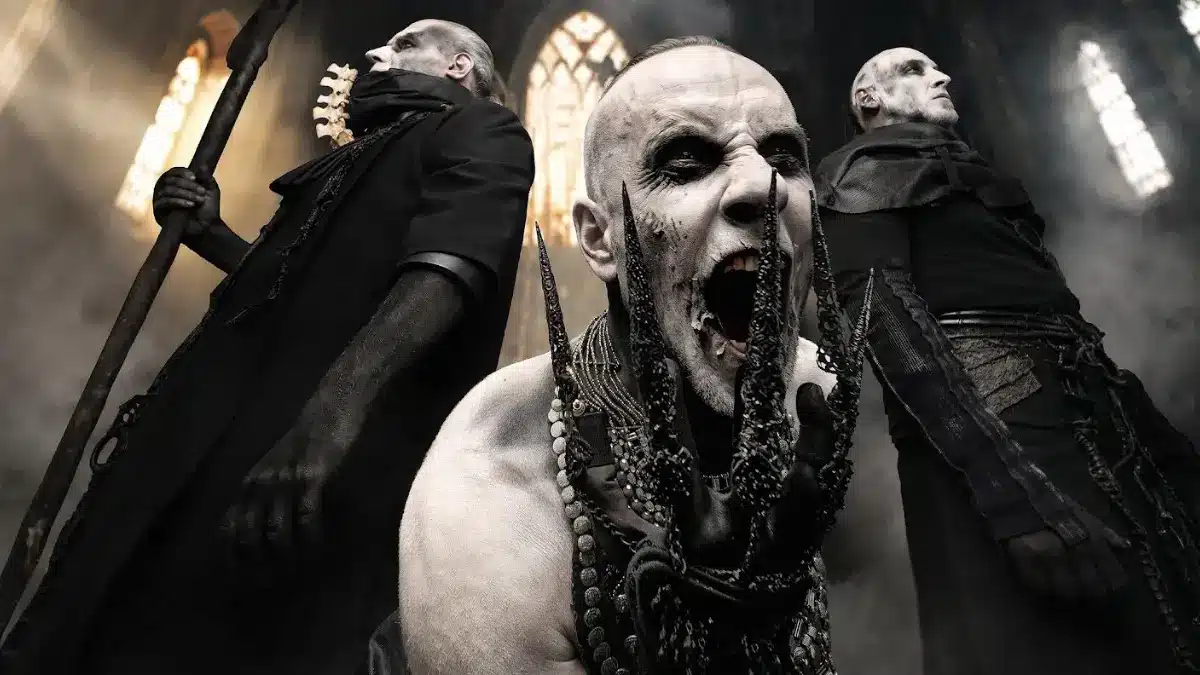
That conflict resurfaced once again when Behemoth were forced to cancel their March 3 performance in Bangalore, India, after receiving what the band described as credible threats from religious groups.
In a statement shared on social media, the Polish blackened death metal band said Christian organizations had been pressuring authorities and promoters to shut the concert down.
According to the statement, those threats raised serious concerns about the band’s safety, including the possibility of arrest or physical harm if the show proceeded.
“These threats have raised serious concerns regarding the band’s safety and security, including the possibility of arrest or physical danger.”
Behemoth are not the only artists to face disruptions during the current touring cycle. Slaughter to Prevail saw a February show in Istanbul canceled after religious groups accused the band of promoting “satanism,” prompting local authorities to intervene.
Greek black metal veterans Rotting Christ have also faced increased scrutiny around upcoming European and Asian dates, with promoters in more conservative regions reportedly being urged to reconsider bookings due to the band’s name and imagery.
For longtime metal fans, however, the language surrounding the cancellation feels eerily familiar, because accusations that heavy music is dangerous, immoral, or spiritually corrupt have followed the genre for decades.
A Pattern Emerging
The India cancellation comes shortly after similar issues forced the band to abandon planned shows in Turkey.
Authorities in Istanbul and Ankara canceled concerts by Behemoth and Slaughter to Prevail following pressure from religious groups that labeled the music “satanic propaganda.”
Turkish officials publicly defended the decision, stating that activities seen as corrupting social values would not be permitted.
Behemoth responded by framing the situation as part of a broader trend.
“This is another example of religious fanaticism attempting to impose itself on artistic expression,” the band wrote, adding that the situation reflects a troubling increase in attempts to censor music around the world.
The Band’s Position
Behemoth’s statement focused heavily on artistic freedom, arguing that musicians should not face intimidation, threats, or legal punishment for performing their work.
“Regardless of religion, race or culture, freedom of expression must remain a fundamental principle.”
The band also addressed their fans in India directly, expressing disappointment that the show could not move forward and promising they hope to return in the future.
When Metal Was Put on Trial
Metal has been here before. In the 1980’s heavy music found itself in the crosshairs of a moral panic that swept across American media and politics.
The idea that heavy music could corrupt listeners didn’t stop with angry church groups or parental watchdogs. It escalated into something even stranger: courtrooms.
Advocacy groups argued that rock lyrics were corrupting young listeners. Politicians held hearings. Television pundits warned parents that certain bands were promoting Satanism or dangerous behavior.
Parents’ groups claimed that records contained hidden messages, occult symbolism, and content dangerous to young listeners. The panic eventually led to congressional hearings organized by the Parents Music Resource Center.

The most famous moment came when Twisted Sister frontman Dee Snider walked into the PMRC Senate hearings to defend his band’s music September 19th 1985.
Politicians and lawmakers were surprised when Snider, alongside Frank Zappa and John Denver, stood out by presenting a calm, articulate defense instead of snarling rock stars incapable of explaining themselves from a horror movie.
“The testimony of intelligent musicians explaining that heavy music was not a secret recruitment tool for the occult, but art will remain embedded in history.”
The hearings eventually produced the “Parental Advisory” label that still appears on albums today. But the deeper message behind the panic was clear: certain people believed heavy music needed to be controlled.
But the deeper fear behind the panic was always the same: the belief that loud, aggressive music could somehow undermine social or religious authority.
Metal survived that moment. But the impulse behind it never fully disappeared.

In 1990, Judas Priest found themselves defending their music in a Nevada courtroom after a lawsuit claimed that hidden subliminal messages in their songs had influenced two teenagers to attempt suicide.
The case focused on alleged backward messages buried in the band’s recordings – a claim that quickly became a media spectacle.
During the trial, lawyers literally played metal records in reverse inside the courtroom while arguing that the band had embedded secret commands into the music. The accusation was surreal.
According to the lawsuit, the band’s song “Better By You, Better Than Me” supposedly contained a hidden instruction: “Do it.”
The band’s defense was simple: the idea was absurd.
Musicians, they argued, could barely control what a guitar amp was going to do onstage, let alone hide secret mind-control messages inside a vinyl record.
The judge ultimately dismissed the case, ruling that there was no scientific evidence that subliminal messages in music could compel someone to act against their will.
But the trial left a strange legacy. For a brief moment in American history, heavy metal wasn’t just controversial.
It was treated as if it might be dangerous enough to require legal intervention.
Of course, metal didn’t just wake up one morning in the 1980s and suddenly get accused of summoning Beelzebub. That suspicion had already been simmering for years.
Bands like Black Sabbath and Led Zeppelin spent the 1970s fielding accusations that their music was dabbling in dark forces.
The irony, of course, is that many of Black Sabbath’s songs were written as warnings about evil rather than endorsements of it. But nuance has never been the strong suit of a moral panic. When a distorted guitar meets a church sermon, subtlety usually dies first.
To be fair, some of the suspicion didn’t come entirely out of thin air. Guitarist Jimmy Page had a well-known fascination with the writings of occultist Aleister Crowley.
He collected Crowley’s books and even purchased the infamous Boleskine House once owned by the self-proclaimed “Great Beast 666.”
But the irony is that much of the hysteria landed on bands like Black Sabbath, whose songs were often closer to horror stories about evil than endorsements of it.
Meanwhile, the guy actually reading occult literature was mostly busy writing enormous blues-rock epics. Moral panics, it turns out, are not especially interested in fine details.
Metal’s Global Collision Course
Today the pressure looks different depending on where you are in the world.
In some countries it comes from governments. In others it comes from religious groups. Sometimes it comes from activist campaigns online.
What links these moments together is the same basic accusation that metal bands have heard for decades: that their art is dangerous, immoral, or corrosive to society. To metal fans, the argument often sounds absurd.
Metal has always flirted with symbols that other genres avoid: religion, mythology, death, apocalypse, and rebellion against authority. Those themes are part of the genre’s DNA.
To fans, they represent storytelling, philosophy, or theatrical provocation. To critics, they can appear threatening. That gap in interpretation is where controversy lives.
And it’s why metal bands have spent decades defending the idea that provocative music is an art form.
The Question That Never Goes Away
The Behemoth situation raises a question that has followed heavy music since the first distorted riffs rattled church walls:
Should artists be forced to change or silence their work because someone finds it offensive?
Metal has never offered an easy answer to that question. But it has always insisted on asking it loudly.
Why This is Still Relevant Today
For Behemoth, the immediate issue was safety, but the broader issue the band raised in its statement is one that continues to echo through the metal community.
“It is deeply concerning to see what feels like a growing movement toward censorship around the world.”
Metal’s Strange Resilience
The irony is that attempts to suppress metal rarely destroy it. If anything, they often strengthen it.
The Satanic Panic didn’t kill metal. It helped define it.
Bands like Mayhem, Gorgoroth, Slayer, and Venom built entire mythologies out of the outrage surrounding them. And decades later, the same arguments continue to surface in new places around the world.
Enjoying heavy music has never required abandoning your beliefs or your values. Metal fans come from every background imaginable.
For most listeners, the music isn’t a belief system at all. It’s art.
Listening to a crushing riff doesn’t turn someone into a bad person any more than watching a horror film turns someone into a monster.
The real issue isn’t whether people enjoy the music, it’s when institutions or authorities decide that certain art shouldn’t exist at all.
That’s where the conversation stops being about taste and starts becoming about censorship.
About The Author:
Lucien Drake is a writer and archivist at Metal Lair, contributing across features, essays, cultural commentary, and long-form series including Deep Cuts, Road Riffs and editorial projects exploring music, memory, and resistance. Known for treating heavy music as living history rather than nostalgia, Drake focuses on influence over canon, context over hype, and the stories that survive outside official timelines.
More From This Author:
Deep Cuts: Metal’s Hidden Gems
Before Algorithms Hunting Metal Was Bloodsport
The Underground Never Needed Your Approval – Only the Real Ones Survived
Support Metal Lair
MetalLair.net is a metal zine muttering to itself about seo and blastbeats at 3 AM while scheduling posts – powered by caffeine, riffs, and a severe lack of sleep and a dog wondering why the human is awake again.
And occasionally, Kevin falling asleep on his keyboard while writing album reviews and Seven Deadly Songs.
If you enjoy the interviews, reviews, features and recurring series, you can support the site here: