Written By Chris Norris
World Metal Weekly: Ukraine
“From Kyiv and beyond, Ukraine’s metal scene carries a kind of gravity that doesn’t need explanation – atmospheric, unrelenting, and deeply rooted in place.”
Ukraine’s metal scene has also produced some of the most recognizable names to break through the global underground in recent years.
Jinjer may be the most visible export, blending groove, prog, and sheer vocal ferocity into something unmistakably their own, but they’re far from alone.
Bands like Drudkh and Nokturnal Mortum helped define a colder, more atmospheric strain of Eastern European black metal, while 1914 carved out a harrowing niche rooted in World War I imagery and sonic devastation.
More modern acts like Space of Variations continue pushing that momentum forward, proving Ukraine’s presence isn’t a moment, it’s a movement.
Catch up on past WMW features:
Finland Edition Sweden Edition
Scotland Edition Wales Edition
Germany Edition France Edition
Chile Edition Indonesia Edition
Each edition stands alone, but together they form a growing global map of metal scenes around the world through Metal Lair’s World Metal Weekly series.
World Metal Weekly is A Metal Lair™ Original Series

World Metal Weekly is Metal Lair’s ongoing global series spotlighting metal scenes around the world.
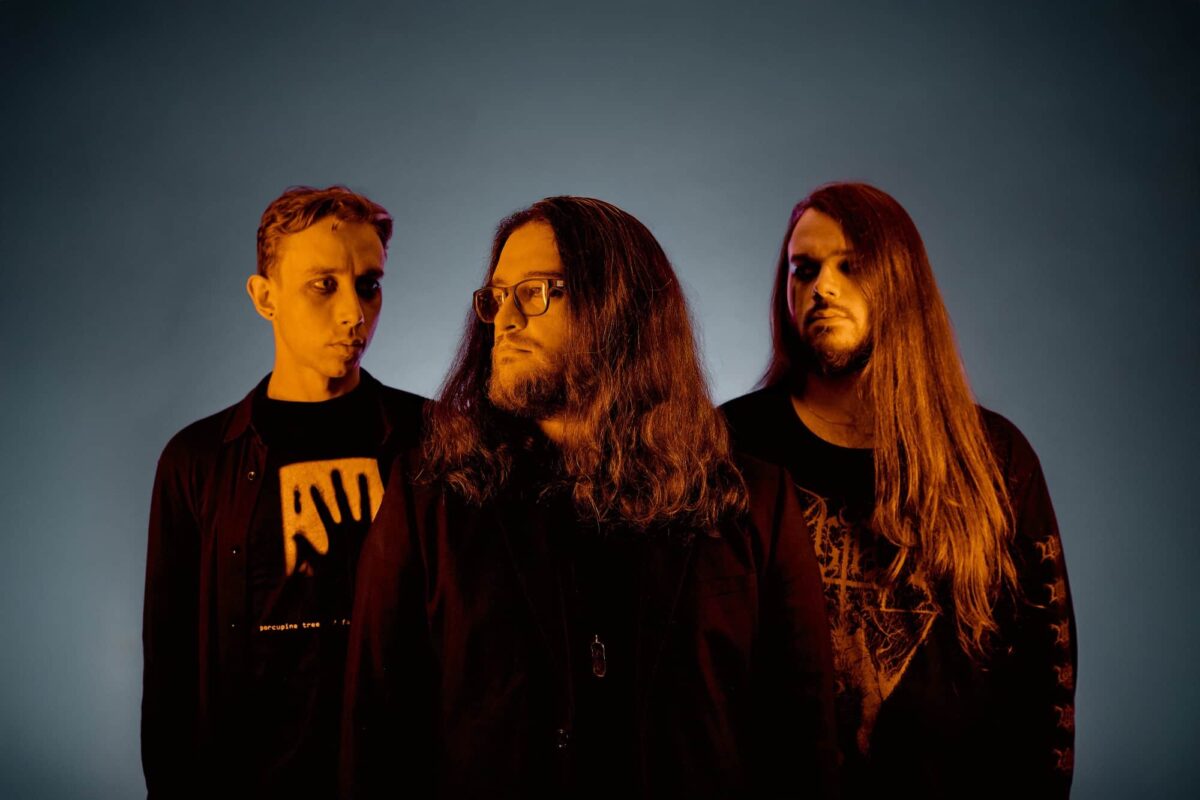
World Metal Weekly: Stoned Jesus – Season of Mist
City: Kyiv
Gateway Track: I’m The Mountain – Seven Thunders Roar (2012)
This isn’t just a gateway, it’s a rite of passage. Sixteen minutes of slow-burn hypnosis that starts fragile and ends towering.
The track that pulled Stoned Jesus out of the underground and into the wider heavy psyche, bridging doom, psych, and prog without losing weight. You don’t listen to this one, you climb it.
Deep Cut: The Sweet Whore of Babylon (Demo Version) – From the Outer Space (2018)
Before the polish, before the scale, they were raw, abrasive, and borderline feral.
A glimpse into Igor Sydorenko’s early vision when Stoned Jesus was still a one-man experiment. Messy in the best way.
The kind of track you don’t recommend casually, you hand it to someone when you know they’re ready.
Why Them:
Seventeen years in, Stoned Jesus are still evolving and more importantly, they’re still refusing to stand still. What began as Sabbath-worshipping stoner doom, built on fuzz, groove, and sheer weight, has gradually stretched into something far more elastic.
Over time, Igor Sydorenko has pushed the band beyond its origins, threading in progressive structures, melodic depth, and a restless instinct to never repeat the same record twice.
That evolution didn’t happen all at once, it’s written across their catalog. From the raw, hypnotic pull of First Communion, recorded in a matter of hours, to the breakthrough sprawl of Seven Thunders Roar and the defining presence of “I’m the Mountain,” to the more exploratory, genre-blurring shifts of The Harvest and Pilgrims, Stoned Jesus have treated each release as a step forward rather than a refinement of what came before.
Even Father Light, shaped in the shadow of real-world disruption, feels less like a setback and more like a recalibration, proof that the band’s core identity can bend without breaking.
With Songs to Sun (2025), explore our full album review – the opening chapter of an ambitious trilogy – Sun, Moon, and Stars, they’re not revisiting their past so much as folding it inward.
You can hear echoes of everything they’ve done before, but it’s all refracted through a sharper, more deliberate lens.
The riffs still hit, the grooves still carry, but there’s a clarity now, a sense of direction that only comes from years of experimentation finally locking into place.
Bands talk about “the journey” all the time. For Stoned Jesus, it isn’t a metaphor. It’s the entire point.

World Metal Weekly: White Ward – Debemur Morti Productions
City: Odesa
Gateway Track: Love Exchange Failure – Love Exchange Failure (2019)
This is where the door swings open, and doesn’t close behind you. That opening sax line doesn’t ease you in, it lures you somewhere dimly lit and uneasy before the whole thing collapses into a black metal storm.
Around the three-minute mark, it clicks: this isn’t atmosphere, it’s urban decay, dressed in noir and dragged through distortion. Nearly twelve minutes long, and somehow still feels too short.
Deep Cut: Guilty If I – Origins (2016/2021)
Before the polish, before the sax became a calling card, there was this. Rawer, colder, and stripped of the cinematic sheen that defines their later work.
Pulled from their early split-era material, it’s a glimpse at White Ward before they fully sharpened their identity, less refined and more exposed. The kind of track you don’t stumble into unless you’re digging on purpose.
Why Them:
White Ward don’t just blend genres, they weaponize contrast. Jazz and black metal shouldn’t coexist this naturally, but here it feels inevitable.
Their sound trades forests for urban jungles inside late-night isolation. It feels like something human unraveling under neon.
In 2025, they quietly closed a chapter with A Thorny Path 2017–2022, a limited box set collecting their three defining records (Futility Report, Love Exchange Failure, False Light) with updated presentation – less a reissue, more a line drawn before whatever comes next.
White Ward aren’t chasing evolution. They’ve been building toward it the whole time.

World Metal Weekly: Khors – Drakkar Productions
City: Kharkiv
Gateway Track: My Cossack Way (Мій козацький шлях) Night Falls onto the Fronts of Ours (2015)
This is where Khors stop feeling like a band and start feeling like a landscape. Mid-tempo, steady, almost ritualistic, built on a melody that doesn’t rush you, just pulls you forward.
The shift into Ukrainian lyrics hits differently here, not as a statement, but as something lived-in. It’s not flashy. It’s not trying to impress you. It just endures.
Deep Cut: Red Mirrors – Mysticism (2008)
A strange, beautiful detour. Clean vocals where you expect venom, a gothic atmosphere that feels closer to a distant echo than a war cry.
It’s the kind of track that catches you off guard if you think you’ve already mapped the band out. Most people miss it. The ones who don’t usually stick around longer.
Why Them:
Khors operate in that space where black metal stops being about extremity and starts becoming about memory. Their sound doesn’t rush to overwhelm, it settles in, steady and deliberate, like something carried over time rather than created in a moment.
There’s a patience to it. Nothing feels wasted, nothing pushed for the sake of impact. Melodies linger longer than expected, rhythms move with a kind of quiet resolve, and the atmosphere builds without ever needing to explode. It’s less about aggression and more about presence and something that feels grounded, almost elemental.
Even as their catalog has been resurfaced through recent reissues, including Letters to the Future Self, it all points back to the same core idea: this isn’t music chasing relevance or reacting to trends.
It’s something rooted, weathered, and still standing – unconcerned with where the scene moves next because it was never trying to follow it in the first place.

World Metal Weekly: Velikhan
City: Kyiv
Gateway Track: Hero – Hero (Single, 2018)
This is the one that hits first – cinematic, mechanical, built to move. There’s a precision to it that leans closer to controlled impact than chaos, the kind of groove that locks in immediately and doesn’t let go.
It’s polished without feeling safe, heavy without losing clarity. If you’ve ever stood somewhere between Jinjer and Meshuggah, this is familiar territory but it carries its own weight.
Deep Cut: Akua – Oh Lord! (2017)
Before the refinement, there was this – sharper edges, more dissonance, less control.
It’s not trying to be accessible. It’s trying to test you. The kind of track that shows where the band started before they learned how to channel that aggression into something more restrained and more dangerous.
Why Them:
Velikhan exist in that rare space between presence and absence, visible enough to matter, but deliberately out of reach.
Built as a rotating supergroup of seasoned Ukrainian musicians, including vocalist Nikita Obrizan, guitarist and producer Dmitriy Afanasiev, bassist Aleksander Savin, and drummer Ruslan Babayev, the band operates without the safety net of a major label or traditional rollout.
Instead, everything runs through their own Kyiv-based Revet Sound studio – a hub not just for creation, but for action.
Releases arrive in bursts, often tied to direct support efforts, turning their independence into something tangible. No middlemen, no polish for the sake of optics, just a controlled, deliberate output from people who clearly know exactly what they’re doing.
In a scene full of noise, Velikhan move differently. Less visible. More intentional. The kind of band you don’t find unless someone points you there.

World Metal Weekly: Ignea – Napalm Records
City: Kyiv
Gateway Track: Alga – The Sign of Faith (2017)
This isn’t just the entry point—it’s the blueprint. The track that put Ignea on the map, pairing full symphonic orchestration with modern metal weight in a way that felt cinematic without losing impact. It’s massive, immediate, and still the clearest window into what they do best. When people discover Ignea, this is usually where it starts—and for good reason.
Deep Cut: Sputnik – Sputnik (2013)
Before the scale, before the polish, this. A glimpse of Ignea in its early form, when the cinematic elements were still being carved out and the sound leaned more experimental than expansive. It’s rougher around the edges, but that’s exactly why it matters. The kind of track you only find if you’re digging, not browsing.
Why Them:
Ignea don’t just write songs, they build entire worlds and then invite you to walk through them. Pulling from Ukrainian history, mythology, and global influences, their sound sits at the intersection of symphonic scope and modern metal precision, but never feels confined by either.
It’s expansive without losing focus and detailed without becoming cluttered. Every element is placed with intent.
What separates Ignea from countless symphonic acts is control. The orchestration doesn’t overwhelm the riffs, it elevates them. The melodies don’t soften the momentum, they sharpen it.
There’s a balance here that feels deliberate, not accidental, and it’s that balance that’s pushed them far beyond the underground.
Millions of streams didn’t happen by chance. They happened because Ignea know exactly how to translate complexity into something immediate without diluting what makes it powerful.

World Metal Weekly: Motanka – Napalm Records
City: Lutsk
Gateway Track: Verba – Motanka (2019)
This is where most listeners first step into Motanka’s world and it doesn’t take long to understand why.
Built around a slow, deliberate rise, “Verba” unfolds like a ritual rather than a song, layering traditional Ukrainian elements with modern metal weight until it finally breaks open.
The title references the willow tree, a sacred symbol in Ukrainian culture, but you don’t need to know that to feel it.
This is the track that introduced their mystic-metal identity to a global audience and it still holds the door wide open.
Deep Cut: Horizon – Motanka (2019)
Not the track people click first and that’s exactly why it works.
Buried deeper in the record, it trades immediate impact for atmosphere, letting the band’s ritualistic side unfold more slowly.
The kind of track that reveals itself after the obvious ones have already hit.
Why Them:
Motanka don’t just play music, they channel something older. Their sound draws from Ukrainian folklore, ritual, and ancestral memory, but it never feels like a reenactment or a tribute to the past. It feels alive. There’s a sense that what you’re hearing isn’t being performed so much as invoked.
Built on tension, repetition, and atmosphere, their songs move like ceremonies rather than compositions that are slow-burning, deliberate, and resistant to interruption.
Vocals feel less like lyrics and more like incantations, rising and falling over rhythms that seem to circle rather than resolve. You don’t follow Motanka’s music in a straight line, you get pulled into it, and by the time it opens up, you’re already inside.
There’s a weight here that doesn’t rely on speed or aggression. It lingers in a different way that’s quieter, but more persistent.
Motanka draw inward, creating something immersive and slightly disorienting. They come from atmosphere and the slow build of something you don’t fully understand but feel anyway.

World Metal Weekly: Ethereal Riffian – Robustfellow
City: Kyiv
Gateway Track: Legends – Legends (2019)
This is the clearest entry point into Ethereal Riffian’s world and the track that carried their sound the furthest.
Where earlier material feels more exploratory, “Legends” is focused, fully realized, and grounded in everything the band had been building toward.
It still moves at its own pace, unfolding rather than striking, but there’s a clarity here that makes it easier to step inside. For a band that never chased accessibility, this is as close as they come to an open door.
Deep Cut: Entering the Void – Shaman’s Visions (2014)
Less immediate and far more inward, this is where Ethereal Riffian’s sound fully leans into its meditative core.
The track doesn’t build toward a moment, it dissolves into one, trading structure for atmosphere and repetition.
It’s not something you casually land on, but once you do, it reframes everything around it. A deeper pull into the band’s psychedelic, ritual-driven side.
Why Them:
Ethereal Riffian move in a space most bands don’t have the patience for. Where others build toward impact, they dissolve into it. Their music isn’t concerned with immediacy or even memorability in the traditional sense. It’s about immersion, about stepping outside the noise long enough to hear something quieter, deeper, and far less predictable.
Across their catalog, there’s a clear rejection of structure as obligation. Songs stretch, contract, and drift as needed, guided more by feeling than by form. That approach could easily collapse into aimlessness, but here it never does. There’s intention in the stillness, control in the repetition, and a steady hand behind every shift.
What makes Ethereal Riffian stand out isn’t just the psychedelic or the progressive elements, it’s the discipline to let space exist without filling it. In a scene that often equates heaviness with density, they prove the opposite can be just as powerful.
They don’t demand your attention. They change your state of mind until you give it willingly.
Ukraine isn’t just a scene, it’s a spectrum. From ritualistic depth to urban decay, from cinematic scale to meditative stillness, what ties it all together isn’t a single sound, it’s intent.
There’s weight here that doesn’t come from volume alone. It comes from history, from place, from something that feels lived-in rather than performed.
And this is only one stop. Keep your passport handy. We’re not done traveling.
Next week, we shift the map again. New country. New noise. Same mission: find what matters before it gets buried.
Stay loud.
World Metal Weekly FAQ:
Q: What is World Metal Weekly?
A: A guided tour through the loudest corners of the planet. One country per week, seven bands per stop, zero apologies for subjectivity.
Q: How do we pick the bands?
A: Taste, instinct, and a little chaos. The goal isn’t to chase hype, it’s to shine a light where the sparks are flying, whether anyone’s looking or not.
Q: Do I need a visa or a black-metal passport to follow along?
A: No paperwork required. Just headphones and questionable volume control decisions.
Q: Can bands submit music to be considered?
A: Absolutely. If you think your riffs can disturb the peace of a different continent, reach out. Worst case: we love it. Best case: we love it loudly.
Q: Does Metal Lair have any other weekly series like this?
A: Oh yes. If your appetite isn’t satisfied by one global feast, check out more crom Metal Lair:
- Seven Deadly Songs – our weekly hunt for the seven must-hear new tracks.
- Metalhead Horoscopes – your weekly forecast in riffs, not retrogrades.
- Deep Cuts: Metal’s Hidden Gems – a descent into the vaults where legendary weirdness sleeps.
- A Rip in Time: Women in Metal -A series celebrating the voices, pioneers, and rule-breakers reshaping heavy music’s DNA.
- Metal Legacy Profiles – Deep-dive essays honoring artists who shaped metal’s sound, culture, and philosophy. These aren’t timelines or greatest-hits lists, but examinations of impact, conflict, evolution, and what each figure left behind.
- Ministry of Metal – A satirical authority devoted to the laws, rituals, and unspoken rules of heavy music. Features proclamations, decrees, cultural edicts, metal lore, and an original comic book series, all delivered with humor and bite.
- Road Riffs: Metal On The Map– We take metal beyond the speakers and onto the highway, exploring legendary venues, scene-defining cities, historic landmarks, local haunts, and travel stops tied to real
metal scenes around the world that every metalhead should experience.
More noise. More discovery. More excuses to stay up too late with incredible music.
About the Author
Chris Norris is the voice behind Metal Lair’s global metal coverage, from funeral doom in the north to thrash born in the streets. Known for spotlighting bands before algorithms notice them and for writing with the precision of a scalpel… or a well-sharpened guitar pick. Vinyl collector. Night-shift journalist. Believes heavy music has no borders.
Support Metal Lair
MetalLair.net is a metal zine muttering to itself about seo and blastbeats at 3 AM while scheduling posts – powered by caffeine, riffs, and a severe lack of sleep and a dog wondering why the human is awake again.
And occasionally, Kevin falling asleep on his keyboard while writing album reviews and Seven Deadly Songs.
If you enjoy the interviews, reviews, features and recurring series, you can support the site here: