Written By Chris Norris
Welcome To World Metal Weekly Chile Edition
Chile doesn’t produce metal casually. It forges it under pressure, political, cultural, and geological. From the suffocating doom of Santiago to the port-city mysticism of Valparaíso, Chilean metal has always sounded like survival music.
This edition of World Metal Weekly explores a scene shaped by resistance, resilience, and an uncompromising commitment to heaviness in all its forms.
Catch up on past WMW features:
Finland Edition Sweden Edition
Scotland Edition Wales Edition
Germany Edition France Edition
Each edition stands alone, but together they form a growing map of metal scenes around the world.
World Metal Weekly is A Metal Lair™ Original Series


World Metal Weekly: Mar de Grises – Season of Mist
City: Santiago
Gateway Track: Shining Human Skin (Draining the Waterheart 2008)
It’s their most accessible “entry” into their unique atmospheric style.
Deep Cut: Deep Seeded Hope Avante – Garde (Draining The Waterheart Remastered 2020)
A raw look at their origins before they became polished doom icons.
Why Them:
They redefined Chilean metal by proving the scene could produce world-class, melancholic Doom/Death that wasn’t just about speed, but about crushing atmosphere and emotion.

World Metal Weekly: Procession – High Roller Records
City: Valparaíso
Gateway Track: Chants of the Nameless (Destroyers of the Faith 2020)
Pure, epic traditional Doom in the vein of Candlemass.
Deep Cut: Far from Light (To Reap Heavens Apart 2013)
A cult favorite that shows their darker, more desolate side.
Why Them:
Though they moved to Europe later, they are the pride of Valparaíso. They brought a sense of ancient, heavy majesty back to the Chilean underground.
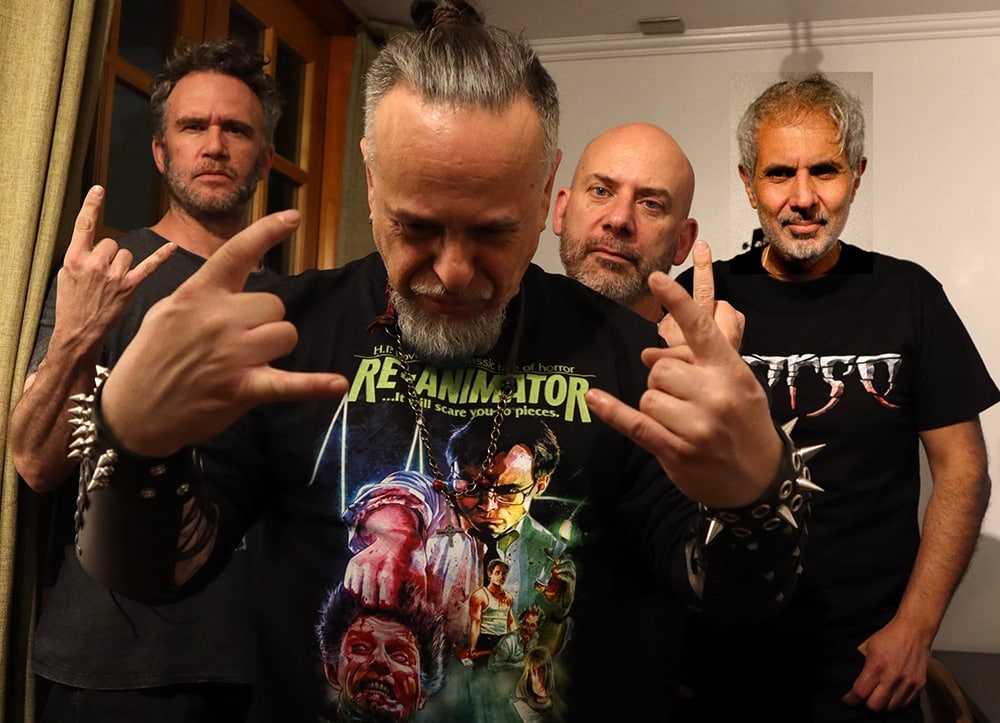
World Metal Weekly: Dorso – Independent
City: Santiago
Gateway Track: Expelido del Vientre (Bajo la Luna Cambiante 2025)
This is the quintessential track for their “Gore-delic” thrash sound.
Deep Cut: Horas sobre el Tentáculo (Espacium 2008)
A weird, proggy masterpiece that shows just how experimental they can get.
Why Them:
Dorso is Chile’s most “unique” export. They blend horror, sci-fi, and Chilean mythology into a style that literally no one else on earth sounds like.

World Metal Weekly: Undercroft – Toxic Records
City: Santiago
Gateway Track: At the Gardens of Hatred (Ruins Of Gomorrah 2012)
Deep Cut: Gateway Track: To the Final Battle (Bonebreaker 1997)
Pure, aggressive Death/Thrash that defines their middle era.
Why Them:
They represent the relentless, “no-frills” aggression of the Chilean scene. They’ve stayed consistent for over 30 years, carrying the torch for raw South American violence.

World Metal Weekly: Massakre – Independent
City: Santiago
Gateway Track: Pissing into the Mass Grave (From the 1985 Demo)
This is the raw, demo-tape history of the band.
Deep Cut: Violent Aggression (early demo-era recording, mid-1980s)
Why Them:
One of the true founding pillars of Chilean extreme metal. Massakre were forging violent, uncompromising thrash in the mid-1980s, when playing this kind of music in Chile was genuinely dangerous.
Their early demos helped define the raw backbone of the Santiago underground, making them enduring symbols of the scene’s resilience and defiance.

World Metal Weekly: Pentagram Chile – Listenable Records
City: Santiago
Gateway Track: Spell of The Pentagram (The Malefice 2013)
This track captures the band’s transition from their raw, cult-demo roots into a more polished (but still devastatingly heavy) studio sound. It features the signature rhythmic shifts and Anton Reisenegger’s unmistakable rasp.
Deep Cut: Temple of Perdition (Demo 2 – 1987)
A blistering demo-era track that captures Pentagram Chile in their raw formative phase. Fast, hostile, and unrefined, “Temple of Perdition” reflects the band’s early thrash/death blueprint as it circulated through tape trading networks, helping cement their influence on South American extreme metal long before official releases existed.
Why Them:
Pentagram Chile is the undisputed architect of South American extreme metal.
Long before the region was a recognized powerhouse, they were crafting a brand of death/thrash so influential that legends like Napalm Death and At the Gates cited them as a primary inspiration.
Their history is one of “what ifs” having disbanded before their prime only to return decades later to prove that their ancient fire hadn’t lost a single degree of heat. They represent the grit, tenacity, and raw spirit of the underground.

World Metal Weekly: Mawiza – Season of Mist
City: Santiago
Gateway Track: Wingkawnoam (ÜL 2025)
This track, which translates to “To Decolonize,” serves as the perfect entry point to Mawiza’s “Indigenous Groove Metal”. It opens their third album, ÜL, with a stomping industrial groove that highlights their ability to blend modern heavy production with the ancestral language of the Mapuche Nation.
Deep Cut: Kütxal (Killong 2019)
“Kütxal” (Mapudungun for Fire) is a raw, ritual driven track that leans hard into Mawiza’s ancestral core rather than modern metal polish.
The song moves with a slow, deliberate weight, percussion and guitars circling like embers instead of erupting into spectacle.
There’s a ceremonial tension running through it, as if the fire being invoked is both destructive and purifying, tied to memory, land, and resistance rather than aggression.
It’s stark, grounded, and uncompromising. Less a song built for crowds, more a piece meant to be witnessed.
Why Them:
Mawiza is currently one of the most vital bands in the global metal scene because they are “decolonizing heavy music”.
Based in Santiago but representing the Mapuche Nation, they only perform in their native language, Mapuzungun, to preserve their ancestral roots.
Their unique “tribal bent on groove metal” has earned them high-profile endorsements from legends like Slipknot, Mastodon, and Gojira.
They aren’t just playing metal; they are using it as a megaphone to scream for indigenous rights and the protection of their sacred land, Wallmapu.
From ancient doom rituals to indigenous groove metal forged in defiance, Chile’s metal scene refuses to be boxed, exported neatly, or softened for outside approval. It stands on its own terms. Loud, uncompromising, and deeply rooted. This is Chile. And this is why World Metal Weekly exists.
World Metal Weekly FAQ:
Q: What is World Metal Weekly?
A: A guided tour through the loudest corners of the planet. One country per week, seven bands per stop, zero apologies for subjectivity.
Q: How do we pick the bands?
A: Taste, instinct, and a little chaos. The goal isn’t to chase hype, it’s to shine a light where the sparks are flying, whether anyone’s looking or not.
Q: Do I need a visa or a black-metal passport to follow along?
A: No paperwork required. Just headphones and questionable volume control decisions.
Q: Can bands submit music to be considered?
A: Absolutely. If you think your riffs can disturb the peace of a different continent, reach out. Worst case: we love it. Best case: we love it loudly.
Q: Does Metal Lair have any other weekly series like this?
A: Oh yes. If your appetite isn’t satisfied by one global feast, check out more crom Metal Lair:
- Seven Deadly Songs – our weekly hunt for the seven must-hear new tracks.
- Metalhead Horoscopes – your weekly forecast in riffs, not retrogrades.
- Deep Cuts: Metal’s Hidden Gems – a descent into the vaults where legendary weirdness sleeps.
- A Rip in Time: Women in Metal – A series celebrating the voices, pioneers, and rule-breakers reshaping heavy music’s DNA.
- Metal Legacy Profiles – Deep-dive essays honoring artists who shaped metal’s sound, culture, and philosophy. These aren’t timelines or greatest-hits lists, but examinations of impact, conflict, evolution, and what each figure left behind.
- Ministry of Metal – A satirical authority devoted to the laws, rituals, and unspoken rules of heavy music. Proclamations, decrees, cultural edicts, and metal lore delivered with humor and bite.
More noise. More discovery. More excuses to stay up too late with incredible music.
About the Author
Chris Norris is the voice behind Metal Lair’s global metal coverage, from funeral doom in the north to thrash born in the streets. Known for spotlighting bands before algorithms notice them and for writing with the precision of a scalpel… or a well-sharpened guitar pick. Vinyl collector. Night-shift journalist. Believes heavy music has no borders.
Support Metal Lair
Metal Lair runs on passion, riffs, and far too much coffee. If you enjoy the interviews, reviews, and recurring series, you can support the site here: