Written By Derek Gann
Possessed death metal emerged in the 1980s Bay Area as the blueprint for extreme metal.
There’s a moment in metal history where things stop being fast and angry and start becoming something else entirely.
Something uglier. Something more dangerous. That moment didn’t happen in Florida, it didn’t happen in Sweden, and it didn’t come from a perfectly rehearsed studio band with clean gear and a vision statement.
It happened in the early 1980s Bay Area, in garages and rehearsal rooms where volume mattered more than precision, and where the idea wasn’t to impress anyone, it was to go further than everyone else dared.
That band was Possessed. And whether people like it or not, death metal doesn’t exist the way we know it without them. Before “Death Metal” Was a Genre
Possessed Death Metal
In 1982 – 83, the Bay Area scene was exploding. Metallica, Exodus and Slayer. Everyone was pushing speed, aggression, and extremity, but there was still a line most bands wouldn’t cross.
Vocals were harsh, but intelligible. Lyrics were dark, but still tongue-in-cheek. Thrash was dangerous, sure but it was still rooted in punk and NWOBHM.
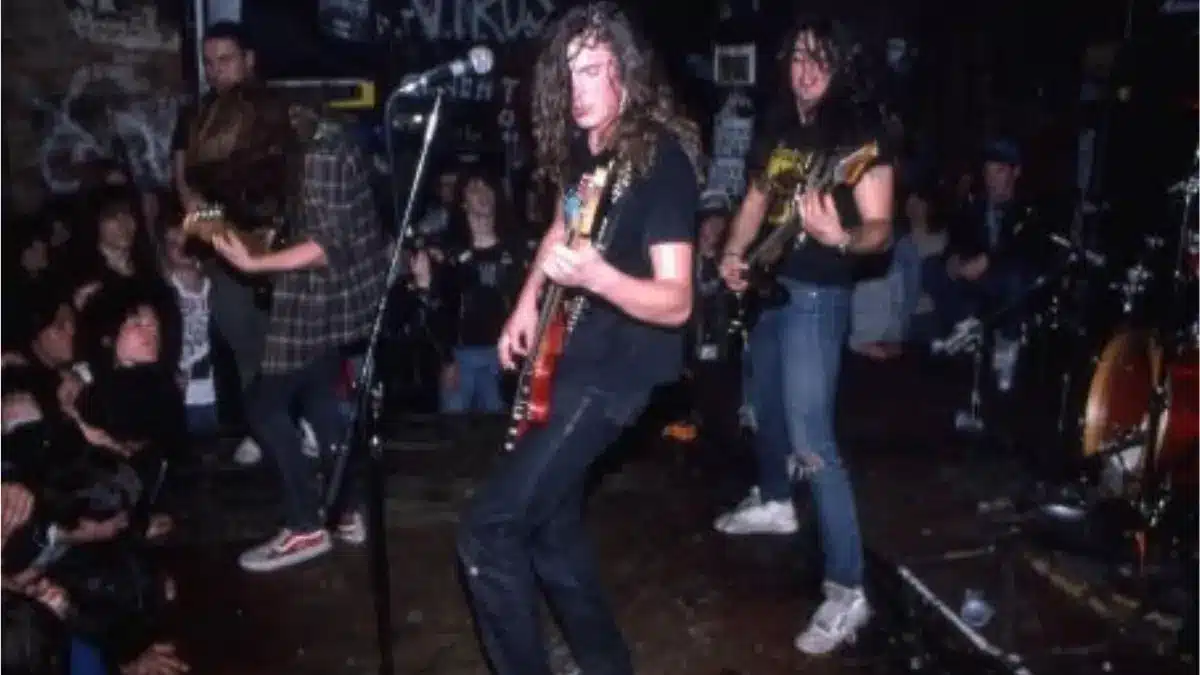
Possessed didn’t care about that line
Originally formed by Mike Torrao (guitar) and Mike Sus (drums), the band was raw and unfocused until Jeff Becerra stepped in.
First as a teenager obsessed with heavier music, then as the defining presence of the band. After the suicide of original singer Barry Fisk, Becerra took over vocals and bass, and everything changed.
His voice wasn’t a shout and it wasn’t a scream. It was a guttural snarl that sounded genuinely hostile. Closer to something animal than human.
This wasn’t shock value, this was instinct. When Possessed started playing faster, darker and more vicious than their peers, people noticed and not always positively.
“Seven Churches” and the Sound of a New Threat
In 1985, Possessed released Seven Churches, and metal quietly crossed a point of no return.
At the time, it didn’t sound like an album trying to invent anything. It sounded like a band that didn’t know or care how far they were pushing things.
The riffs were sharp and frantic, the drumming relentless, and Becerra’s vocals were unlike anything else circulating in underground metal.
The song “Death Metal” wasn’t a manifesto. It wasn’t marketing. It was just a title but it stuck. Possessed were one of the first bands to use the term openly, and whether or not you want to argue semantics, the idea was already there.
Seven Churches wasn’t polished. It wasn’t clean. It wasn’t even perfectly executed. It scared people.
Thrash fans thought it was too extreme. Traditional metal fans dismissed it as noise. But younger musicians heard something different.
It was permission to be uglier, to abandon melody when it didn’t serve the song and to let darkness be sincere instead of theatrical.
The Pushback and the Fracture
The follow-up album, Beyond the Gates (1986), is still controversial and that’s putting it mildly.
Some fans defend it as misunderstood. Others see it as rushed, unfocused, and lacking the dangerous spark of the debut.
What’s undeniable is that it exposed fractures inside the band. Internal tension, changing expectations, and the pressure of being “the band that invented death metal” took their toll.
By the time the Eyes of Horror EP dropped in 1987, Possessed were already coming apart. Then they were gone.
No triumphant farewell. No grand statement. Just another extreme band chewed up by timing, pressure, and the reality that they were moving faster than the scene around them could handle.
Legacy Without Control
Here’s the irony: Possessed disappeared just as death metal exploded. Bands like Death, Morbid Angel, Obituary, and later the entire Florida and Swedish scenes took the elements Possessed helped introduce and refined them.
Some fans argue endlessly over who “really” invented death metal. That argument misses the point. Possessed didn’t perfect death metal, they opened the door. Others walked through it and built empires. That doesn’t erase who kicked it in.
The Shooting That Should’ve Ended Everything
In 1989, Jeff Becerra was shot during a robbery and left paralyzed from the waist down. For most musicians, that would’ve been the end of the story. For death metal’s supposed originator, it should have been a tragic footnote.
Instead, Becerra stayed connected. Stayed vocal. Stayed defiant. Possessed became a legend that refused to stay buried.
Resurrection Without Nostalgia
When Possessed returned to the stage in 2007, it wasn’t a nostalgia act. Becerra fronted the band from a wheelchair with the same snarl, the same venom, the same refusal to soften what Possessed had always been.
And then, against all odds, they did the unthinkable. In 2019, over 30 years after their last full-length, Possessed released Revelations of Oblivion.
It wasn’t perfect and it wasn’t trying to be. It was violent, modern, and unmistakably Possessed.
This wasn’t a band pretending it was 1985 again. This was a band reminding everyone that their roots were deeper and nastier than most of the genre they helped birth.
Why Possessed is Still Relevant in 2025
In 2025, Possessed stands in a strange place. They’re not the biggest death metal band and they’re not the most technical or prolific. They are essential.
They represent the moment metal stopped flirting with extremity and committed to it fully. They’re proof that innovation doesn’t always come from refinement. Sometimes it comes from reckless conviction.
Jeff Becerra walking again with robotic assistance decades after being told he never would feels symbolic in a way that’s almost too on the nose. A band that should’ve stayed buried, refusing to stay down. And in extreme metal, that’s the only real origin story that counts.
“Want more from this corner of metal history?” Explore more Metal Legacy Profiles:
Dimebag Darrell: Texas Fire, Groove Metal, and a Life Lived Loud
Lemmy Kilmister and Motörhead: The Unstoppable Force Behind Heavy Metal’s Grit and Glory
Ronnie James Dio: Holy Diver, Horns Raised High
Metal Legacy Profiles is a Metal Lair™ Original Series
Support Metal Lair
Metal Lair runs on passion, riffs, and far too much coffee. If you enjoy the interviews, reviews, and recurring series, you can support the site here: