Written by Caine Blackthorn
Metal worships endurance.
We build shrines to the eternal warrior, the indestructible riff machine, the frontman who never ages, never falters, never falls. The myth says our heroes are forged from steel.
But even as the icons bend under the weight, metal’s next generation is already rising, just look at the records shaping our Albums of the Year.
The truth?
They’re human tissue and scar tissue and metal has always asked more of them than any human body can pay.
The Myth vs. the Meat Suit
Metal has no retirement plan. No elder council.
No safe landing for legends whose bodies have cashed the checks their spirit kept writing.
In other music genres aging is a transition. In metal, it’s treated like failure. When a pop star ages, they pivot. When a country singer ages, they tour less. When a rapper ages, they produce, guest, reinvent.
Metal fans say stuff like:
• “He lost his growl.”
• “He can’t hit the notes.”
• “They should’ve retired 10 years ago.”
• “What happened to his energy?”
So musicians push until the vertebrae crack, until nerves go numb, until surgeries pile up like backstage passes. And when they finally collapse, fans demand an encore.
But then in the same breath they also demand nostalgia, original lineups, and career long stamina.
That contradiction is part of the issue.
Metal fans want youthful performance forever… from people in their 50s, 60s, and 70s while forgetting they themselves couldn’t survive one night of that physical hell.
And There’s the Musicians – Identity crisis is real.
Many have said:
• “If I’m not touring, who am I?”
• “Metal fans don’t want to see me slow down.”
• “I don’t know how to stop.”
Retirement in metal isn’t normal.
It’s seen as weakness, defeat, giving up.
Why Metal Breaks the Body
This isn’t gentle work. It never was.
• Constant touring
• No recovery time
• High-intensity performance every night
• Headbanging (actual spinal trauma)
• Decades of untreated injuries
• Labels squeezing every last tour cycle
Metal punishes bodies, and the culture glorifies it.
Metal legends don’t get to age, they endure until the body revolts.
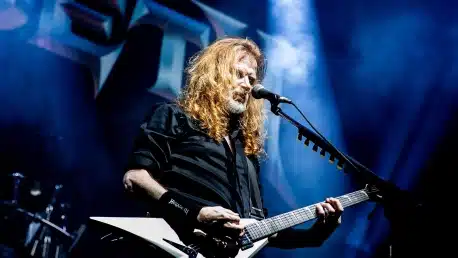
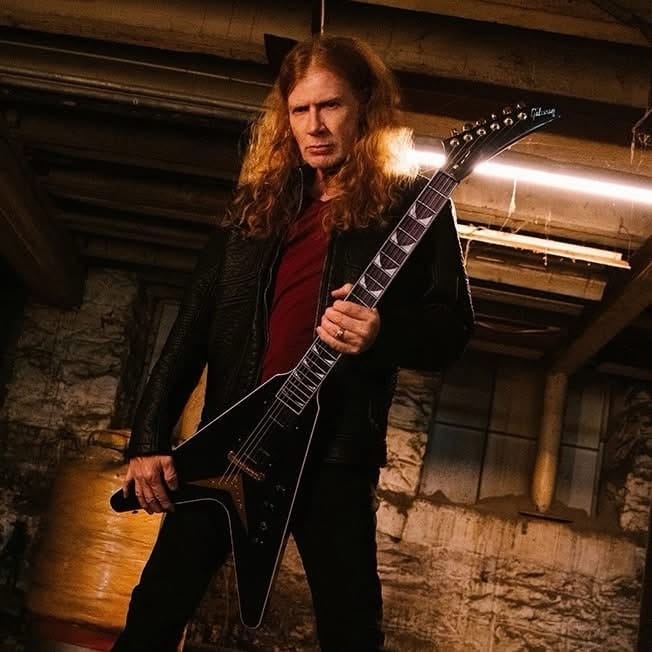
Dave Mustaine – The Warlord Whose Body Finally Declared a Ceasefire
Dave Mustaine isn’t just another legend retiring, he’s the red haired war general who carved thrash into existence through sheer force of will.
He rose from exile, built Megadeth from nothing, rewrote the rules of speed and precision, and then spent four decades punishing his body to keep the empire standing.
Spinal fusions.
Throat cancer.
Arthritis eating at his joints.
Nerve damage that made even basic motion difficult.
Downpicking at tempos no human hand was designed for.
Tour schedules that bordered on physical warfare.
And every time the universe tried to end him, he pushed harder.
That’s the part people forget:
Mustaine didn’t survive metal. he kept rebuilding it while breaking himself in the process.
His riffs sharpened the genre’s blade, but the irony is brutal. The very sound he forged demanded decades of physical violence from him. Metal fed on his stamina, his fury, his spine, his nerves, his pain and he always gave more than he had.
He didn’t stop after the Metallica exile.
He didn’t stop after the hand injuries.
He didn’t stop after cancer.
He didn’t stop when doctors said he should.
So when a man like that steps off the battlefield, it’s not surrender.
It’s biology finally overruling myth.
It’s the body calling a ceasefire the spirit never would have agreed to.
If Dave Mustaine, the benchmark for endurance, stubbornness, and pure thrash warfare can no longer carry the weight of metal’s demands, then the truth is simple:
No one can.
Mustaine’s retirement isn’t a tragedy or a failure.
It’s a monument to the unimaginable cost of being Dave Mustaine. A cost metal has taken for granted for forty years.
He isn’t walking away from the fight. The fight finally, mercifully, carried him off the field.
Tom Araya – Silence by Scalpel
Major spinal surgery, chronic pain and permanent loss of mobility.
Slayer didn’t retire because the fire died, Slayer retired because Tom’s spine did.
The man who screamed war into existence could no longer hold the physical cost of delivering it. His body issued the final verdict long before the fans wanted to hear it.
Corey Taylor – Evidence the New Generation Isn’t Safe Either
Massive neck surgery. Touring in a brace. Risk of paralysis hanging over every show.
Corey is the reminder that this cycle didn’t end with the old guard.
The myth of “the show must go on” devours the young too, they just break sooner because the workload is heavier, the tours are longer, and the expectations are impossible.
Ozzy Osbourne – The Eternal Frontman Who Couldn’t Outrun Gravity
One fall set off a chain reaction of old injuries. Multiple surgeries. Parkinson’s. Muscle degeneration.
Ozzy Osbourne is metal’s clearest cautionary tale, You can act immortal for fifty years, but eventually gravity wins.
Ozzy wasn’t defeated by lack of will, he was defeated by the physics of an aging body pushed too far for too long.
Mick Mars – The Pain No One Saw Because He Hid It Too Well
Ankylosing spondylitis. A spine turning to stone. Decades of agony. Then shamed for finally protecting himself.
Mick Mars is metal’s cautionary tale. Endure too long, and they’ll punish you for quitting the marathon you were never meant to run.
Nicko McBrain – The Iron Heart That Finally Needed Rest
Nicko McBrain Suffered a stroke in 2023 that temporarily paralyzed his right side.
Rehabbed, recovered, and somehow finished Maiden’s world tour. A feat no doctor would’ve recommended but every fan applauded.
By late 2024, after the final São Paulo shows, he retired from touring.
Not because the fire faded, but because age and neurological damage forced a warrior’s surrender after 42 years behind the kit.
Nicko didn’t slow down. His body simply called time.
David Coverdale – The Voice That Time Finally Caught
After more than 50 years fronting Whitesnake and Deep Purple, Coverdale retired from touring in 2025, openly admitting that age and the physical toll of performing finally outweighed the fire. His spirit didn’t dim but even iconic voices eventually meet the limits of breath, muscle, and stamina.
The Culture Problem
Metal doesn’t allow weakness.
Fans react with anger when shows are canceled.
Labels push older artists because tours feed the machine.
Bands feel obligated because they fear disappointing the diehards who built them.
The result?
Legends hide their injuries until hiding is no longer possible.
The Human Question
If we claim to love these musicians, why do we demand their destruction to feel satisfied?
• Should metal shift its expectations?
• Should we create a culture where retirement is honorable instead of shameful?
• Should we stop equating endurance with worth?
Because right now, the truth is harsh:
Metal legends don’t retire. Their bodies mutiny.
Glenn Tipton didn’t step away from Judas Priest because the spark died, Parkinson’s forced the sword from his hand.
Chuck Schuldiner didn’t fade quietly cancer took one of the most brilliant minds in metal before the genre even grasped his full impact.
Dio. Lemmy. Vinnie Paul. Alexi Laiho.
Their spirits were eternal. Their bodies weren’t.
Even the ones who remain, Mustaine, Araya, Mars didn’t bow out from boredom. They bowed out because the physical brutality of decades finally called the debt due.
There IS Fan Backlash When Legends Step Down
Documented, loud, and often cruel.
Examples:
• When Mick Mars retired? People accused him of being “lazy” and “washed up.”
• When Tom Araya stopped? Fans complained Slayer was “quitting early.”
• When Bruce Dickinson had vocal struggles? Comment sections were vicious.
• When Ozzy canceled shows? He got mocked for “getting old.”
Every time an aging legend shows vulnerability, the internet acts shocked that someone in their late 60s or 70s can’t perform a 90 minute metal set.
Yes, it’s a thing.
The Closing Truth
Metal isn’t built for gentle exits. It isn’t built for long goodbyes. It’s built on myth, on the warrior who fights until the end.
But maybe the most metal act of all…is knowing when to put the sword down.
Because in this genre, careers don’t end with applause.
They end with a diagnosis.