Written By Kevin McSweeney
Mawiza have never been a band content to separate their music from their Mapuche identity. Their new acoustic EP, IÑ MONGELETEW, released November 6, takes that connection into territory quite different from the groove metal for which I know them.
I have enjoyed the heavy music they treated us to on previous releases such as their debut album, 2024’s Kollong, and last year’s Ül. This release asks for a different kind of listening, though, and deserves to be approached on its own terms.
A review is, ultimately, one listener’s opinion. What matters is being clear about the perspective behind it, particularly when the music draws on traditions beyond that listener’s experience.
When it comes to metal, I at least have the benefit of several decades of being a fan under my belt. I cannot claim the same familiarity with Indigenous musical traditions from South America. That limits what I can say about their cultural meanings, but it does not prevent me from listening carefully to what Mawiza have created.
Three of the songs featured, namely Wingkawnoam, Mamüll Reke and Ti Inan Paw-Pawkan, are new versions of songs that appeared on Ül, their first full-length release on Season of Mist. Hearing these compositions in a different setting makes the relationship between the band’s metal sound and its cultural roots especially interesting.
The EP was apparently inspired by an incredible experience for the band, when they had the honour of joining the iconic South American metal institution that is Sepultura at their final show in Santiago, Chile.
They joined the legends to perform a version of Kaiowas, the acoustic track from the landmark 1993 album Chaos AD. The instrumental pays tribute to the Guarani-Kaiowá, an Indigenous people of Brazil whose struggle to protect their ancestral lands has been marked by displacement, violence, and profound human suffering.
For Mawiza, sharing that stage was clearly significant. The band describe its influence on this recording in their own words:
“Standing on stage next to Sepultura means a lot to any musician, and even more so to Mawiza”, drummer Txalkan says. “They are undoubtedly a cornerstone band in the development of our music and that of many others. They pioneered drawing on the ancestral wisdom of indigenous peoples and standard-bearers of the culture on this side of the Americas. Using metal as a medium to bring social and ecological issues to the forefront is a legacy in and of itself that will remain relevant for generations to come”.
“We want to carry on their legacy by making music in the language of this land” Txalkan continues. “We’re talking about the same things as Sepultura, but in different languages. Sharing newen (energy) while performing ‘Kaiowas’ together was an unforgettable and very relevant moment, yet it also felt close and intimate, like a torch was being passed to a new generation”.
It must have been a moving experience, and one they were keen to honour with this recording.
“The music of our ancestors was just another sound of nature. Sepultura knows this. They learned from those who know their land and their ancestors. That’s why they’ve created songs like ‘Kaiowas’,” Mawiza vocalist and guitarist Awka says. “Mawiza follows that same path. We can create our music without distorted guitars and big percussion, but not without our language and our identity. That is why IÑ MONGELETEW exists: these are songs given to the primordial. The world needs to pause, turn its head, and once again contemplate its natural surroundings with respect”.
The language and identity is there in abundance, right down to the cover art, which depicts the flag of the Mapuche people before a rugged landscape, honouring the indigenous nation that is present in modern-day Chile and Argentina.
My limited familiarity with Mapuche musical traditions calls for some humility in interpreting this recording, rather than a refusal to engage with it. It is true that I had no issue engaging with Saor’s Caledonia album, which was released on the same day, but while that recording was steeped in the Celtic tradition and culture of its creator, it is a tradition and culture in which I have a stake, being a Celt myself.
I’m leaving the Metal Horns unrated today. A numerical score would add little to what I want to say about this particular release. If you’re expecting the music to be heavy in terms of distorted guitars and double-kick drums, you won’t find that here. In terms of the weight of meaning and emotion, however, it’s as heavy as anything you’ll ever hear.
Beyond the Distortion: Mawiza’s Ancestral Identity
Having listened to selections from Mawiza’s IÑ MONGELETEW, I found myself somewhere entirely outside the familiar territory of metal. What struck me wasn’t simply the absence of distorted guitars or thunderous percussion. It was the presence of something altogether different.
The a cappella passages feature multiple voices singing and chanting together, creating an atmosphere that feels almost ceremonial. There is a collective intensity to the performances, an impression of witnessing a cultural or spiritual expression whose deeper significance remains just beyond the listener’s understanding.
In an unexpected way, the experience reminded me of watching an opera performed in Italian without understanding a single word. You hear the tones, the voices rising and falling, the gradual swelling of volume, and the emotional intensity pouring out of the performance.
You may not understand the language, but you can feel something being communicated. The human voice becomes an instrument capable of conveying emotion without translation.
I don’t speak Mapudungun, and I won’t pretend to understand what is being sung. But there is something undeniably powerful about hearing those voices converge. You can recognize emotional conviction without understanding every word, even while acknowledging that much of the music’s cultural meaning may escape you.
For someone accustomed to experiencing Mawiza through their groove metal recordings, this is an unexpected encounter with another dimension of the band’s identity. It isn’t conventional metal, nor does it need to be. The music draws attention toward the ancestral heritage that has always informed their work.
In our earlier feature, Ancestral Metal Awakens: Mawiza and Impureza Lead Latin America’s Rising Metal Revolution, we explored the relationship between Mawiza’s Mapuche identity and the force of their metal sound.
Our coverage of Mawiza Vocalist Awka Speaks Out on Nature Conservation also examined the band’s connection to the land, cultural heritage, and environmental responsibility.
With IÑ MONGELETEW, Mawiza invite listeners to encounter that identity without the familiar armor of metal instrumentation. The result may seem strange or unfamiliar to ears accustomed to amplified aggression, but unfamiliarity does not diminish its emotional force.
Perhaps Kevin’s decision to leave this recording unrated is particularly appropriate. Not because the music is beyond criticism, but because its value cannot be adequately measured by how closely it resembles the band’s previous releases.
You don’t have to understand every word to hear the weight of what is being said.
Additional perspective by Caine Blackthorn
Mawiza IÑ MONGELETEW Acoustic Tour of Chile
November 19 – Rancagua @ Barley Resto Bar
November 20 – Villarrica @ Skol Restobar
November 21 – Pucón @ Vieja Escuela
November 22 – Concepción @ Templo Crápula
More dates announcing soon!
Catch Mawiza next year when they join Slipknot’s (sic)EST Stadium Tour.
Slipknot 2027 (sic)EST Stadium Tour in Santiago, Chile
with special guests Marilyn Manson, Hatebreed & Mawiza
September 12 @ Estadio Nacional [TICKETS]
Explore Mawiza’s previous studio album, ÜL, available through Season of Mist.
Stream or order ÜL
https://orcd.co/mawizaul
Available Formats
Digital Download
CD Digipack
12″ Vinyl Gatefold (Black)
12″ Vinyl Gatefold (Red with Black Splatters)

Track Listing
1. Mür
2. Wüzapiwken
3. Wingkawnoam
4. Mamüll Reke
5. Ti Inan Paw-Pawkan
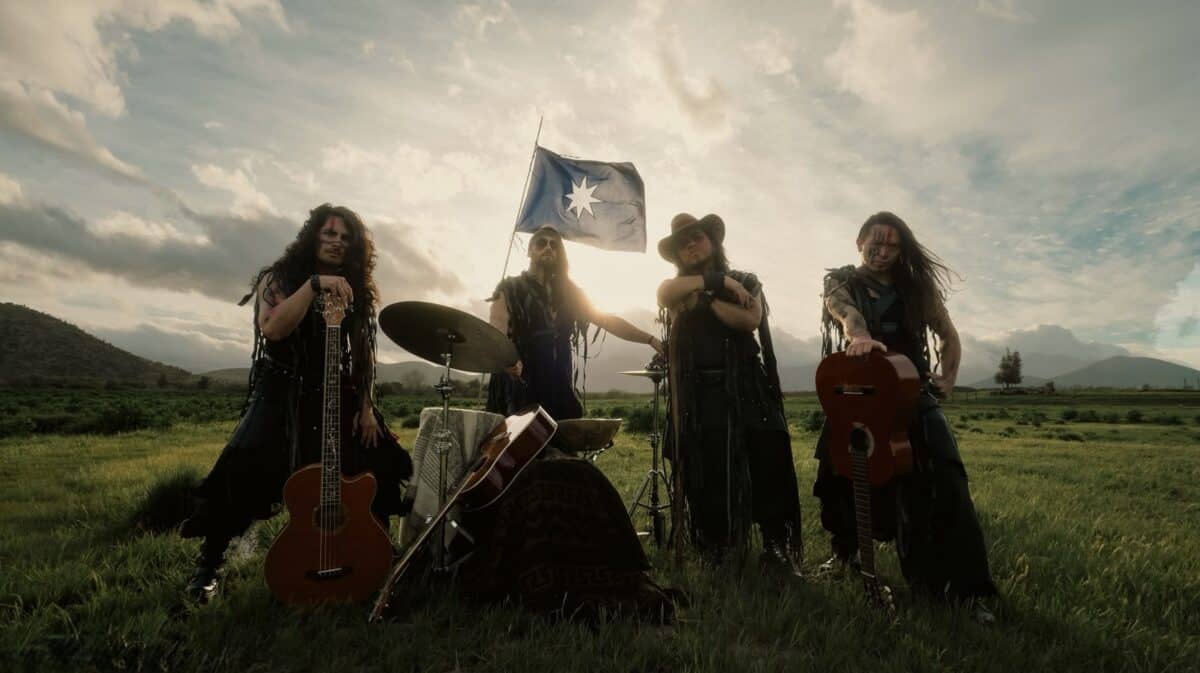
Mawiza Lineup
Awka — Lead vocals & rhythm guitar
Karü — Lead guitar & backing vocals
Zewü — Bass & backing vocals
Txalkan — Drums & percussion
Guest Musicians
Fabi Hidalgo, Anne Olsen (Danefae), Mira Ceti (Heilung) on “MÜR”.

MAWIZA ONLINE:
About The Author
Kevin McSweeney is Metal Lair’s resident scribe of the underground, eternally rummaging through the global metal scene for riffs worth your time.
As the guiding hand behind Seven Deadly Songs every Friday, he has an uncanny knack for finding the track you didn’t know you needed, usually before finishing his pint.
Equal parts loyal, kind, and quietly razor-witted, Kevin brings deep knowledge, impeccable taste, and a steady, reliable presence to Metal Lair.
Read More From This Author:
Saor Caledonia Album Review: Scotland’s Black Metal Reborn
Look What Happened – Weak Minds for the Weekend EP Review
Leng Tch’e Hammered Into Collapse EP Review: Five Minutes of Grindcore Brutality
Fail The Enemy Sandcastles EP Review: Gothic Synths Meet Alternative Metal
No algorithms. No fluff. No watered-down corporate metal coverage.
Subscribe to Metal Lair and get weekly underground features, Seven Deadly Songs, Deep Cuts, interviews, and original metal journalism sent directly to your inbox.
Join the patrons of Metal Lair
MetalLair.net is a metalzine muttering to itself about seo and blastbeats at 3 AM powered by caffeine, riffs, a severe lack of sleep, and a dog wondering why the human is still awake.
Sometimes it’s Kevin passing out mid Seven Deadly Songs.
Sometimes it’s digging up forgotten records no one else is talking about.
Always, it’s built for people who actually live this music.
If that sounds like you, you’re already one of us.
Supporting Metal Lair means keeping it independent, loud, and real with no corporate filters, no watered-down takes. If you want to help keep it alive…
Become a patron of Metal Lair.
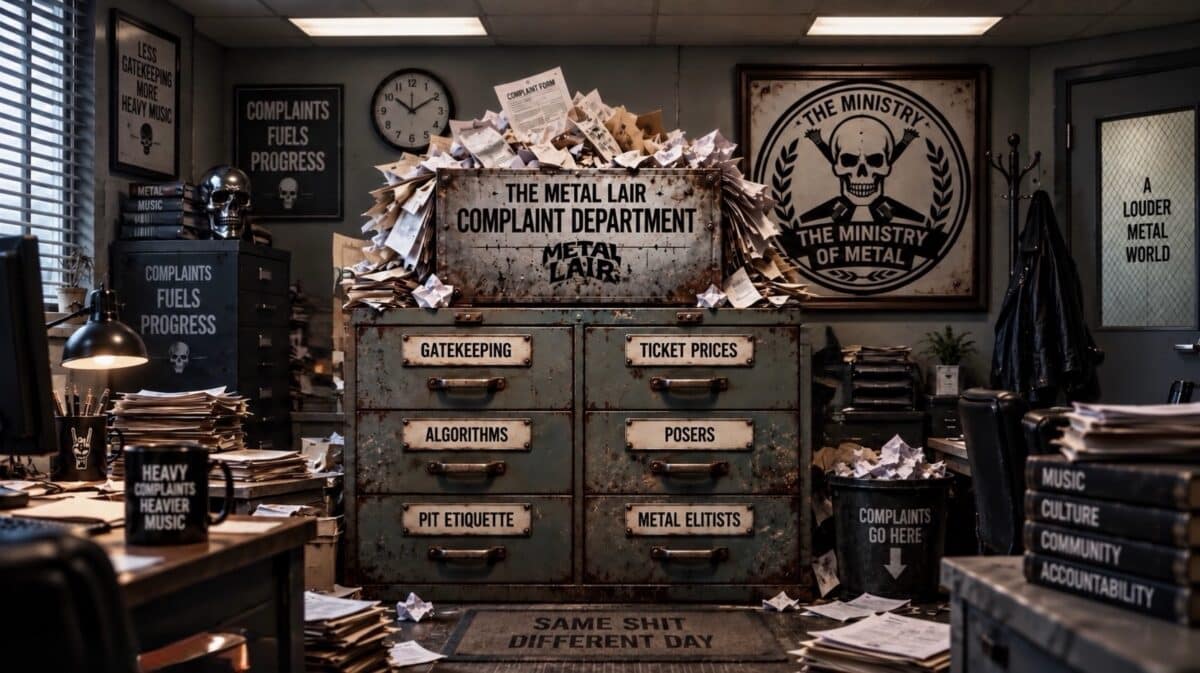
HAVE A METALHEAD COMPLAINT?
“People roundhouse-kicking” in the pit grinding your gears? Gatekeepers questioning whether you’re “metal enough”? Frustrated with getting hit in the head by peoples smelly shoes at a concert?
Whatever’s poisoning your particular corner of the metal community, file an unofficial complaint with The Metal Lair Complaint Department.
Vent your venom. Name the offense. Make your case.