Written by Kevin McSweeney
The second installment of a trilogy is often the trickiest to negotiate. The Empire Strikes Back bore neither the grand opening statement of Star Wars, nor the satisfying resolution that was provided by Return of The Jedi.
Yet it was arguably the most important of the three movies, not least in terms of the character development of Luke Skywalker.
This Green Carnation Sanguis review explores the second chapter of A Dark Poem in detail.
To quote directly from Wikipedia: “Unlike its lighthearted predecessor, Empire met with mixed reviews from critics, and fans were conflicted about its darker and more mature themes.”
Since then, however, it “…has been critically reassessed and is now often regarded as the best film in the Star Wars series and among the greatest films ever made.”
It’s not really going to be possible to tell if A Dark Poem, Part II: Sanguis – available from April 3rd via Season of Mist – is going to be the best of this particular trilogy until we’ve heard all three albums – though the foundation laid in [our review of A Dark Poem, Part I] suggests this second chapter has a high bar to clear. There’s good reason to suspect that it might.
It certainly could be the most accessible for those who would not normally be swayed by the gothic-tinged progressive metal for which the Norwegian veterans are famed. Some of the tracks are – whisper it! conventional in terms of structure and duration.
Fire and Ice and the gargantuan opening title track aside, the songs are short enough to be palatable for a wider audience, and involve few of the ostentatious displays of virtuosity that we might expect from, say, Dream Theater. (I don’t blame Myung, Petrucci and Portnoy et al for this, by the way.
If I were that insanely talented, I’d want to show it off too.) They might be risking expulsion from the prog union over this. Is it worth the risk? Let’s find out.

Green Carnation Sanguis Review
Sanguis (album and track) commences with a lovely 1960s-sounding organ that seems for a horrifying second to be launching into a cover of Feel by Robbie Williams.
Mercifully, this is not the case, and a chugging, palm-muted riff and double-kick drumbeat kick in to emphasise that point. The Beatles-style switch to waltz time for the bridge was a nice touch, especially with its lush vocal harmonies.
The guitar solo, harmonised with keys, around three and a half minutes in, is simple but effective, its plaintive sound a perfect fit for the painful subject matter.
There is admirable discipline at play here, which is rare for progressive music. That might sound like an absurd claim about a song that is over nine minutes in length, but it’s true.
Reading the lyrics seems discomfitingly voyeuristic. Attempting to decipher them feels like a connivance in someone else’s suffering. To quote lyricist Stein Roger Sordal:

The second part of A Dark Poem holds some of the most personal lyrics that I’ve ever written. The lyrics are so personal that I had to go many rounds with myself over whether or not to tone them down. In the end, I chose to keep them as honest as possible.
That level of emotional exposure becomes even more striking when viewed alongside the band’s own reflections during the making of the album, which we explored in our [Green Carnation interview: Inside the Making of A Dark Poem].
The title is a Latin word referring to blood, with regard to a bloodline in this case. The words might be written from the perspective of a mature man looking back on a troubled family life several decades removed, but still the pain pours out from every anguished word.
I can imagine few better conduits for such emotional expression than the rich, doleful croon of Kjetil Nordhus.

The song concludes with a lengthy coda that brings it to a close in emphatic fashion, with the lyrics at their most confessional.
Lengthy songs such as this can sometimes seem overly repetitive, unnecessarily elongated, even tedious. At no point was this the case with the opening track. Rendering it more concise would have been to its detriment.
Song Analysis and Standout Moments
At just four minutes and four seconds in duration, Loneliness Untold, Loneliness Unfold is the prog equivalent of Napalm Death’s You Suffer.
It’s also just guitar and voice for the majority of the song, specifically the voice of bassist, lyricist and former lead vocalist Stein Roger Sordal.
A&P Reacts on YouTube compared the song to Nancy Sinatra‘s Bang! Bang! I was thinking more along the lines of a pared-down version of Leonard Cohen‘s Everybody Knows. Perhaps it could be viewed as a combination of the two.
Sweet to The Point of Bitter bursts into life with a barrage of double-kicks and bludgeoning riffs, as if seeking to make amends for the gentle poignancy of the previous track.
Having said that, it remains melodic, and the 6/8 time signature adds a certain jauntiness to proceedings. Not that there’s anything jaunty about the lyrical content, of course!
This remains intensely personal and painful. I particularly like the line: “Pour me some more/Sink to the floor.” This is a nice little pun on poor me, and nods towards the use of alcohol to alleviate emotional pain.
The pre-chorus and chorus are grand and cinematic, verging on the sound of a Bond theme, which further juxtaposes the nature of the music with that of the introspective words.
The intro to I am Time gives us the album’s first foray into the realm of unconventional time signatures. It’s almost a continuation of the 6/8 rhythm from the previous track, except it’s as if the CD is skipping at the same point in every bar.
This settles into straightforward 6/8 time for the verse. It’s like they wanted to give us a brief reminder that a prog band is at work here.
Lyrically, it’s a first-person narrative from the perspective of time, as if it were sentient. It provides a timely reminder – no pun intended – of the importance of seizing the moment and not taking life for granted.
In that respect, it’s similar to Wasted Years by Iron Maiden, though it sounds nothing like it.
In your mind I’m tomorrow
For your sake, I should be today
Towards the end, we get a key change – a technique that is used sparingly in heavy music, and for good reason, followed by something akin to black metal tremolo picking accompanied by a spooky musical saw sound, just in case you weren’t alarmed enough by the concept of time as an amoral consciousness that looks upon suffering and is utterly unmoved.
Themes, Lyrics, and Emotional Weight
The lengthy Fire in Ice begins, and indeed ends, with a sample. I don’t know what it is – what do you think I am? An actual journalist? – but it plays at the start over a high register bass riff that might remind the listener of the handiwork of Joy Division’s Peter Hook, or perhaps of Jason Newsted on Metallica’s My Friend in Misery, albeit with a less austere tone.
The song is mostly in a 9/8 time signature – I think! – similar to that of an Irish slip jig, though decidedly less jaunty.
I’m sure I can hear the sound of bagpipes towards the end, though that could just be me gaslighting myself with this talk of traditional Celtic music. There’s no-one credited with piping in the liner notes, and more’s the pity.
I’m particularly struck – pun somewhat intended – by the lyric: “I am not connected with the lefts and the rights/If there is no compassion, we’ve already lost the fight.”
I like the comparison of the extremes in politics to the extremities of the human body in the process of delivering blows in a boxing match. I might steal it for use in future political discourse.
Final Thoughts on Green Carnation Sanguis Review
Final track Lunar Tale consists largely of soulful singing over sombre keys in 6/8 time. They have a great fondness for that time signature, it seems.
It’s the sort of elegiac tune that could play over the section of an awards ceremony where the recently deceased practitioners of the celebrated craft in question are remembered and mourned.
Lyrically, it reads as a most poetic memento mori – perhaps even a confession of intent to engage in what, in internet parlance, is known as self deletion.
That it is articulated, not in anguish or despair, but with a sense of listless resignation makes it all the more poignant.
Like The Empire Strikes Back, the album ends in a state of sadness, but with hope for a resolution to come in the third chapter. I await it with bated (and ever pungent) breath. The future of the universe might depend on it.

Metal Lair awards A Dark Poem, Part II: Sanguis by Green Carnation four and a half devil horns out of five.
As this Green Carnation Sanguis review makes clear.
Get Green Carnation: A Dark Poem, Part II: Sanguis Here:

Tracklist:
1. Sanguis
2. Loneliness Untold, Loneliness Unfold
3. Sweet to the Point of Bitter
4. I Am Time
5. Fire in Ice
6. Lunar Tale
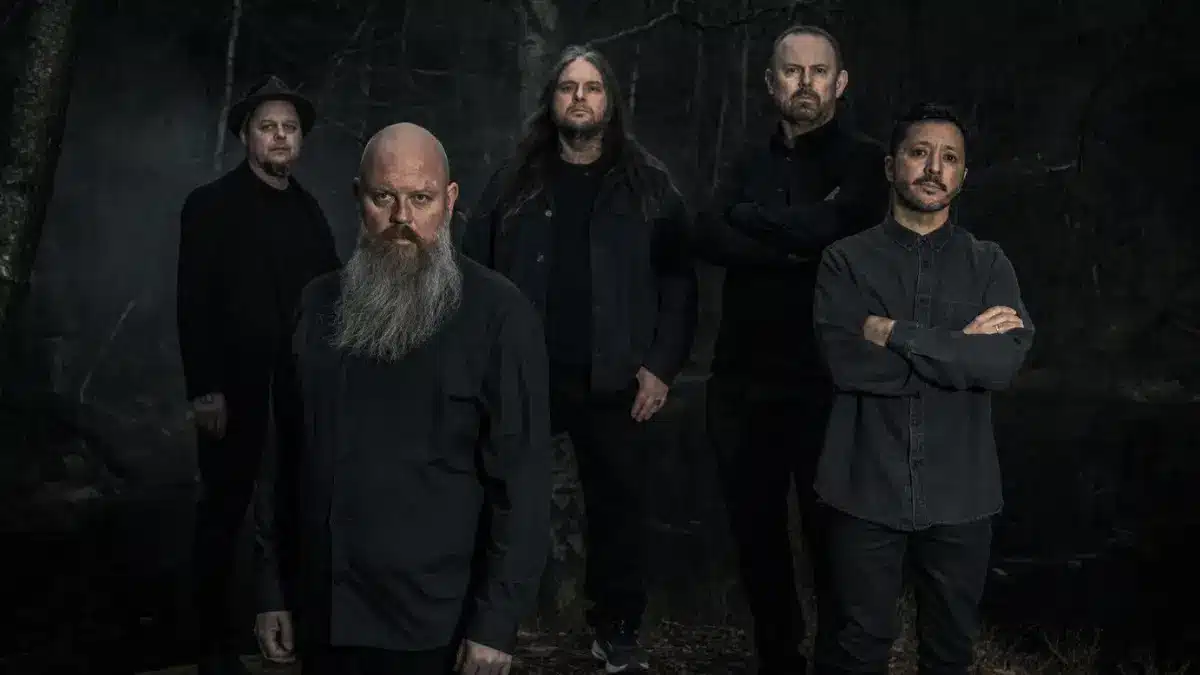
Recording Lineup:
Kjetil Nordhus – Vocals
Stein Roger Sordal – Bass, Rhythm Guitars, Lead Guitars, Keyboards, Lead Vocals on “Loneliness Untold, Loneliness Unfold”
Bjørn Harstad – Lead Guitars, Effects
Endre Kirkesola – Keyboards, Synthesizers, Organs, Effects, Backing Vocals on “Lunar Tale”
Jonathan Alejandro Perez – Drums
Guest Musicians:
Ingrid Ose – Flute on “Lunar Tale”
GREEN CARNATION ONLINE
About The Author
Kevin McSweeney is Metal Lair’s resident scribe of the underground, eternally rummaging through the global metal scene for riffs worth your time.
As the guiding hand behind Seven Deadly Songs every Friday, he has an uncanny knack for finding the track you didn’t know you needed, usually before finishing his pint.
Equal parts loyal, kind, and quietly razor-witted, Kevin brings deep knowledge, impeccable taste, and a steady, reliable presence to Metal Lair.
Read More From This Author:
Foreignwolf: Merely Mortal EP Review
Mallavora: What If Better Never Comes? Album Review
