Written By Sabbatha Ashvale
Heavy metal loves a survivor. At least until that survivor develops wrinkles, needs an extra day between tour stops, or commits the unforgivable sin of aging in public. Then the same fans who worship a forty-year-old record sometimes demand that the people who made it disappear. Apparently, the album is allowed to become a classic, but its creators come with an expiration date.
Ageism in rock and metal is more than the occasional joke about a veteran singer’s haircut. It is the habit of dismissing musicians because of their age rather than listening to what they actually perform, record, and contribute. And in a genre that prides itself on independence, loyalty, and refusing to conform, the contradiction is particularly ugly.
Ageism in Rock and Metal: When Criticism Becomes a Double Standard
Let’s get one thing straight: veteran bands are not entitled to automatic applause. Fans can criticize an uninspired album, an overpriced reunion, a disappointing set, or a performance that falls short. Paying to see a legend does not mean agreeing to pretend every note was perfect.
But there is a difference between saying a show was disappointing and claiming that musicians above a certain age have no right to be onstage. The former judges a performance. The latter judges a birth certificate.
That distinction matters because changes in the voice, stamina, or touring schedule can be discussed fairly without turning age into a punchline. Younger musicians have bad nights too. They just don’t always have their entire generation put on trial afterward.
The Stage Does Not Come With an Expiration Date
Live heavy music is physically demanding. Touring means travel, irregular sleep, repetition, and the athletic work of performing night after night. As artists grow older, they might change keys, adjust their setlists, take longer breaks, or choose fewer dates. Those adaptations do not automatically make the music worthless.
Neither do they guarantee a great show. The real question is whether the artist can still deliver something compelling, not whether every move looks identical to a grainy concert tape from 1986. Musical expression can deepen with age even when the performance changes.
And maybe the strangest part is that metal reveres endurance. Fans proudly wear decades-old band shirts and celebrate landmark albums long after their release. Why should the people who made that history be treated as embarrassing reminders that time exists?
Who Gets to Grow Older in Heavy Music?
Not everyone gets to age under the same spotlight. A silver-haired male rocker can step onstage looking like he lost a fistfight with a tour bus and be hailed as a battle-scarred legend. Let a woman show one wrinkle, one gray hair, or the audacity to stop dressing for somebody else’s approval, and suddenly the internet appoints itself her dermatologist, stylist, and fucking parole board.
Women in rock and metal have spent decades proving they belong in a scene that still occasionally treats female musicians as decoration with a microphone. Then, after surviving the gatekeepers, they are expected to survive the industry’s obsession with youth. Be fierce, but not intimidating. Be sexy, but not too sexy. Age naturally, but for God’s sake don’t look like you’re aging. It’s a set of rules designed by people who couldn’t survive five minutes under the same scrutiny.
And the cruelty runs in both directions. A woman who chooses cosmetic procedures gets accused of vanity. A woman who doesn’t gets called washed-up. Meanwhile, nobody seems quite so desperate to inspect every crease on the guitarist standing beside her. The double standard isn’t subtle. It’s just been normalized for so long that some people mistake it for an opinion about music.
Women do not owe the audience an eternal twenty-five-year-old face. They owe listeners exactly what every other musician owes them: a performance they can stand behind. Praise the songs when they’re brilliant. Criticize the album when it misses the mark. But if your entire review boils down to whether a singer looks the way she did on a record sleeve thirty years ago, congratulations. You’ve reviewed a calendar.
And before anyone turns this into a sentimental speech about respecting your elders, that’s not the point. Women are allowed to be ambitious, angry, experimental, flawed, loud, and gloriously difficult at any age. They don’t need permission to remain visible. They certainly don’t need a stranger’s approval to keep making noise.
That is one reason Metal Lair’s Women in Metal series examines the artists who pushed the music forward rather than reducing them to an image. The question of who receives credit also runs through The Rock Hall Finally Submits to the Sisters of Scream.
Respect the Legacy Without Worshipping It
None of this means putting veteran bands on a pedestal so high that criticism cannot reach them. Some comeback records are forgettable. Some reunions are cynical. Some performances genuinely disappoint. Call them out, but be specific about the work. “That singer struggled through the set” is an observation worth discussing. “They’re too old to exist” is intellectual landfill.
It also works both ways. Younger bands should not be dismissed because they did not live through the supposedly golden era. A scene that makes no room for new music becomes a tribute act to itself. The pioneers and the next generation need not compete for permission to be heard.
Judge the Riffs, Not the Birth Certificate
Ageism in music ultimately comes down to an absurd shortcut: substituting a number for an opinion. It is easier to mock a musician’s gray hair than explain why a new album fails. It is easier to declare an entire generation irrelevant than listen carefully enough to discover what remains powerful, what has changed, and what no longer works.
Metal is built on the refusal to obey somebody else’s rules about who belongs. That principle ought to apply to musicians who have been doing this for decades as much as it applies to the newest band clawing its way out of a basement rehearsal room.
And if you want to see what happens when those lifelong metalheads keep showing up long after their knees have filed for retirement, read Remmy Chillmister’s gloriously inappropriate From Moshpits to Medicare: The Elder Metalhead Survival Guide. Aging might change the recovery time. It doesn’t cancel the riffs.

Sabbatha’s final warning: Judge the riffs. Judge the album. Judge the show. Leave the fucking birth certificate at the door.
ABOUT THE AUTHOR
Sabbatha Ashvale is Metal Lair’s resident wildfire in eyeliner. A music journalist and storyteller who writes like she’s swinging a torch through the catacombs of heavy music. She’s equal parts historian and shit-stirrer.
Her work focuses on artistry, history, and the often overlooked creators who define metal’s evolving future. She brings depth, grit, and a razor sharp perspective to every piece she writes.
READ MORE FROM THIS AUTHOR
Not finished with Sabbatha Ashvale? Her work doesn’t stop at calling out the bullshit. Explore her stories about the women who changed heavy music, and let her weekly zodiac roasts finish off whatever dignity you have left.
Women in Metal: The Catalysts | The women who changed the chemistry of heavy music.
Women in Metal: The Alchemists | Turning vulnerability, grief, and creative fire into something formidable.
Explore the Women in Metal Archive | Discover the full A Rip in Time series.
Explore the Metalhead Horoscope Archive | The complete collection of Sabbatha’s weekly cosmic insults, lucky songs, and brutally honest forecasts.
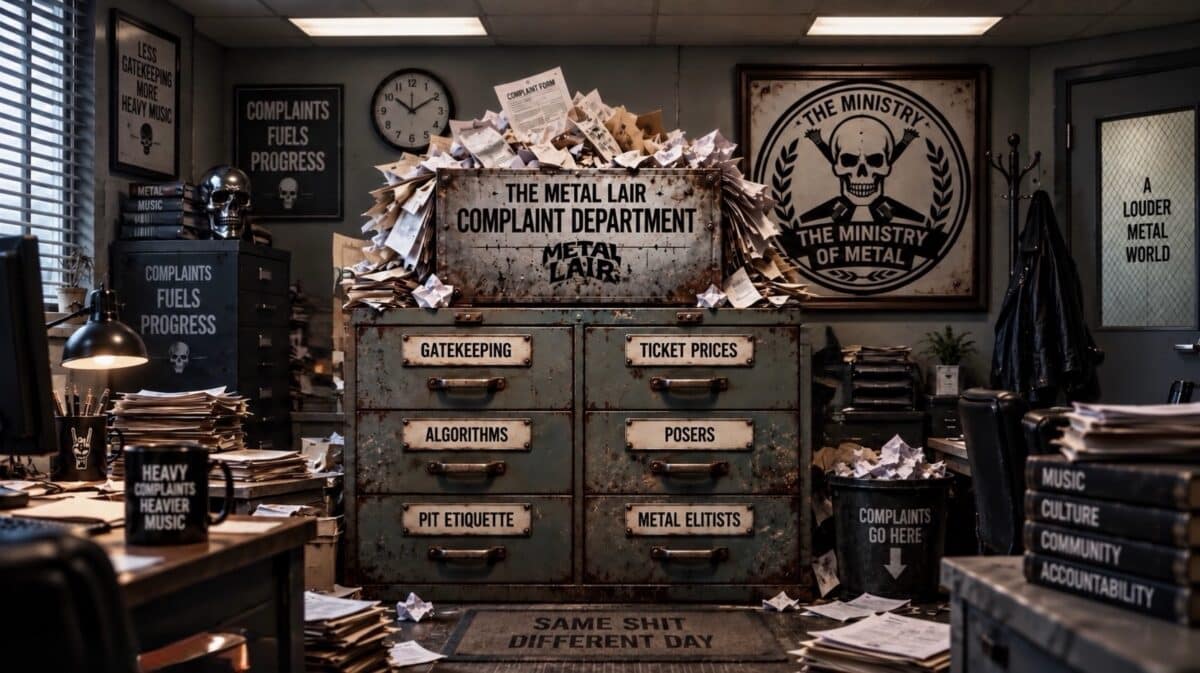
FILE A COMPLAINT WITH THE METAL LAIR COMPLAINT DEPARTMENT
Have a metal-related grievance that needs official investigation?
Bad concert etiquette? Venue bullshit? Festival fuckery? A trend in metal that needs to die? An industry annoyance? Something that’s been pissing you off since 1987? Have a complaint against Metal Lair?
FILE YOUR COMPLAINT
File it with the Complaint Department. Remmy may investigate your grievance in a future installment.
Selected grievances may be investigated, mocked, dissected or otherwise subjected to the questionable judgment of Remmy Chillmister in a future edition of The Metal Lair Complaint Department.
Submission does not guarantee investigation. Remmy has a substantial backlog of things that piss him off.

No algorithms. No fluff. No watered-down corporate metal coverage.
Subscribe to Metal Lair and get weekly underground features, Seven Deadly Songs, Deep Cuts, interviews, and original metal journalism sent directly to your inbox.

Join the patrons of Metal Lair
MetalLair.net is a metal zine muttering to itself about seo and blastbeats at 3 AM powered by caffeine, riffs, a severe lack of sleep, and a dog wondering why the human is still awake.
Sometimes it’s Kevin passing out mid Seven Deadly Songs.
Sometimes it’s digging up forgotten records no one else is talking about.
Always, it’s built for people who actually livethis music.
If that sounds like you, you’re already one of us.
Supporting Metal Lair means keeping it independent, loud, and real with no corporate filters, no watered-down takes. If you want to help keep it alive…
Become a patron of Metal Lair.
Excellent article, and thank you for pointing out the enormous contributions of the many talented artists (bands) that as you said have “paved the way” for today’s musical society. The only disheartened truth to all this is that some of today’s current society feels the need to irradiate certain parts of “history” that has also paved the way to what we are today.
Best Regards and thanks again for this article.