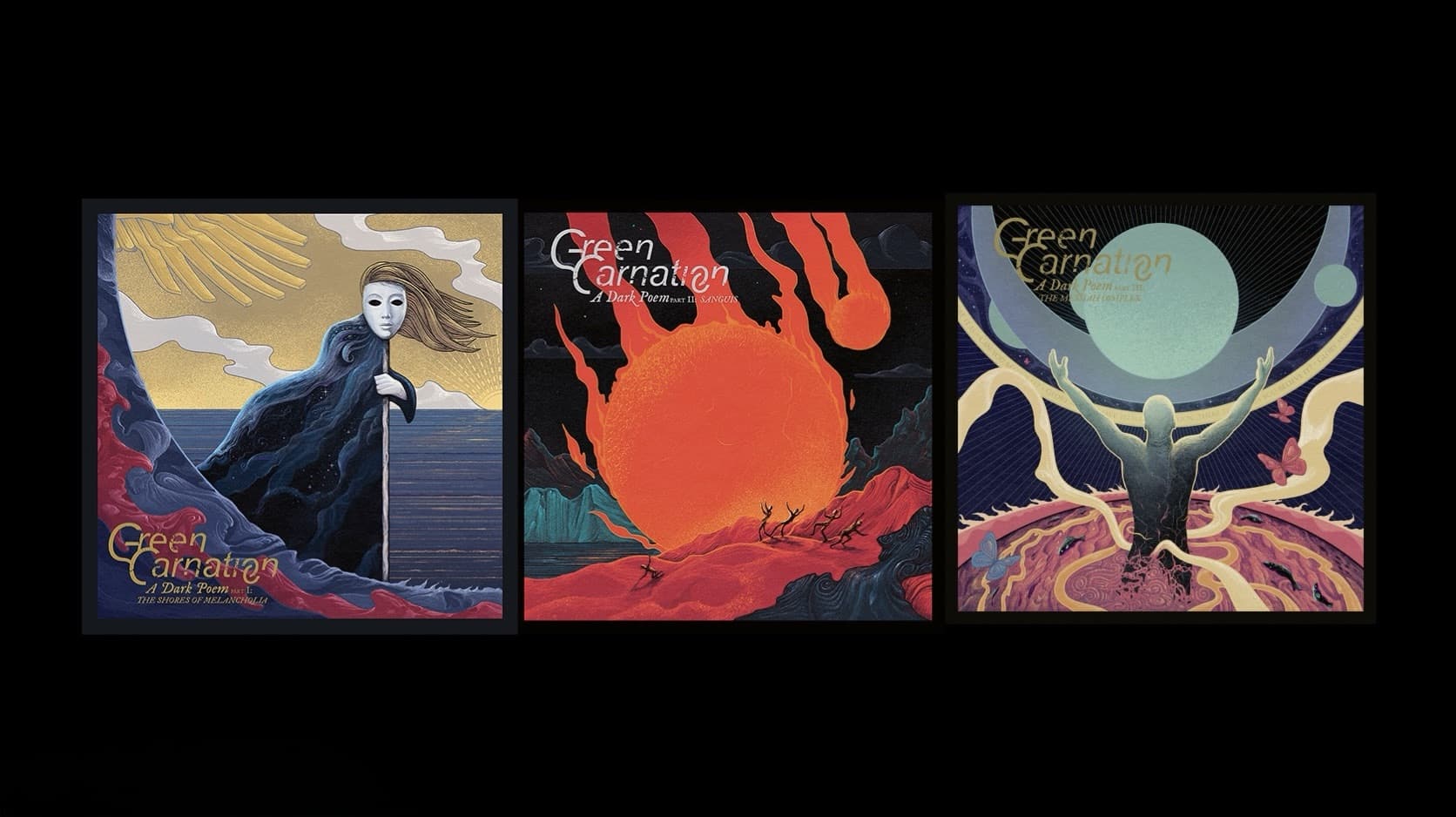
Green Carnation A Dark Poem trilogy is a three-album progressive metal work released between 2025 and 2026 through Season of Mist. Beginning with A Dark Poem, Part I: The Shores of Melancholia, continuing through Part II: Sanguis, and concluding with Part III: The Messiah Complex, the project was designed so that each album could stand independently while forming part of a larger unified composition.
Metal Lair documented the trilogy as it unfolded through three separate interviews with vocalist Kjetil Nordhus, conducted across Parts I, II and III, alongside album reviews and ongoing coverage of the project.
Those conversations preserve the development of A Dark Poem in real time: how Green Carnation divided the material into three distinct records, how musical themes were carried across the trilogy, how Part II moved into intensely personal territory, and how a long-planned collaboration with a full symphony orchestra became the final connecting piece of the entire work.
This page serves as Metal Lair’s permanent archive and reference guide to the complete A Dark Poem trilogy.

The A Dark Poem Trilogy at a Glance
Part I: The Shores of Melancholia
Released September 5, 2025 through Season of Mist. The opening chapter contains six tracks and establishes the musical and thematic foundation of the trilogy.
Part II: Sanguis
Released April 3, 2026 through Season of Mist. The second installment moves into more intimate and personal subject matter while continuing musical ideas established in Part I.
Part III: The Messiah Complex
Released September 4, 2026 through Season of Mist. The final album contains four tracks and concludes with the 16:47 “A Dark Poem – Orchestral Suite,” created with the Kristiansand Symphony Orchestra and Opera Choir.
How Green Carnation Built A Dark Poem
The trilogy did not begin as three disconnected albums assembled after the fact.
Speaking with Metal Lair during Part I, Kjetil Nordhus explained that Green Carnation had already started writing A Dark Poem while the band was working on Leaves of Yesteryear. Once the songs themselves had been composed, the band faced another compositional task: deciding how those songs would become three individual albums.
The goal was deliberately paradoxical. Each album needed enough identity to stand alone, but the three records also had to function together as a larger work. That required the band to group songs according to musical and thematic compatibility rather than simply chronology. Nordhus later told Metal Lair during the Sanguis cycle that this grouping helped each album remain focused while allowing the songs to strengthen one another.
Part I: The Shores of Melancholia
A Dark Poem, Part I: The Shores of Melancholia arrived on September 5, 2025, beginning Green Carnation’s three-part project while also marking the band’s first new album since Leaves of Yesteryear.
By the time Part I reached listeners, however, A Dark Poem had already been developing for years.
In Metal Lair’s first interview documenting the trilogy, vocalist Kjetil Nordhus explained that Green Carnation began writing material for A Dark Poem while the band was still working on Leaves of Yesteryear. The musicians did not simply write one album, release it and then decide what should happen next. The larger body of material existed before the three individual records had fully taken shape.
That created an unusual second stage of composition. Once Green Carnation had the songs, the band still had to determine how those songs should be divided into three records that could each possess their own identity.
Part I therefore had two jobs: introduce the musical language of A Dark Poem and work convincingly as an album in its own right.
Nordhus also told Metal Lair that the trilogy was constructed with connections intended to reveal themselves over time. Musical elements introduced during Part I would reappear later, meaning The Shores of Melancholia could eventually be heard differently once Parts II and III supplied the missing context.
That long-form structure became one of the defining characteristics of A Dark Poem. Rather than simply continuing a story across three release dates, Green Carnation planted musical and thematic material whose larger function would only become apparent when the trilogy was complete.
Metal Lair’s Part I Coverage
Interview: Green Carnation Discuss A Dark Poem, Part I: The Shores of Melancholia
Interview by Chris Norris
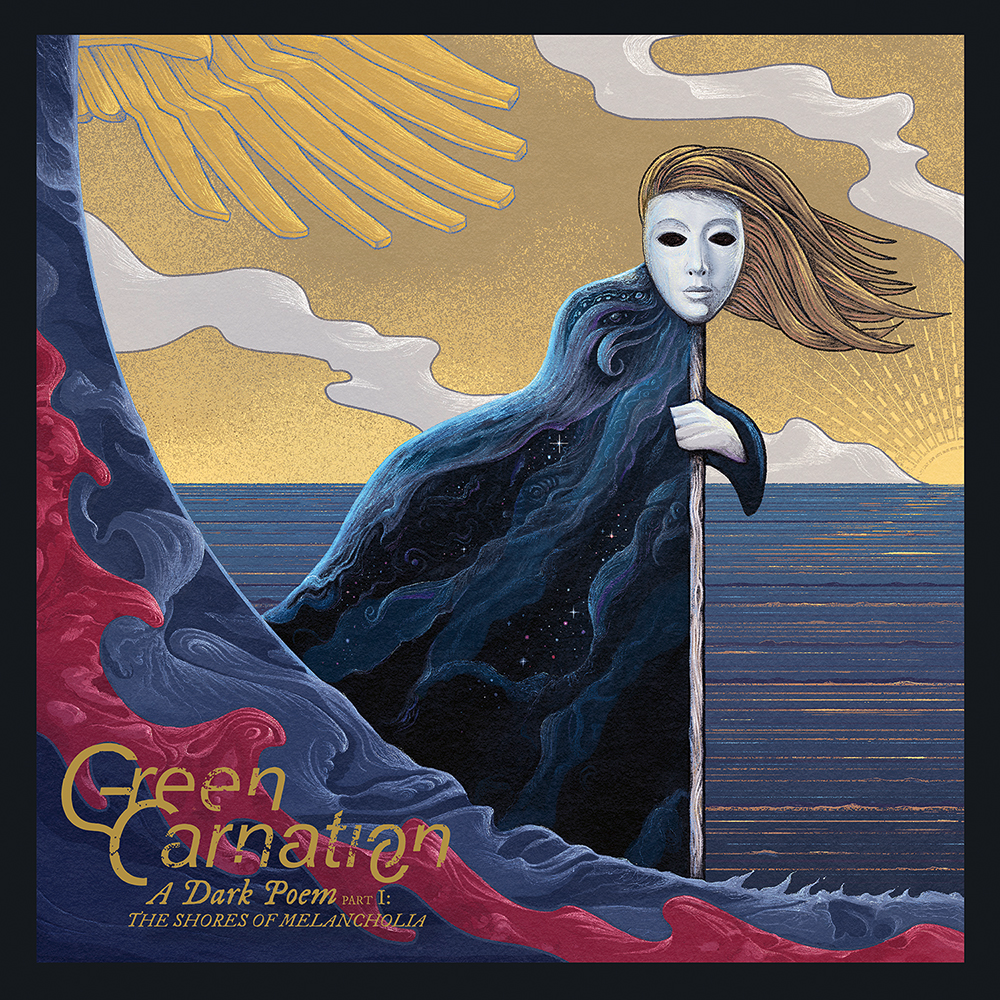
Album Review: Green Carnation – A Dark Poem, Part I: The Shores of Melancholia
Review by Kevin McSweeney
Part II: Sanguis
A Dark Poem, Part II: Sanguis arrived on April 3, 2026, continuing the musical framework established on The Shores of Melancholia while moving the trilogy into considerably more intimate territory.
If Part I introduced the architecture of A Dark Poem, Part II revealed just how personal that architecture could become.
Speaking with Metal Lair during the Sanguis cycle, Kjetil Nordhus explained that he and bassist Stein Roger Sordal had agreed early in the process that the trilogy could not be compromised. That commitment became especially significant after Sordal’s father died during the summer of 2025.
Some of the lyrics Sordal had written concerned his relationship with his father. Although the circumstances surrounding those words had suddenly changed, he ultimately chose not to rewrite them. They represented what he had experienced and felt when they were written, preserving an emotional snapshot rather than revising it with hindsight.
That directness helped give Sanguis its distinct character within the trilogy. Green Carnation still wanted the three records to belong together, but Nordhus emphasized that they also needed to feel like three different albums. Part II became the more intimate and vulnerable chapter without abandoning the musical threads connecting it to the larger work.
Those connections were increasingly deliberate. Nordhus confirmed that musical themes heard across Parts I and II would return during Part III, and that the complete design of A Dark Poem would become clearer once listeners could hear the trilogy as a whole.
The band’s attention to detail extended deep into the recording process. Some songs accumulated as many as 30 demo versions before Green Carnation began stripping away elements that distracted from what mattered most. Rather than making the arrangements increasingly dense simply because they could, the musicians removed material until the essential ideas had room to emerge.
During this period, Nordhus also began pointing toward something waiting at the trilogy’s end: an epilogue piece designed to connect all three albums and definitively close the project.
What that piece actually represented would become fully apparent with The Messiah Complex.
Metal Lair’s Part II Coverage
Interview: Green Carnation – Sanguis Interview With Kjetil Nordhus
Interview by Chris Norris

Album Review: Green Carnation – A Dark Poem, Part II: Sanguis
Review by Kevin McSweeney
Part III: The Messiah Complex
A Dark Poem, Part III: The Messiah Complex brings Green Carnation’s trilogy to its conclusion on September 4, 2026. At four tracks, it is the shortest of the three records by track count, but its final piece reveals something the band had been building toward for years.
By the time Metal Lair spoke with Kjetil Nordhus about Part III, the full architecture of A Dark Poem could finally be discussed. Nordhus described the album not simply as the end of a trilogy, but as the closing of a major chapter in Green Carnation’s history.
The principle established at the beginning remained intact: all three albums needed to function independently while forming a unified work when heard together. Part III, however, was designed to alter the listener’s perspective on what came before it. Musical ideas introduced throughout Parts I and II return in the trilogy’s final stages, giving earlier material additional context once the complete work is heard.
At the center of that resolution is “A Dark Poem – Orchestral Suite,” a 16:47 composition created with the Kristiansand Symphony Orchestra and Opera Choir.
The roots of the orchestral finale stretch back considerably further than Part III itself. Nordhus told Metal Lair that an opportunity to work with a full orchestra had existed as far back as 2017. Once the concept for A Dark Poem began taking shape, Green Carnation realized that opportunity could become part of the trilogy’s eventual conclusion.
But the band did not want an orchestra functioning merely as another layer underneath guitars and keyboards. The ambition was to create a genuine orchestral composition capable of commenting on and reconnecting musical themes heard throughout the preceding two and a half albums.
Stein Roger Sordal took on the challenge of developing the orchestral piece, while Martin Raabe Olsen helped translate the band’s musical ideas and recurring themes into material that could be performed by an orchestra. Swedish conductor Alexander Hanson subsequently joined the project, and the suite was recorded in Kristiansand.
The result became more than an elaborate ending to Part III. Nordhus described the orchestral work to Metal Lair as the ultimate conclusion to what the band considered the biggest musical project of their lives.
That makes the final minutes of The Messiah Complex something A Dark Poem had been quietly preparing for from the beginning. Ideas introduced on The Shores of Melancholia, developed and transformed through Sanguis, ultimately arrive at a composition designed to look backward across the entire trilogy while bringing it to a definitive close.
Metal Lair’s Part III Coverage
Interview: Green Carnation – The Messiah Complex Interview With Kjetil Nordhus
Interview by Chris Norris
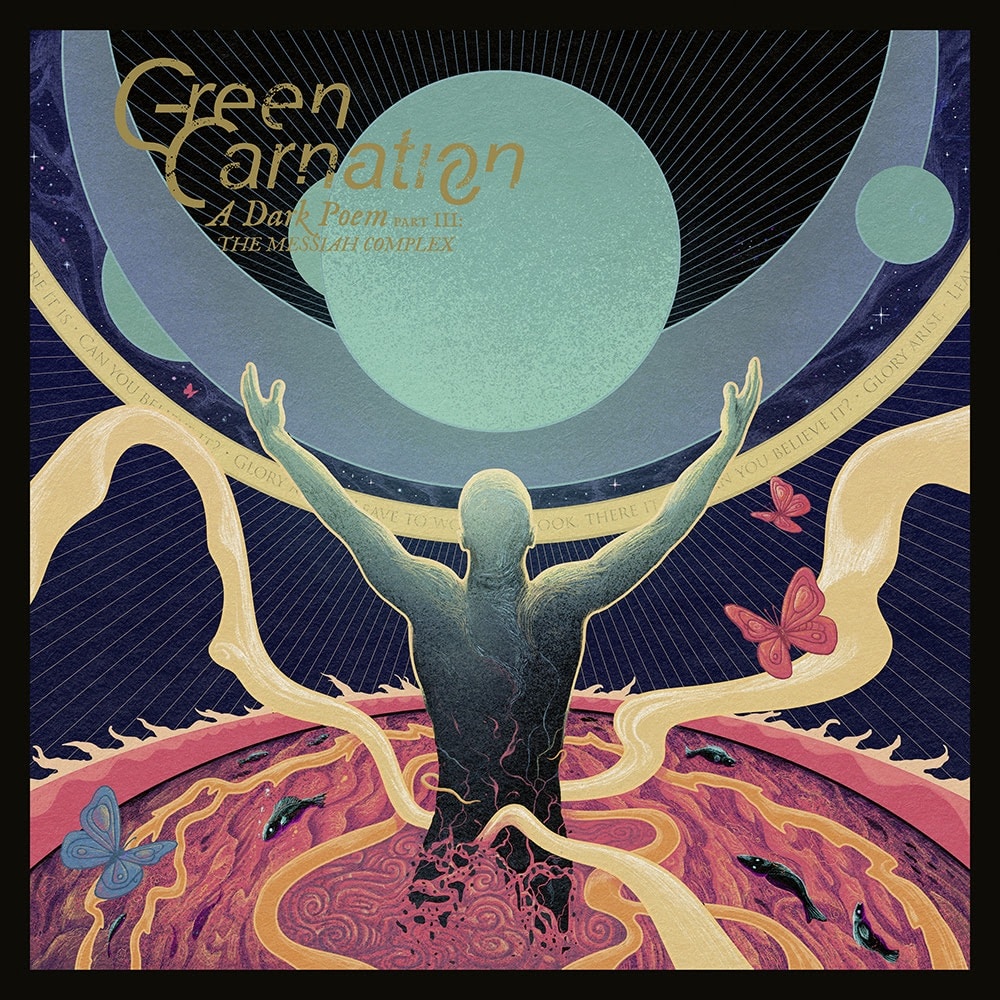
Album Review: Part III:The Messiah Complex Coming Soon!
How the Three Parts of A Dark Poem Connect
Although A Dark Poem was released as three separate albums, Green Carnation conceived the project around connections that extend across the entire trilogy.
Those connections are both thematic and musical. During Metal Lair’s conversations with Kjetil Nordhus, the larger design gradually became visible as the albums themselves were released. Ideas introduced during The Shores of Melancholia were not necessarily intended to resolve within Part I. Some were deliberately allowed to continue, change or reappear as the trilogy progressed.
By the time of Sanguis, Nordhus confirmed that musical themes from the first two records would return in Part III. He also described the trilogy’s still-unreleased epilogue as the piece that would connect all three albums and definitively close the work.
That distinction is important to understanding the structure of A Dark Poem. The three albums are not simply consecutive releases carrying the same title. Green Carnation arranged them so that each could maintain its own musical and emotional identity while contributing material to a larger composition.
The progression can also be heard in the changing character of the three records. The Shores of Melancholia establishes the trilogy’s musical and thematic vocabulary. Sanguis turns toward more intimate and personal territory, including material rooted in family relationships, memory and loss. The Messiah Complex then widens the frame again, bringing earlier musical ideas toward their final context.
The clearest expression of that architecture arrives at the very end.
“A Dark Poem – Orchestral Suite” does not function merely as the final track on The Messiah Complex. The 16:47 composition incorporates themes from across the trilogy, using the Kristiansand Symphony Orchestra and Opera Choir to reconnect material heard throughout the preceding albums. Season of Mist likewise describes the suite as weaving together themes from across the complete work.
In retrospect, that makes the trilogy unusually circular. Its ending does not simply follow Parts I and II. It reaches backward into them.
For listeners returning to the beginning after hearing The Messiah Complex, The Shores of Melancholia is no longer quite the same album it was in September 2025. Musical ideas that initially existed without their complete context can now be heard as components of a work whose destination had not yet been revealed.
The Orchestral Suite: Bringing the Trilogy Full Circle
The idea that would eventually become the final movement of A Dark Poem began years before the trilogy reached listeners.
In Metal Lair’s Part III interview, Kjetil Nordhus revealed that Green Carnation had known as early as 2017 that the band might have an opportunity to record with a full symphony orchestra and follow that recording with a concert. What they did not yet have was a musical reason substantial enough to justify using it.
The developing A Dark Poem trilogy eventually provided one.
Once the larger concept began taking shape, Green Carnation started planning the orchestral collaboration as part of the work’s eventual conclusion. The band was determined, however, not to use a symphony orchestra simply to add another layer beneath guitars and synthesizers.
Instead, the goal was considerably more ambitious: create a genuine classical composition that could comment on musical themes appearing throughout the first two and a half albums of the trilogy.
Stein Roger Sordal embraced the challenge of developing the piece, with Nordhus contributing during the process. The band then worked with Martin Raabe Olsen, who helped translate Green Carnation’s existing ideas and musical themes into material that could be performed by an orchestra.
Swedish conductor Alexander Hanson joined the project, and the orchestral material was recorded in Green Carnation’s hometown of Kristiansand.
The resulting “A Dark Poem – Orchestral Suite” became the 16:47 final movement of The Messiah Complex and the destination toward which the trilogy had been quietly moving.
Its importance extends beyond its scale. Because the composition revisits musical ideas from earlier portions of A Dark Poem, the suite gives Green Carnation a way to conclude the trilogy by returning to its own musical history. Material that listeners first encountered without knowing its eventual purpose can be heard again within a new context.
Nordhus described the finished suite to Metal Lair as the “ultimate conclusion” to the biggest musical project of the band’s lives.
That makes the orchestra more than the trilogy’s grand finale. It is part of the structural logic of A Dark Poem itself: three individual records ultimately converging in a composition designed to remember what came before them.
A Dark Poem Trilogy Timeline
2017 – The orchestral possibility emerges
Years before A Dark Poem was announced, Green Carnation became aware of an opportunity to work with a full symphony orchestra and potentially follow the recording with a concert. The possibility remained in the background until the band developed a project ambitious enough to make meaningful use of it.
During the Leaves of Yesteryear era – A Dark Poem begins taking shape
While Green Carnation were working on Leaves of Yesteryear, released in 2020, the band had already begun writing material that would eventually become A Dark Poem. Kjetil Nordhus later explained to Metal Lair that the songs were composed before the final structure of the three individual albums had been determined.
The trilogy takes shape – Three albums are composed from the larger work
With the songs in place, Green Carnation faced what Nordhus described as another compositional challenge: constructing the three albums themselves. Songs had to be grouped so that each record possessed its own identity while remaining part of the larger A Dark Poem structure.
The band also committed to completing the project without compromising its ambitions, including the eventual use of the orchestral opportunity first presented years earlier.
September 5, 2025 – Part I: The Shores of Melancholia
A Dark Poem, Part I: The Shores of Melancholia is released through Season of Mist. Its six tracks establish musical and thematic ideas that will continue through the trilogy.
During Metal Lair’s first interview documenting A Dark Poem, Nordhus explains that elements introduced during Part I will return later, providing an early indication that some of the album’s musical ideas will not reveal their complete function until subsequent installments arrive.
Summer 2025 – Personal loss changes the context surrounding Sanguis
During the period surrounding the trilogy, Stein Roger Sordal’s father dies. Some of Sordal’s already-written lyrics deal with his relationship with his father.
As Nordhus later explains to Metal Lair, Sordal considers revisiting the lyrics but ultimately leaves them unchanged because they represent his feelings and experiences at the time they were written. The circumstances give some of the material that will appear on Sanguis an additional emotional dimension.
April 3, 2026 – Part II: Sanguis
A Dark Poem, Part II: Sanguis is released through Season of Mist.
The second album moves into more intimate and vulnerable territory while continuing the trilogy’s larger musical design. During Metal Lair’s Sanguis interview, Nordhus confirms that themes heard during Parts I and II will return in Part III.
He also points toward an epilogue piece intended to connect all three albums and definitively close A Dark Poem, although listeners have not yet heard what that conclusion will become.
June 24, 2026 – The Messiah Complex is announced
Season of Mist formally announces A Dark Poem, Part III: The Messiah Complex. Nordhus explains that although Parts I and II can stand independently, Part III is necessary to fully understand the larger work. The label identifies the still-unreleased 16-minute orchestral suite as central to revealing the trilogy’s complete design.
July 2026 – Green Carnation reveals the architecture behind the finale
In Metal Lair’s third interview documenting the trilogy, Nordhus explains how the orchestral idea dating back to 2017 ultimately became part of A Dark Poem.
Rather than using an orchestra simply to accompany the band, Green Carnation constructed a piece designed to revisit and comment upon musical themes heard throughout the trilogy. Stein Roger Sordal developed the orchestral work, Martin Raabe Olsen helped translate the band’s ideas for orchestral performance, and conductor Alexander Hanson became involved in bringing the composition to life.
For the first time, the destination hinted at throughout the previous Metal Lair interviews is fully visible.
September 4, 2026 – Part III: The Messiah Complex completes A Dark Poem
A Dark Poem, Part III: The Messiah Complex is released through Season of Mist, completing the three-album project.
The four-track record concludes with “A Dark Poem – Orchestral Suite,” a 16:47 composition featuring the Kristiansand Symphony Orchestra and Opera Choir. The suite weaves together themes from across the trilogy, providing the musical resolution toward which A Dark Poem had been building.
With the arrival of The Messiah Complex, listeners can finally hear The Shores of Melancholia, Sanguis and The Messiah Complex not only as three individual Green Carnation albums, but as the complete work the band had been constructing across them.
A Dark Poem, Part I: The Shores of Melancholia
Release date: September 5, 2025
Tracks: 6
Season of Mist catalog: SOM871
A Dark Poem, Part II: Sanguis
Release date: April 3, 2026
Tracks: 6
Season of Mist catalog: SOM891
A Dark Poem, Part III: The Messiah Complex
Release date: September 4, 2026
Tracks: 4
Season of Mist catalog: SOM918
Artist: Green Carnation
Trilogy: A Dark Poem
Label: Season of Mist
Release span: September 5, 2025 – September 4, 2026
Total albums: 3
Total tracks: 16
Final composition: “A Dark Poem – Orchestral Suite”
Length: 16:47
Orchestral performers: Kristiansand Symphony Orchestra and Opera Choir
About This Green Carnation Archive
Metal Lair documented Green Carnation’s A Dark Poem trilogy as it unfolded, following the project across all three albums through separate interviews with vocalist Kjetil Nordhus.
Rather than reconstructing the story of the trilogy after its completion, these conversations captured its development at different stages. The Part I interview explored how A Dark Poem originated and how Green Carnation approached dividing a larger body of material into three distinct albums. During the Sanguis cycle, Nordhus revealed more about the connections between the records and pointed toward an unreleased epilogue designed to bring the complete work together. By the Part III interview, the band could finally explain how that idea had developed into the orchestral suite concluding The Messiah Complex.
This archive brings those interviews together with Metal Lair’s contemporary reviews of The Shores of Melancholia and Sanguis, along with official release information from Season of Mist. A review of The Messiah Complex will be added following its release.
The purpose of this page is to preserve that material in one permanent reference: not only what A Dark Poem became, but what Green Carnation said about the project while it was still becoming.
Sources and Further Reading
For primary-source commentary from Green Carnation, see the Metal Lair interviews linked throughout this archive. Album release dates, track information and official release details have been cross-referenced with Green Carnation’s label, Season of Mist.
Last updated: August 30, 2026