Written By Lucien Drake
Road Riffs isn’t a travel guide. It’s a controlled descent.
This is for metalheads who don’t care about postcard versions of a city. You’re here for what it sounds like after midnight. For the streets where the music didn’t start on a stage, it leaked out of the walls and never left.
Every Road Riffs run is built around location and sound. The bands that came from it. The venues that survived it. The kind of places that don’t show up on clean itineraries because they were never meant to.
This isn’t sightseeing, it’s immersion. You don’t visit these places, you absorb them, or they chew you up and spit you back out with better taste in music.
A travel guide for metalheads, yeah. Just don’t expect it to behave like one.
Road Riffs New Orleans
Hello, I’m Lucien. Buckle up, I’ll be your tour guide.
“New Orleans doesn’t welcome you. It absorbs you. The air is too thick, the streets too narrow, and the music doesn’t play, it leaks out of the walls like it has been trapped in the brick for centuries, waiting for the right hour to crawl back out. This city doesn’t flash itself at you all at once. It gets under your skin slowly. Through sweat. Through smell. Through stories half-whispered in bars that shouldn’t still be standing.
Nothing ruins a mosh pit faster than feeling like you’re drowning in air. Metalheads don’t shine when they’re melting into their leather.”
While Florida has death metal, NOLA owns Sludge, that thick, humid, “swampy” sound born from extreme heat.
Here, heaviness is not a gimmick and it sure as hell is not imported. It is homegrown. It rises out of the cracked pavement, the river air, the old wounds, the funerary architecture, the Catholic guilt, the occult residue, the addiction, the decadence, the rot, the beauty, and the stubborn little fact that this city has always known how close ecstasy lives to ruin.
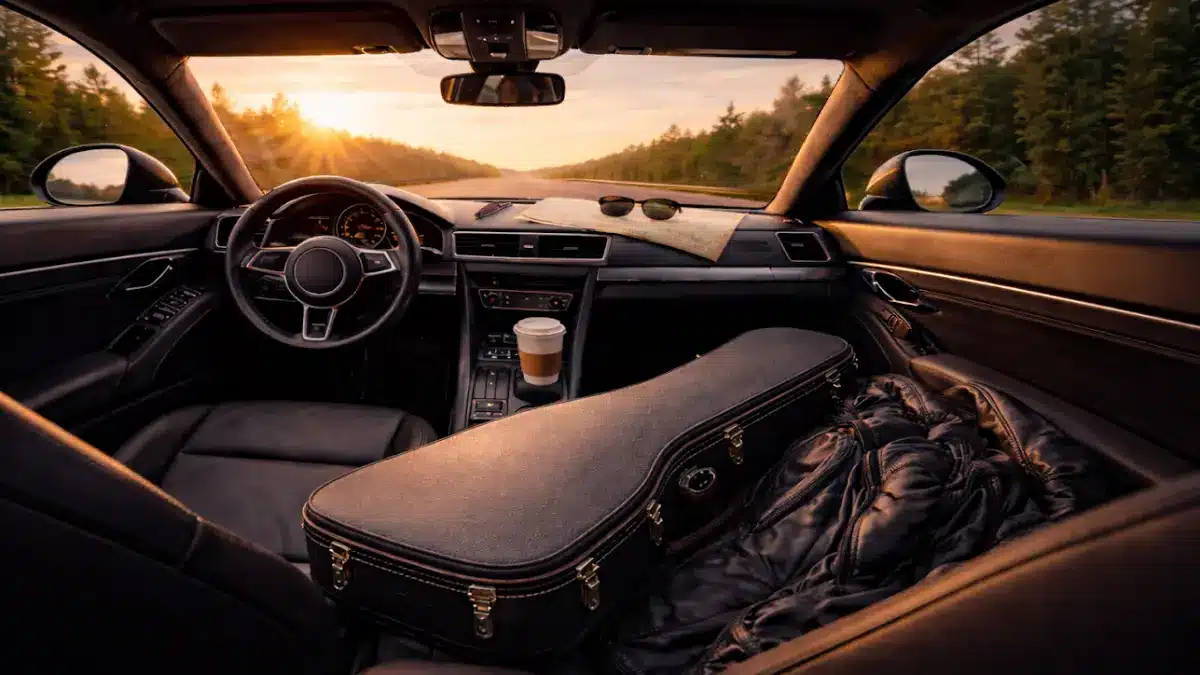
So we start the car and let the first riff set the tone. Road Riffs Spin #1: Crowbar – Planets Collide
Not because it’s subtle. Because it isn’t. That riff hits like weather. Slow, bruising, inevitable. Perfect music for crossing into a city that doesn’t need to announce its darkness because it’s already baked into the humidity.
While Florida gave the world death metal in one of its most vicious forms, New Orleans gave metal something dirtier, more exhausted, more human. Sludge. That thick, low, agonizing sound born from heat, pressure, and the feeling that life has sat on your chest for too long and still expects you to get up and go to work.
You can trace the city’s metal history through the bands like scars across a body.
THE MUSIC
Exhorder helped bridge thrash into groove before groove metal had a proper name and before certain bigger bands got all the credit.
Eyehategod dragged riffs through addiction, feedback, and heat until they sounded like they were collapsing under their own weight.
Crowbar, with Kirk Windstein carrying enough emotional weight to level concrete, turned suffering into something monolithic and strangely noble.
Acid Bath took Southern Gothic poetry, dead flowers, madness, sex, and decay and wrapped them in one of the most singular sounds heavy music ever produced.
Then later, Goatwhore dragged blackened blasphemy through the mud and kept New Orleans sounding dangerous in a completely different register.
And the thing about New Orleans metal is this: it is not fantasy. It is not dragons and ice castles and decorative evil. This city doesn’t have to fake darkness. It has lived with death for too long.
Its lyrics pull from cemeteries, floods, voodoo, addiction, religion, blood, and the sultry little romance between self-destruction and survival.
Even the drumming here often feels ritualistic, hypnotic and circular, trance-inducing. The pulse is different. More physical. Less performance, more possession.
And because this is Road Riffs, not a museum plaque, we don’t just talk about the sound. We drive through it.
While the rest of the world chased speed, New Orleans slowed everything down and made it hurt.
This isn’t fantasy metal. This is humidity, withdrawal, funerals, and days that don’t end clean.
Even the lyrics here feel different. Death isn’t metaphor. It’s proximity. It’s background noise. It’s part of the rhythm. You don’t write songs about darkness in New Orleans. You write from inside it.
THE FIRST DIG: RECORD STORES AND DAYLIGHT RITUALS
Daylight in New Orleans feels temporary, like the city only tolerates it because tourists panic when they can’t see where they’re going. So while the sun is still up, you use it.
You start with The Mushroom, founded in 1969 and still one of the city’s oldest independent record stores.
It sits upstairs above The Boot like a stubborn relic that refused to be cleaned up for modern tastes. That alone gives it credibility.
This is not a sleek boutique pretending to have edge. This is the kind of place where you go hunting for vinyl, shirts and obscurities with the smell of old cardboard and devotion.
If you’re a metalhead in New Orleans and you don’t stop here, you’re not doing your research, you’re just sightseeing.
What’s always fascinated me about New Orleans is how deeply entangled its musicians are. Almost every major name seems to have played in three other bands with two other legends while guesting on somebody else’s side project.
Phil Anselmo. Kirk Windstein. Pepper Keenan. Nobody here belongs to one chapter only. The whole scene cross-pollinates like a fever swamp. That’s part of what gives it weight. It’s not just a collection of bands. It’s an ecosystem.
THE CITY’S SPIRITUAL BACKBONE: DEATH, VOODOO, AND THE LOW END
Here’s where Road Riffs gets dark in the right way. The occult in New Orleans is not some novelty-shop stage prop. It is not the theatrical garnish that some other scenes paste on after the riffs are written.
Here, it’s in the walls, the folklore, inside the rituals and in the architecture. It’s in the names people still say carefully. In the fact that death is never far from the visible surface of everyday life.
Voodoo. Santería. The Loa. All of it exists here not as marketing but as living history.
And whether the city’s metal musicians consciously meant it or not, you can hear that influence in the repetitive, trance-inducing pulse of NOLA sludge.
Think Joey LaCaze and Jimmy Bower. The drumming often circles rather than sprints. It works like invocation and hypnotizes before it crushes.
Even the city’s major alt festival once carried that energy right in the name: Voodoo Music + Arts Experience. Because New Orleans understands something most cities don’t: the dark and the sacred are often neighbors and sometimes they share a drink.
The Cemetery Culture
This is also why the cemeteries matter. The famous above-ground tombs, the so-called Cities of the Dead are not just tourist bait. They are the city’s spiritual backdrop.
Walk by St. Louis Cemetery No. 1, where Marie Laveau’s tomb sits like a permanent axis of folklore and devotion, and you understand why New Orleans metal sounds the way it does. Here, death is not hidden. It is architecturally embedded. It is part of the view.
Then there’s the old Westgate Necromantic Gallery, a true gallery of necromantic art devoted to the transition between life and death.
That place was a genuine hub for the goth and metal underground in the 1990s, and the kind of thing only New Orleans could produce without irony.
Beyond the Quarter: Where It Gets Real
If you want something real and not the Bourbon Street costume version of “dark,” you go off-map. Out on St. Claude, inside the New Orleans Healing Center, there’s a place most tourists never make it to: Island of Salvation Botanica.
People call it a voodoo shop. That’s the lazy version. It’s a botanica. A working spiritual apothecary tied to traditions like Vodou, Santería, and Yoruba. Not curated for show and not softened for visitors. This is a place people actually come to do the work.
The energy isn’t “creepy” in a theme-park sense. It’s focused. Heavy. Like you walked into something already in motion.
Shelves lined with 7-day candles, oils, herbs, gris-gris, and ritual objects that don’t feel decorative. Haitian Vodou art, spirit cloths, metalwork – some of it created by Sallie Ann Glassman herself.
There are readings here. Cleansings. Rituals. Not performances – practices. And inside, the International Shrine of Marie Laveau sits quietly, receiving offerings from people who still treat her like she’s listening.
This isn’t a stop you breeze through. It’s a place you lower your voice without being told to.
Where the Vampires Still Breathe
In the Garden District, behind iron gates and heavy Southern stillness, sits the former home of Anne Rice.
It’s not just a house, it’s a portal into the world of The Vampire Chronicles and The Mayfair Witches.
Rice lived here during the height of her career, and that sense of beauty laced with decay – the quiet, watchful feeling of New Orleans bleeds straight onto the pages.
The Garden District doesn’t announce itself. It lingers. In the still air, in the architecture, in that strange feeling that something is always lurking just behind you.
This is where her worlds were built. Not imagined – absorbed.
The city has always attracted artists drawn to its darker current. Even Trent Reznor lived here and turned a former funeral home on Magazine Street into Nothing Studios, where some of the darkest records of the 1990s were produced.
Industrial, yes. But the metal scene bled into that orbit constantly. In New Orleans, those subcultures never sit in neat little boxes. They ooze into each other.
By now the sun is sliding lower. Time to change the track. Road Riffs Spin #2: Eyehategod – Dixie Whiskey. Now the city looks right. Not pretty. Right.
THE BIG THREE AND THE GHOSTS OF THE STAGE
Every real scene has venues that act like arteries. In New Orleans, the blood has always moved through rooms that are louder, dirtier, and more honest than the tourist version of the city wants to admit.
Tipitina’s is legendary for good reason. It may host jazz, funk, rock, and half the city’s cultural bloodstream besides, but it remains a spiritual home for NOLA heaviness.
It has history, gravity, and the kind of lived-in legitimacy you can’t fake with decor. When Eyehategod and Crowbar share a major bill there, it doesn’t feel like a reunion stunt. It feels like the city checking its own pulse.
Siberia, out in the Marigny, is the gritty heart of the local metal and punk underground. Great pierogis and better blast beats. That’s such a New Orleans sentence it hurts.
This is one of those places that reminds you underground culture doesn’t need polish. It needs commitment and the right kind of grime.
Santos Bar, sitting right on the edge of the French Quarter, is one of those bars that seems to absorb every kind of rock ’n’ roll filth and turn it into atmosphere.
Blackened thrash one night, stoner doom the next, all under lighting that makes everyone look a little more sinful than they probably are.
Le Bon Temps Roule (Uptown): an iconic dive and live music venue.
Co-owned by Pepper Keenan, guitarist/vocalist of Corrosion of Conformity and a founding member of Down, it’s not pretending to be part of the scene, it is the scene.
You can feel when a place is built by people who actually live this shit.
And hovering over all of it like a vanished cathedral is The Zephyr – long gone now, but still spoken of with that specific tone older metalheads get when they’re talking about rooms where history happened before anyone knew to call it history.
Grimy, crucial and beloved. The kind of place that earns comparisons like “The L’Amour’s of the South” because it cut its teeth the hard way.
THE DUNGEON: THE FINAL BOSS
Some places you visit. Some places you submit to. The Dungeon is the latter.
Tucked down a narrow alley in the French Quarter and refusing to even pretend it belongs to daylight, The Dungeon is one of those “if you know, you know” spots that actually deserves the phrase.
It doesn’t open until midnight, which is perfect, because nothing about it feels like it should be accessible to sober people at 2 p.m.
Inside, the atmosphere is exactly what you want and slightly more dangerous than you hoped. Southern Gothic by way of nocturnal perversion. Dim red lighting. Iron cages and a strict “no photos” rule they actually mean.
Drinks strong enough to undo your better judgment. It feels like a place where local metal legends, old goth royalty, vampire LARPers, tourists who made one very correct choice, and actual demons could all coexist without anybody asking too many questions.
It has been around since the late 1960s, which makes it one of the oldest alternative spaces in the city. New Orleans is full of newer bars trying on darkness like a leather jacket. The Dungeon doesn’t have to try. It already is what it is.
You’ll hear Type O Negative, Danzig and Celtic Frost. You’ll sip something like Dragon’s Blood and wonder whether this was a bad idea. Don’t you just love those?
And because this is where the article should get just a little sexier and stranger, this is where the car stereo in my head shifts again.
Road Riffs Spin #3: Acid Bath – Scream of the Butterfly.
Because if there was ever a New Orleans song that understood beauty and decay making out in the dark, it’s that one.
LANDMARKS FOR THE METAL-MINDED: HAUNTED GROUND AND CULTURAL DAMAGE
Now let’s talk landmarks, because if this is going to become a real metalhead travel book and it is then the piece needs more than bars and riffs. It needs places that hold narrative weight.
New Orleans is often called the most haunted city in America, and usually I roll my eyes at that kind of branding because half the time it’s just chamber-of-commerce goth bait. But here, there’s enough genuine darkness and weirdness woven into the city’s history that the haunted label actually feels earned.
The cemeteries are only one layer of it. The old funeral architecture is another. But the haunted hotels? Those are their own little genre.
WHERE TO SLEEP IF YOU LIKE YOUR REST WITH A SIDE OF DOOM
By this point, if you’re doing Road Riffs right, you’re not choosing your hotel based on thread count. You’re choosing based on atmosphere, history, and how good the ghost story will sound later.
So yes: Hotel Provincial, Andrew Jackson Hotel, Dauphine Orleans Hotel, and Bourbon Orleans Hotel all belong in the New Orleans metalhead travel conversation for different reasons.
Blood-soaked Civil War hospital energy, orphanage melancholy, bordello hauntings, convent ghosts, ballroom phantoms – pick your poison according to taste. This city is generous that way.
HOTEL PROVINCIAL – THE MILITARY HOSPITAL HORRORS
If you guys want a place with visceral blood-and-guts history, Hotel Provincial is one of the strongest candidates.
Building #5 sits on the site of a former Civil War military hospital, which already makes it more metal than most themed bars trying too hard.
People report apparitions of soldiers and surgeons. Figures vanish when lights flick on. There are stories of blood appearing and disappearing on floors and bedding.
One account tells of an elevator opening onto a second floor that had somehow reverted into an old hospital ward with moaning patients still inside it. If that isn’t the setup for a death-doom concept record, I don’t know what is.
ANDREW JACKSON HOTEL – THE TRAGEDY OF THE ORPHANAGE
If your taste runs more melancholic than gruesome, Andrew Jackson Hotel gives you restless ghost children and a deeper sadness.
It stands on the site of a colonial boarding school and orphanage destroyed by fire in 1794. Guests talk about belongings moved by unseen hands, children heard playing in the courtyard at impossible hours, and the recurring presence of a young boy named Armand.
The building was later used as a federal courthouse where Andrew Jackson himself was once held in contempt, because this city apparently collects haunted plotlines the way other cities collect parking tickets.
DAUPHINE ORLEANS HOTEL – THE BORDELLO AND THE BOUDOIR
If you want your haunted New Orleans with more seduction and less surgical gore, Dauphine Orleans Hotel leans into the city’s old bordello energy. It once functioned as a high-end brothel, and the bar.
May Baily’s Place was formerly part of that world. Guests still report the “lost ladies” in mirrors and moving through the rooms.
The Carriage House has its own Civil War soldier pacing the courtyard. There’s a tucked-away saltwater pool that somehow feels both serene and quietly wrong. Which is, to be fair, an excellent description of New Orleans itself.
BOURBON ORLEANS HOTEL – THE BALLROOM OF LOST SOULS
Then there’s Bourbon Orleans Hotel, a building with enough layered history to feel like a prog-metal box set. It was a ballroom, theater, convent and an orphanage.
A lonely ghost dancer is often seen beneath the chandeliers. Children and nuns are said to haunt the upper floors. It has the kind of grandeur that makes you instinctively lower your voice even while a part of your brain is screaming, “This would be the perfect place to shoot a goth metal video.”
Road Riffs Spin #4 Goatwhore – Apocalyptic Havac
GHOST TOURS FOR PEOPLE WITH BETTER TASTE THAN BOURBON-STREET CLOWN SHOWS
Now, if you’re going to do haunted New Orleans as a metalhead, don’t do it like a family from Ohio buying glowing skull beads and giggling through sanitized ghost stories. Do it right.
HOTTEST GHOST AND PARANORMAL TOURS
This one has the most appropriately trashy name and, thankfully, the right energy. Hottest Ghost and Paranormal Tours leans adult, late-night, and intense.
They don’t shy away from the more graphic parts of the city’s history. There’s a stronger paranormal-investigative angle here too, with detection equipment and a mood that feels less “storybook” and more “we’re wandering around trying to make contact with whatever still hasn’t moved on.” That’s exactly what you want.
HAUNTED HISTORY TOURS
Haunted History Tours is more established and broader in scope, but that’s not a weakness.
They offer themed routes digging into Voodoo, vampires, and the grislier undercurrents of the French Quarter.
What makes them worthwhile is the historical depth. The legends hit harder when you understand the real damage underneath them.
They also pair beautifully with a Dungeon night if you’re doing the Quarter properly and want the evening to spiral in the correct direction.
THE POST-TOUR RITUAL: WHERE TO DRINK AFTER THE DEAD ARE DONE TALKING
After the ghost tours, you need somewhere to drink that doesn’t feel like a themed trap for bachelorette parties in witch hats. New Orleans, thankfully, provides.
THE GOAT
If you want out of the Bourbon Street noise and into the actual underground, The Goat on St. Claude is one of the best moves you can make. It’s dark, minimal and loud.
This is where the current NOLA underground breathes. Blackened thrash, synth-wave, industrial, weird local bills, and the kind of off-night musician congregation that tells you the place is trusted.
THE CRYPT
Where the Bayou Meets the Batcave. The Crypt is more than just a bar; it’s a living, breathing love letter to the NOLA underground, co-founded by local artistic powerhouses JLH Illustration and Destryur.
Nestled where the Marigny meets the Seventh Ward, it has rapidly evolved from a neighborhood haunt into the city’s premier sanctuary for the “beautifully bizarre.”
While its aesthetic leans heavily into a dark, immersive “subterranean” vibe – think moody lighting and altar-like stages, the venue is celebrated for its radical inclusivity, serving as a haven where “artists, misfits, and romantics” can toast to the night in a judgment-free zone.
THE DUNGEON
Obviously. This is where the night goes to get less accountable.
Pro move: wander in around 1:00 a.m. on a Friday morning when the historical three-for-one mixed drink window has a decent chance of ruining your moral purity and your next morning.
A rite of passage is still a rite of passage even if it ends with you questioning your blood chemistry.
POOR BOYS BAR
A little farther out on St. Bernard, Poor Boys gives you the neighborhood-bar version of the alt-metal and experimental crowd.
Big patio. Underground vibe. Less tourist spooky, more actual local grit. Open-deck nights, showcases, weird energy. Exactly the kind of place a book like this should include, because not every stop needs to be polished into legend.
By now, we change the soundtrack again.
Road Riffs Spin #5: Down – Stone the Crow
Because at this phase of the night the city is no longer introducing itself. It’s leaning on you.
EAT LIKE THE MUSIC MATTERS
New Orleans food deserves real space here, because this city understands appetite the same way it understands darkness: with zero half-measures.
This isn’t just about “good restaurants.” This is about where a metalhead should eat to actually understand the city.
TURKEY AND THE WOLF – THE SLUDGE STANDARD
Chaotic, loud and irreverent. Turkey and the Wolf is the modern New Orleans underground in sandwich form. It takes junk-food instinct and pushes it just far enough into art without sanding off the attitude.
The fried bologna sandwich is famous for a reason. Thick-cut meat, melted American cheese, childhood filth elevated without losing its sneer.
The collard green melt and the curly fries are equally worth your time. It’s cluttered, odd, nostalgic, and a little obnoxious. Which is why it works.
THE COLUMNS – THE GOTHIC INSTITUTION
For the Southern Gothic side of the experience, The Columns offers that old-mansion, dark-wood, chandeliered elegance that makes you feel like you should be drinking something brown and dangerous while plotting either a seduction or a murder.
Sitting on St. Charles Avenue with streetcars drifting by, it’s less “metal bar” and more “Interview with the Vampire” before someone puts on Candlemass.” Small plates, boudin links, charcuterie, old money haunted by new sins.
COCHON – THE HEAVY HITTER
Cochon is mandatory if you worship meat, smoke, wood fire, and the idea that food should leave a mark.
This place goes all in on Cajun technique and snout-to-tail philosophy. Cochon with turnips, cabbage, and cracklins. Smoke in the air.
Whiskey and moonshine at the bar. Loud in the right way. It doesn’t feel precious. It feels committed. Heavy food for heavy minds.
COOP’S PLACE – THE FRENCH QUARTER DIVE
This is what happens when a no-frills tavern gets better food than half the polished spots pretending to be “authentic.”
Rabbit and sausage jambalaya, Cajun fried chicken, blunt service, strict 21+ policy. This place has the spirit of a basement punk show in restaurant form. You’re here to eat, not be flattered.
LATE-NIGHT FOOD: BECAUSE THE CITY DOES NOT BELIEVE IN CLOSING HOURS
If you’re staying out until 3 or 4 a.m. and doing the Quarter, you need food that can handle the damage.
VERTI MARTE
A tiny, legendary, 24/7 hole in the wall on Royal Street. Verti Marte is sacred territory for musicians, bartenders, and night creatures.
Get the All That Jazz po-boy and respect it. Ham, turkey, roast beef, Swiss, cheddar, mushrooms, wow sauce. It’s not subtle. It doesn’t need to be.
CLEO’S MEDITERRANEAN
Tucked into the back of a convenience store, Cleo’s has the exact kind of accidental-underground vibe I love.
Shawarma, hummus plates, food that doesn’t feel like a deep-fried death pact but still saves your life at three in the morning.
SNAKE AND JAKE’S CHRISTMAS CLUB LOUNGE
More bar than food stop, but it belongs here because Snake and Jake’s is one of the most gloriously disreputable little shacks in the city.
Christmas lights, duct-tape energy, open until the sun comes up if the universe is feeling permissive. If New Orleans had a physical manifestation of “low-end charm,” this would be it.
Road Riffs Spin #6 Exhorder – Desecrator
THE RECOVERY MORNING: POWDERED SUGAR, GREASE, AND DENIAL
The next morning, assuming you’re still technically alive, you need breakfast with authority.
CAFÉ DU MONDE
The original Café Du Monde at the French Market is the heavy metal of coffee shops. Green awnings, chaos. And powdered sugar everywhere.
Chicory coffee with a dark bitterness that cuts through the sweet like a sharp riff through fog. The beignets are non-negotiable. Wear black at your own peril unless you want to look like you lost a fight with a baggie of cocaine.
ELIZABETH’S
Out in the Bywater, Elizabeth’s gives you local-art weirdness, massive portions, and praline bacon that hits like a beautiful mistake. Thick, salty, glazed with sugar, completely excessive.
It’s the kind of breakfast item that makes you forgive yourself for the previous night.
SLIM GOODIES DINER
On Magazine Street, Slim Goodies has that alt-crowd, punk-diner energy that makes it feel more lived in than polished.
Big slams, fast service, a local pulse, and oddball menu items like the Jewish Coonass, because New Orleans absolutely refuses to stay inside one category for too long.
A QUICK NOTE ON THE NEW NOLA SOUND
No New Orleans metal chapter should leave the present out in the rain.
The legends matter. But the city still produces new monsters.
Thou remains one of the most crushing and atmospheric American sludge metal bands to come out of Louisiana in recent years, music that feels less like “songs” and more like structural damage.
Then there’s Brat, whose abrasive, confrontational bimbocore/grindcore energy proves the city still knows how to mutate and offend in style as it should.
OmenBringer: A newer name popping up on local bills. The band delivers a theatrical “stoner metal witch” vibe that leans into catchy, Sabbath-inspired riffs and occult aesthetics.
Catsclaw is a high-precision “thall” and technical deathcore project known for industrial textures and crushing, mechanical grooves.
The enigmatic while(true) is a fresh face in the underground scene, currently building a reputation for raw, intense live sets at local mainstays like The Crypt.
Past Self bridges the gap between metal and atmosphere, blending “k-goth” post-punk with ethereal, darkwave soundscapes that fit perfectly into Siberia’s moody lineup.
A scene that only worships its own past is already dead.
THE LAST LOOK
And this is the thing you have to understand about New Orleans if you’re going to write about it honestly. The music does not end when the show does.
It stays in the walls. In the damp night air. In the cemeteries. In the old ballrooms. In the bars where nobody took pictures. In the records stacked above The Boot. In the po-boy you inhale at 3:30 in the morning. In the hotel room where something may or may not have crossed the hall after you turned off the lamp.
New Orleans is not a clean city. Spiritually, morally, sonically or architecturally, it is gloriously contaminated.
That’s why the riffs feel heavier here, you don’t leave with a memory. You leave carrying ghosts.
Road Riffs Q & A
Q: Does Metal Lair have other series like this?
Yes! Metal Lair runs several signature series that explore every corner of heavy music:
- Seven Deadly Songs – A weekly roundup of the most unholy new releases.
- Deep Cuts – Hidden gems and lost recordings from rock and metal history.
- A Rip in Time: Women in Metal – A series celebrating the voices, pioneers, and rule-breakers reshaping heavy music’s DNA.
- Metalhead Horoscopes – Weekly forecasts laced with riffs, attitude, and a lucky song for every sign.
- World Metal Weekly – A global passport through the underground, one country at a time.
- Ministry of Metal – A satirical authority devoted to the laws, rituals, and unspoken rules of heavy music. Features proclamations, decrees, cultural edicts, metal lore, and an original comic book series, all delivered with humor and bite.
- Metal Legacy Profiles –
Deep dive essays honoring artists who shaped metal’s sound, culture, and philosophy. These aren’t timelines or greatest-hits lists, but examinations of impact, conflict, evolution, and what each figure left behind.
About The Author:
Lucien Drake is a writer and archivist at Metal Lair, contributing across features, essays, cultural commentary, and long-form series including Deep Cuts, Road Riffs and editorial projects exploring music, memory, and resistance. Known for treating heavy music as living history rather than nostalgia, Drake focuses on influence over canon, context over hype, and the stories that survive outside official timelines.
Read More From Lucien Drake:
The Underground Never Needed Your Approval – Only the Real Ones Survived
Before Algorithms Hunting Metal Was Bloodsport
Join the patrons of Metal Lair
MetalLair.net is a metal zine muttering to itself about seo and blastbeats at 3 AM while scheduling posts – powered by caffeine, riffs, a severe lack of sleep and a dog wondering why the human is still awake.
And occasionally, Kevin falling asleep on his keyboard while writing album reviews and Seven Deadly Songs.
If this kind of work matters to you – become a patron of Metal Lair.