Written By Lucien Drake
Deep Cuts documents the music that survived without permission.
Deep Cuts: Steely Dan’s Lost Underground “The Nightfly Outtakes That Shouldn’t Exist”
There’s a rumor that’s older than the internet and twice as slippery: A box of 2” reels left behind in a Detroit closet.
Not official, not sanctioned. The kind of thing Becker would have sued humanity over.
Bootleggers swear by it, Toy Soldier, The Bear, half-mixed tracks with Donald muttering in the talkback mic like he’s cursing God for inventing tape hiss.
Nobody agrees on the exact tracklist. Nobody agrees if these “lost” Nightfly scraps are even real. But every time somebody swears they found a cleaner dub of that “fake Wurlitzer swing vamp”… another collector goes silent and disappears for six months.
Because that’s how the Dan cult operates, you don’t find the truth. The truth finds you. Usually on a CD-R with a Sharpie written in handwriting that looks suspiciously like a divorce lawyer’s.
That’s the lane and here’s the real heresy: This is the one Dan-heads have been talking about for years. The “my cousin’s studio friend has a cassette” myth the tape the purists swear existed before the internet cheapened the magic into PDFs and blogspot rips.
The Nightfly outtakes that maybe shouldn’t exist…and yet somehow always surface in smoky side rooms at record fairs right after someone says “don’t tell anyone I played you this.”
“And the best part is even the purists can’t agree which reel vanished because of ‘accident’… and which reel vanished because Becker wanted it buried.”
Where the ghost occasionally surfaces
One of the only semi-public artifacts floating around right now is an upload titled “The Bear (Ultimate Restoration) mix 1.” it lives on YouTube. Today, but these things flicker in and out like numbers stations. Copyright claims come, channels vanish, someone re-uploads the file with a slightly different title and the cult whispers start again.
Nobody knows if this mix is close to what Becker & Fagen had on the reel or if it’s two generations removed and colored by whatever tape deck it passed through in a garage on Livernois Avenue in ’86.
But it’s something, an audible echo of the myth.
Deep Cuts: The Zombies That Never Existed – The Bootleg Ghosts of Odessey & Oracle
When a band disappears, the bootlegs don’t lie – they mutate.
There are eras in rock history where the recordings are more real than the band. The Zombies have two of them. This is the curious case of the fake Zombies.
The first is the one everyone pretends they’ve always understood: Odessey & Oracle, that pastel poison dream from 1968 that barely registered until the body was cold and the autopsy was complete.
The second is the one nobody likes to talk about. The post-breakup U.S. “Zombies” tours – shows played by bands that were not The Zombies at all, but still wore the name, still sang the songs, and still left behind tapes.
Bootlegs of a band that literally… did not exist.
Cheap cassette dubs. Fluorescent-lit VFW hall rips. Vocals half-remembered. Chords misplayed. Track listings mislabeled, mis-tracked, mis-sung.
And here’s the rotgut truth every deep-crate hunter learns eventually: Sometimes the counterfeit becomes the artifact.
Sometimes the bootleg becomes the only surviving proof a song ever existed. This is where it gets filthy.
Floating through collector circles, not the remasters, not the polite studio outtakes – are unsanctioned recordings tied to those fake Zombies lineups. Pre-Odessey sketches. Half-songs. Melodies that never made the official bloodline.
Songs the real band never confirmed and nobody can agree belong to anyone at all. Just whispered titles, passed mouth to mouth like contraband.
“Arctic Sundays” – supposedly a pre-Odessey chord sketch, half baroque, half nursery rhyme. The vocal is so faint it sounds like Rod Argent’s ghost mumbling from inside the tape hiss.
“Picture Book Waltz” – not the Kinks song. The crown-jewel myth. Seventy seconds of wandering Mellotron that cuts mid-phrase, like someone hit STOP because another human walked into the room.
“Lullaby for a Girl With No Name” – the darkest rumor. One harmony line. A tambourine loop. Everyone who claims they’ve heard it repeats the same sentence: “It sounds like a memory that never happened.”
These aren’t tracklists, they’re fingerprints and nobody can prove they exist.
But every serious Zombies obsessive swears they know someone who knows someone with a second-generation dub.
This is the subterranean Zombies catalogue, the one real fans don’t talk about in daylight.
Odessey & Oracle only became canon after it died. That’s why the lost-scraps myth works: it mirrors the album’s own arc. The rumor feels plausible.
The fragments feel like they belong to a masterpiece the world didn’t recognize until it was already a ghost.
One of the only semi-public artifacts floating around is a low-generation upload labeled by collectors as an early/rehearsal era clip, a piece that surfaces and disappears under different titles on odd corners of YouTube.
Deep Cuts: Moody Blues
The Moody Blues didn’t lose a record, they lost authorship. Sometimes the deepest cuts aren’t missing.
They’re everywhere and nobody remembers who put them there.
They’re one of those bands people think they already understand.
They don’t.
On the surface, the shorthand is easy: proto-prog, dad rock, incense and flared jeans. But if you actually sit with the records – Days of Future Passed, In Search of the Lost Chord, On the Threshold of a Dream, To Our Children’s Children’s Children – something darker starts bleeding through the pastel.
The Moody Blues were one of the first bands to say it out loud: What if rock isn’t rebellion… what if it’s a portal?
They weren’t trying to sound hippie, they were trying to make inner space audible.
Justin Hayward and Mike Pinder weren’t writing love songs, they were writing cosmic psychology. Liminal states. Time dilation. The quiet terror of meaning slipping through your fingers when you stare at it too long.
Pinder’s Mellotron work didn’t just decorate the music, it invented an emotional language. A vocabulary that later prog bands absorbed so completely they forgot where it came from.
King Crimson, Genesis, Yes – none of them exist in recognizable form without the Moodies quietly building the doorframe first.
Moody Blues trivia most people miss:
“Nights in White Satin” isn’t a ballad, it’s a dissociative episode set to strings. Mike Pinder was the one who showed John Lennon how to actually use a Mellotron. Days of Future Passed was a concept album before “concept album” was a genre checkbox.
They weren’t writing songs, they were building dream architecture.
And that’s why their influence looks ghost-thin now. It’s so deeply embedded it’s invisible. Their ideas became infrastructure. They existed before the filing cabinet, before the genre labels hardened, before rock knew how to classify what it was feeling.
Which makes their work one of the quietest Deep Cuts of all:
Not lost because it vanished, but because it became everything.
Deep Cuts: David Bowie
Bowie wasn’t a genre, he was a mutation vector.
What still gets flattened and reduced to glitter wigs and cheekbones is that he didn’t change costumes. He changed species.
Ziggy wasn’t a character. Ziggy was a prototype – an early model for post-human emotional architecture.
The Thin White Duke wasn’t “Bowie goes icy.” It was an experiment: can detachment be erotic?
Outside-era Bowie wasn’t “weird industrial Bowie.” It was a man trying to fracture linear narrative the way William Burroughs fractured sentences.
Most rock stars evolve like mammals: a little bigger, a little sharper, a little older. Bowie evolved like a virus.
You don’t track him on a timeline. You track him by what he infected.
You hear him in Trent Reznor’s late-’90s palette. You hear him in Kid A, which functions like a Bowie echo chamber whether Radiohead admits it or not.
Even Blackstar – his so-called death album isn’t a goodbye. It’s a final provocation.
Watch me die, but not organically. He didn’t fade out. He staged his exit like an art installation.
People call that theatrical but that word’s too small.
There’s something colder and more honest in the truth: he scored his own disappearance.
Most artists chase immortality by lasting. Bowie achieved it by shapeshifting so completely that there’s no single version the culture can kill.
Which means none of them die. That’s the trick. And buried beneath the floorboards of all that mythology is the real Deep Cut, the one Bowie fans whisper about like it’s loaded:
The Leon Tapes(aka: the lost / original Outside narrative)
Before Outside became an album, Bowie and Brian Eno spent days in improvised, stream-of-consciousness sessions. They invented characters. Crime scenes. Mutilated art bodies. Entire psychosexual mythologies.
They recorded hours of it. That original, raw, feral proto-album was called LEON.
It was never officially released. It circulated only as bootleg. Three long suites with spoken-word fragments and unreliable narrators.
Murder, ritual and noise darker than Outside. More unhinged. Less “album,” more pocket universe.
The prevailing rumor and the one that makes Leon perfect for Deep Cuts is that Bowie intended it to be a sprawling, multi-album, multimedia crime saga. A narrative too strange, too unstable, too difficult to market.
The label panicked so Leon was carved down into Outside and shaped into something recognizably album-like.
What survived is a mythic object in Bowie lore: half performance art, half industrial noir. A ghost record that never officially existed but dictated what did.
Fragments still surface online but only if you already know the name to search. That’s your Deep Cut. Not a lost Bowie album but the shadow negative of one. With Bowie, you were never just consuming music, you were entering a mind-architecture.
Plenty of people claim him. Very few followed him when he went fully strange – Low, Outside, Blackstar. The eras where he stopped behaving like a rock star and started behaving like a data leak from the future.
His entire career was an internal jailbreak. He never treated identity as a noun, he treated it like clay. That’s the kind of artist who makes sense in here.
Not content, not templates, but a voice that refuses to sit still long enough to be filed away.
Fragments of the original Leon sessions still surface online usually mislabeled, incomplete, and quietly re-uploaded when they disappear.
Deep Cuts: Jimi Hendrix – Black Gold, The Suite That Never Had a Future
There are lost albums, and then there are albums that died mid-thought.
Black Gold isn’t a record in the traditional sense. It’s a suite – a sequence of unfinished songs, spoken-word interludes, and melodic fragments that Jimi Hendrix recorded alone in 1970, on a portable cassette machine, months before his death.
There was no band or studio polish. Just Hendrix, a guitar, and a mind clearly moving faster than the industry around him.
The tape was given to drummer Mitch Mitchell for safekeeping. After Hendrix died, it vanished.
For decades, Black Gold existed only as rumor. A whispered future Hendrix never got to finish. When fragments finally surfaced years later, they revealed something unsettling:
Hendrix wasn’t heading toward another Electric Ladyland. He was building a narrative, possibly even a mythic cycle. Songs flowed into each other. Spoken passages linked ideas. Characters emerged and dissolved.
This wasn’t “demo tape” Hendrix. This was composer Hendrix in architect mode.
Tracks like “Suddenly November Morning,” “Astro Man,” and the recurring “Black Gold” motif feel less like songs and more like waypoints. You can hear him searching for structure, for story, for something beyond the album format altogether.
And that’s the tragedy that makes Black Gold a true Deep Cut: It isn’t unfinished because it was abandoned. It’s unfinished because Hendrix died while inventing a new lane.
There is no definitive tracklist or authoritative sequence. No official release that captures the intent.
Only fragments, circulating quietly – proof of a future that never got to exist. Black Gold isn’t a lost album. It’s a missing direction.
Fragments from the unreleased Black Gold demo suite reveal a future Hendrix never had time to finish.
Deep Cuts: Black Sabbath: The BBC Tapes (1969–1970)
Before Black Sabbath became Black Sabbath, before the iconography, the panic headlines ad the doctrine, they were a live organism still mutating.
Between 1969 and 1970, Sabbath recorded a series of sessions for BBC Radio 1, captured live-to-tape for broadcast. These weren’t studio albums. They weren’t meant to last. They were transmissions that were fast, raw, and slightly unstable, pushed out over the air and then supposed to disappear but they didn’t.
What survives are versions of songs that feel unfinished in the best possible way: faster, meaner and less ceremonial
Ozzy sounds feral, not iconic. Iommi’s guitar tone is rougher, more abrasive, closer to weapon than riff. Geezer’s bass crawls instead of grooves. Bill Ward swings like a jazz drummer possessed by something ugly and impatient.
This is Sabbath before the ritual hardened. The BBC sessions capture Sabbath mid-invention and they weren’t blues anymore. Not quite yet the doom metal band we love.
Lyrics shift, tempos bend and structures stretch or collapse. You can hear the band still figuring out what the monster actually is.
These aren’t alternate takes, they’re parallel versions of Sabbath from a slightly different timeline.
For decades, these recordings lived as off-air cassette dubs bootlegs traded at record fairs low-generation copies with DJ chatter and broadcast compression baked in
The hiss and bleed mattered. The fact that this wasn’t meant to be archived matters. When the BBC Sessions were finally released officially, they didn’t lose their edge because the source was never clean to begin with.
The real Deep Cut thesis:
These tapes document heavy metal being invented in real time, before it knew what to call itself without branding.
Just four men pushing volume, dread, and repetition until something new leaked into existence.
If the studio albums are grimoires, the BBC tapes are field recordings. Metal didn’t arrive fully formed. It escaped through radio static and that’s the ghost.
Early versions of Sabbath’s sound surface most clearly in the BBC Radio 1 sessions (1969–1970), captured before the mythology hardened.
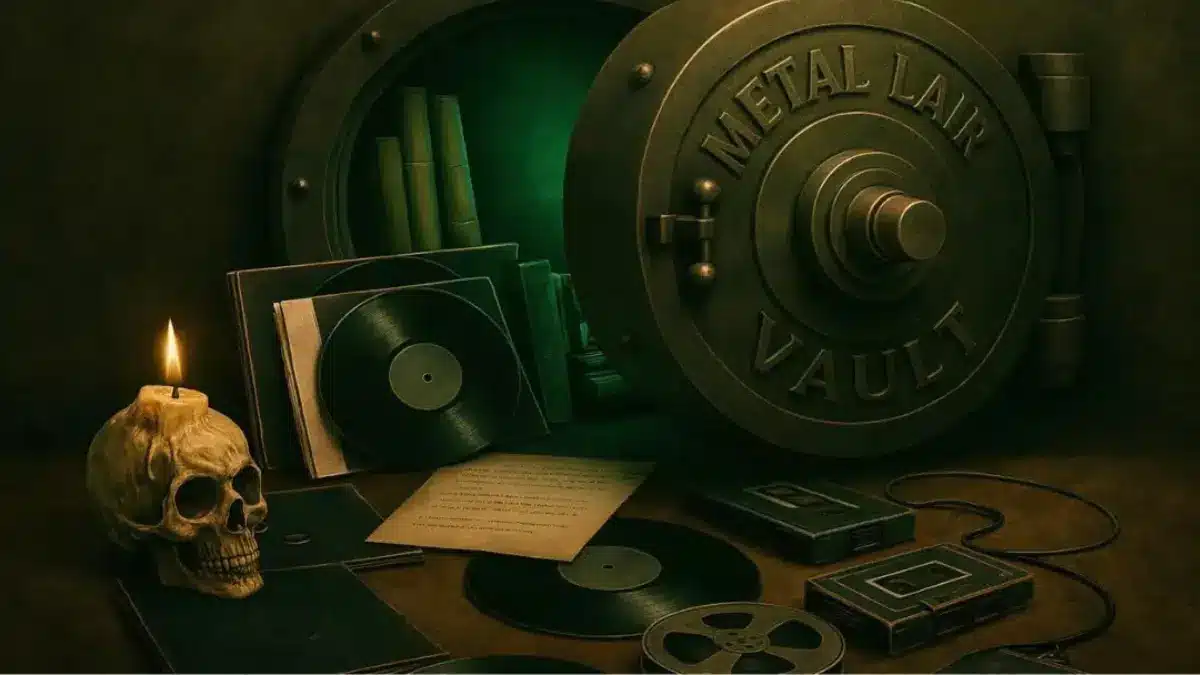
Deep Cuts: Metal’s Hidden Gems is A Metal Lair™ Original Series
Missed the last Deep Cuts? It’s in the vault. Find it here.
FAQ – Deep Cuts: Metal’s Hidden Gems
Q: What is Metal Lair’s Deep Cuts: Metal’s Hidden Gems series?
A: Deep Cuts is a curated archive of music that exists on the edges of official history, lost demos, unreleased sessions, bootleg-era artifacts, abandoned concepts, and records that shaped heavy music without ever fully entering the canon.
Q: What kind of artists does Deep Cuts feature?
A: The series moves freely across eras and genres, spotlighting artists whose work left a lasting imprint through fragments, transmissions, or unfinished ideas from underground metal scenes to influential figures whose most revealing material never arrived in finished form.
Q: Why focus on demos, broadcasts, and unreleased material instead of albums?
A: Because those moments often capture artists in transition before the mythology hardens. Deep Cuts documents music as it mutates: raw, unstable, and sometimes never meant to survive.
Q: Where can I listen to these hidden gems?
A: When possible, we link to publicly available sources such as official archival releases, broadcast recordings, or circulating fragments on platforms like YouTube. Some material may appear, disappear, or exist only in partial form that impermanence is part of the story.
Q: Does Metal Lair have any other weekly series like this?
A: Oh yes. If your appetite isn’t satisfied by one global feast, check out more crom Metal Lair:
- Seven Deadly Songs – our weekly hunt for the seven must-hear new tracks.
- Metalhead Horoscopes – your weekly forecast in riffs, not retrogrades.
- World Metal Weekly – A global passport through the underground, one country at a time.
- A Rip in Time: Women in Metal – A series celebrating the voices, pioneers, and rule-breakers reshaping heavy music’s DNA.
- Metal Legacy Profiles – Deep-dive essays honoring artists who shaped metal’s sound, culture, and philosophy. These aren’t timelines or greatest-hits lists, but examinations of impact, conflict, evolution, and what each figure left behind.
- Ministry of Metal – A satirical authority devoted to the laws, rituals, and unspoken rules of heavy music. Features proclamations, decrees, cultural edicts, metal lore, and an original comic book series, all delivered with humor and bite.
- Road Riffs: Metal On The Map– We take metal beyond the speakers and onto the highway, exploring legendary venues, scene-defining cities, historic landmarks, local haunts, and travel stops tied to real
metal scenes around the world that every metalhead should experience.
About The Author:
Lucien Drake is a writer and archivist at Metal Lair, contributing across features, essays, cultural commentary, and long-form series including Deep Cuts, Road Riffs and editorial projects exploring music, memory, and resistance. Known for treating heavy music as living history rather than nostalgia, Drake focuses on influence over canon, context over hype, and the stories that survive outside official timelines.
No algorithms. No fluff. No watered-down corporate metal coverage.
Subscribe to Metal Lair and get weekly underground features, Seven Deadly Songs, Deep Cuts, interviews, and original metal journalism sent directly to your inbox.

Join the patrons of Metal Lair
MetalLair.net is a metal zine muttering to itself about seo and blastbeats at 3 AM powered by caffeine, riffs, a severe lack of sleep, and a dog wondering why the human is still awake.
Sometimes it’s Kevin passing out mid Seven Deadly Songs.
Sometimes it’s digging up forgotten records no one else is talking about.
Always, it’s built for people who actually livethis music.
If that sounds like you, you’re already one of us.
Supporting Metal Lair means keeping it independent, loud, and real with no corporate filters, no watered-down takes. If you want to help keep it alive…
Become a patron of Metal Lair.